Finance · Markets
Malaysia's Currency Dips as Dollar Strengthens on Fed Rate Speculation
The ringgit slipped modestly in morning trade as markets priced in higher odds of a September US rate hike, though energy export dynamics cushion downside risk
KEY TAKEAWAYS
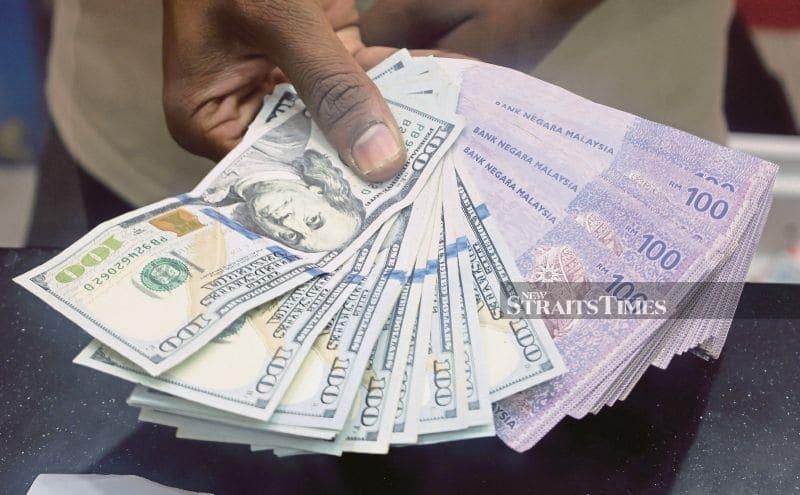
- ·Malaysia's ringgit weakened to 4.0855 per dollar in morning trade as market probability of a September Federal Reserve rate hike rose to 64.8 percent from 51.5 percent in early July.
- ·The currency showed resilience compared with regional peers, supported by Malaysia's improving terms of trade and its status as a net energy exporter amid rising oil prices.
- ·Currency watchers expect the ringgit to trade in a narrow range near term, with the September Fed meeting serving as a key inflection point for emerging-market currencies.
Morning Slide Reflects Shifting Rate Outlook
Malaysia's ringgit softened marginally in early Thursday trading, settling at 4.0855 per US dollar by 8am local time from 4.0850 at the prior session's close. The movement mirrored weakness across several major Asian currencies as traders recalibrated expectations for US monetary policy in the wake of persistent geopolitical uncertainty in the Middle East.
The modest depreciation comes as markets digest the implications of ongoing disruptions to energy supply routes in the region, which have complicated the inflation outlook for major economies and, by extension, central bank policy trajectories. Crude oil prices have edged higher on concerns that tensions could further constrain global flows, a dynamic that carries mixed consequences for net energy exporters like Malaysia.
Fed Policy Repricing Drives Dollar Strength
Probability estimates for a Federal Reserve interest rate increase in September have climbed to 64.8 percent, up from 51.5 percent at the start of July, according to Dr Mohd Afzanizam Abdul Rashid, chief economist at Bank Muamalat Malaysia. This shift in market pricing has lent support to the greenback across the board, creating headwinds for emerging-market currencies even as individual economies display divergent fundamentals.
The repricing reflects growing conviction among traders that inflationary pressures, particularly those stemming from energy markets, may compel the Federal Open Market Committee to maintain a tighter policy stance than previously anticipated. Higher US rates typically attract capital flows toward dollar-denominated assets, exerting downward pressure on currencies in smaller open economies.
Yet the ringgit's performance has been notably resilient compared with peers, suggesting that domestic factors are providing a measure of insulation. Stephen Innes, managing partner at SPI Asset Management, noted that the Malaysian unit has held up better than many competitors this week despite the broadly firmer dollar, a pattern he attributes to what he describes as dispersion trade dynamics rather than uniform currency weakness.
Trade Surplus and Energy Exporter Status Provide Buffer
Malaysia's improving terms of trade have emerged as a stabilizing force. Recent official data showed robust export performance, with the trade surplus expanding on the back of strong shipments in electronics, commodities, and energy products. The country's status as a net exporter of liquefied natural gas and crude oil has offered relative protection as energy prices rise, offsetting some of the negative sentiment driven by external rate expectations.
This structural advantage distinguishes Malaysia from energy-importing neighbors, where higher oil prices translate directly into wider current account deficits and currency pressure. For Kuala Lumpur, elevated energy revenues bolster foreign exchange inflows and support fiscal balances, creating a more favorable backdrop for the ringgit even as the dollar strengthens globally.
The interplay between geopolitical risk, commodity prices, and currency performance underscores the complexity facing policymakers and investors in the region. While Middle East tensions pose risks to global growth and inflation trajectories, they simultaneously enhance the relative attractiveness of energy-exporting economies within Asia.
Mixed Performance Against Regional and Major Peers
The ringgit's movements against other currencies reflected this nuanced landscape. Against the Japanese yen, the Malaysian unit appreciated slightly to 2.5051, compared with 2.5057 at the previous close. However, it weakened versus the euro, moving to 4.6624 from 4.6585, and slipped against the British pound to 5.4648 from 5.4612.
Within Southeast Asia, the ringgit edged lower against the Singapore dollar, settling at 3.1646 from 3.1635, and depreciated modestly versus the Thai baht to 12.0924 from 12.0787. It held steady against the Indonesian rupiah at 228.0 and was unchanged against the Philippine peso at 6.61, suggesting that intra-regional currency dynamics remain relatively stable despite broader dollar strength.
These cross-rates illustrate the extent to which currency movements are being driven by idiosyncratic factors rather than a uniform flight to the dollar. Economies with strong export data, favorable commodity exposure, or improving fiscal positions have seen their currencies outperform, while those facing domestic challenges or external vulnerabilities have lagged.
Implications for Monetary Policy and Market Sentiment
The ringgit's trajectory in the coming weeks will hinge on several variables, chief among them the evolution of US rate expectations and the persistence of Middle East supply risks. If September rate hike odds continue to rise, the dollar is likely to maintain its strength, pressuring emerging-market currencies broadly. Conversely, any easing of geopolitical tensions or softer US inflation data could prompt a reassessment and provide relief for regional units.
For Bank Negara Malaysia, the central bank, the current environment presents a delicate balancing act. A stronger dollar and higher US rates can complicate domestic monetary policy by increasing the cost of foreign currency debt and tightening financial conditions. At the same time, robust trade performance and energy revenues offer room for policy flexibility, reducing the urgency of reactive currency interventions.
Market participants will be closely watching upcoming US economic data releases, particularly inflation figures and labor market indicators, for clues about the Federal Reserve's next move. Any surprises in these datasets could trigger swift repricing in currency markets, with knock-on effects for the ringgit and its regional peers.
Regional Context and Forward Outlook
The broader Southeast Asian currency landscape remains in flux as central banks across the region navigate divergent growth and inflation dynamics. Indonesia's rupiah has been relatively stable, supported by its own energy export profile, while the Thai baht has faced pressure from weaker tourism revenue and political uncertainty. The Singapore dollar, often viewed as a regional safe haven, has appreciated modestly as investors seek stability amid global volatility.
For Malaysia, the near-term outlook hinges on maintaining the positive momentum in trade data while managing external headwinds from US monetary policy. The country's diversified export base, which spans electronics, palm oil, and energy, provides a degree of resilience that will be tested in the months ahead.
Currency watchers expect the ringgit to trade within a relatively narrow range in the near term, with downside risks capped by strong fundamentals and upside constrained by the firmer dollar. The September Federal Reserve meeting will be a critical inflection point, potentially setting the tone for emerging-market currencies through the remainder of the year.
RELATED STORIES
Ringgit Strengthens as Malaysia's Stable Rates Signal Policy Flexibility
Mariel D. Santos · 3 min
Ringgit Gains Ground as Traders Await Fed Chair Warsh's Jackson Hole Address
Priyanka V. Rao · 3 min
Malaysian Ringgit Strengthens on Strong US Jobs Data
Tran Quoc Bao · 3 min
Ringgit Set to Hold Gains as Malaysia Central Bank Meeting Nears
Priyanka V. Rao · 3 min
Spot something wrong? Email editor@briefasia.com. We log every correction publicly.