Finance · Markets
Malaysia's Currency Climbs as Fed Chair Avoids Rate Guidance
The ringgit strengthened against the dollar after Federal Reserve Chairman Kevin Warsh declined to signal future policy moves, leaving markets watching U.S. jobs data
KEY TAKEAWAYS
- ·The ringgit strengthened to 4.0780 per dollar from 4.0920 after Fed Chairman Kevin Warsh offered no forward rate guidance at a European forum.
- ·Markets are now focused on U.S. Nonfarm Payrolls data expecting 114,000 jobs added in June with unemployment steady at 4.3 percent.
- ·The Malaysian currency posted gains against most regional peers including the Singapore dollar, Thai baht, and Indonesian rupiah in Thursday trading.
Dollar Weakness Lifts Regional Currencies
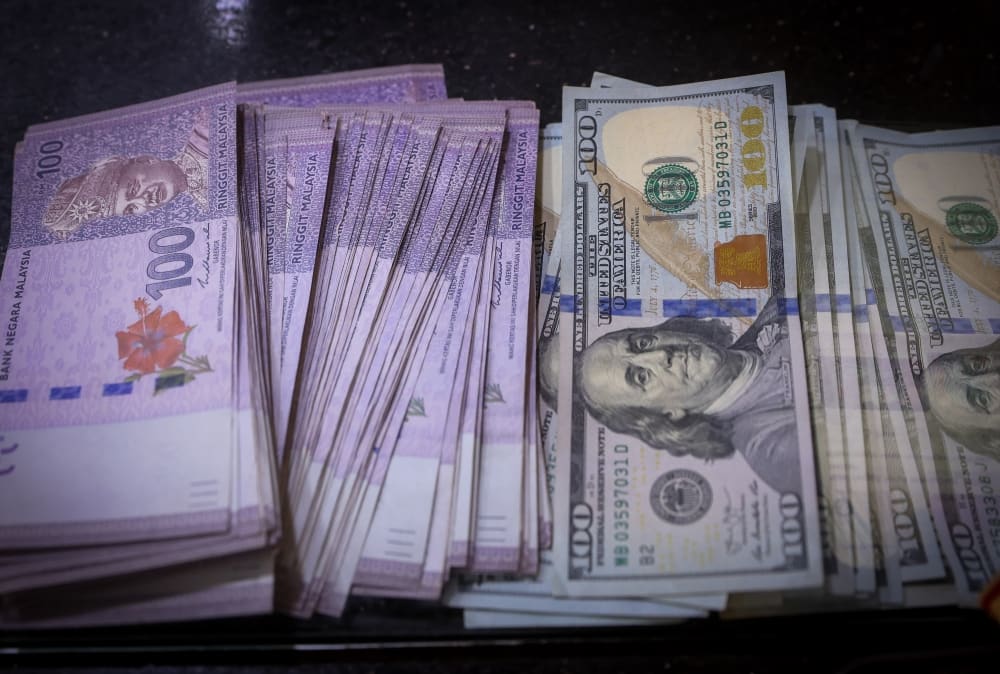
Malaysia's ringgit posted gains against the dollar in Thursday trading, closing at 4.0780 per U.S. dollar compared with 4.0920 the previous session. The move came as the greenback softened following remarks from Federal Reserve Chairman Kevin Warsh that left market participants without clear signals on the future path of U.S. monetary policy.
The currency's advance reflects broader uncertainty in foreign exchange markets about when, or whether, the Federal Reserve will adjust interest rates in the coming months. Without explicit guidance from the central bank's leadership, traders have turned their attention to incoming economic indicators to divine the Fed's next steps.
Dr. Mohd Afzanizam Abdul Rashid, chief economist at Bank Muamalat Malaysia, noted that market focus had shifted squarely to hard data after Warsh's appearance at the European Central Bank Forum in Sintra, Portugal. The Fed chairman participated in a panel discussion but declined to provide forward guidance on interest rate decisions, reinforcing the central bank's stance that policy moves will depend on evolving economic conditions rather than a predetermined schedule.
The reluctance to commit to a policy trajectory leaves currency markets in a state of heightened sensitivity to each new data release from the United States. Traders are particularly focused on employment figures, which serve as a key barometer of economic health and a critical input for Fed decision-making.
Employment Data Takes Center Stage
Market participants are now awaiting the U.S. Nonfarm Payrolls report, which was due for release later Thursday. Consensus forecasts among economists suggest the American economy added approximately 114,000 jobs during June, a figure that would represent moderate but steady growth in the labor market.
The unemployment rate is expected to hold at 4.3 percent, according to analyst projections. That level would indicate a labor market that remains relatively tight by historical standards, though not so overheated as to force the Fed's hand on rate increases. Any significant deviation from these expectations could trigger volatility in currency pairs involving the dollar.
The data-dependent approach favored by the Fed means that a stronger-than-expected jobs report could bolster the case for maintaining current interest rate levels or even tightening policy, which would likely support the dollar. Conversely, weaker employment figures might increase speculation about potential rate cuts, putting downward pressure on the greenback and benefiting currencies like the ringgit.
Cross-Currency Performance
The ringgit's performance against other major currencies presented a mixed picture at Thursday's close. The Malaysian unit weakened versus the British pound, settling at 5.4401 compared with 5.4203 in the previous session. Against the Japanese yen, the ringgit also slipped, moving to 2.5295 from 2.5144.
However, the currency managed to edge higher against the euro, closing at 4.6526 versus 4.6600 the day before. The modest gain suggests that the ringgit's strength was not uniform across all major currency pairs but rather concentrated in its matchup against the dollar.
More pronounced gains appeared in the ringgit's trading relationships with regional currencies. Against the Singapore dollar, the Malaysian unit strengthened to 3.1517 from 3.1555. It also advanced versus the Thai baht, moving to 12.2411 from 12.2526, and gained ground against the Indonesian rupiah, closing at 226.6 per ringgit compared with 227.9 previously.
The Philippine peso also weakened relative to the ringgit, with the exchange rate improving to 6.62 from 6.64. These regional currency movements suggest that the ringgit's appreciation was part of a broader pattern affecting Southeast Asian foreign exchange markets, possibly reflecting investor sentiment about growth prospects across the region.
Policy Uncertainty and Market Positioning
The current environment of monetary policy uncertainty creates both opportunities and risks for emerging market currencies in Asia. When the Federal Reserve refrains from providing clear forward guidance, currency traders must rely more heavily on their interpretation of economic data and central bank communications, which can lead to increased volatility.
For Malaysia, the ringgit's trajectory remains closely tied to global risk appetite and the relative attractiveness of emerging market assets. A weaker dollar generally benefits Asian currencies by making regional assets more appealing to international investors and reducing the cost of dollar-denominated debt servicing for governments and corporations in the region.
The Malaysian economy has shown resilience in recent quarters, supported by export strength and domestic consumption. However, currency movements remain highly sensitive to external factors, particularly U.S. monetary policy and China's economic performance, given the tight trade linkages between Malaysia and its largest trading partners.
What Markets Are Watching
Beyond the immediate focus on U.S. employment data, currency traders are monitoring several other factors that could influence the ringgit's direction in the near term. These include upcoming Federal Reserve policy meetings, inflation readings from both the United States and Malaysia, and any shifts in global commodity prices, particularly for palm oil and natural gas, which represent significant export revenues for Malaysia.
The Fed's data-dependent approach means that each major economic release carries heightened importance. In addition to employment figures, markets will scrutinize consumer price index reports, retail sales data, and manufacturing surveys for clues about the health of the U.S. economy and the likelihood of policy adjustments.
For now, the ringgit's advance reflects a moment of dollar weakness rather than a fundamental shift in the currency landscape. Whether this strength proves durable will depend largely on how incoming data shapes market expectations about the divergence between U.S. monetary policy and the policy paths of other central banks, including Bank Negara Malaysia. The coming weeks will test whether the ringgit can sustain its gains or whether renewed dollar strength will reverse recent currency movements.
RELATED STORIES
Ringgit Strengthens as Malaysia's Stable Rates Signal Policy Flexibility
Mariel D. Santos · 3 min
Ringgit Set to Hold Gains as Malaysia Central Bank Meeting Nears
Priyanka V. Rao · 3 min

Ringgit Gains Ground as Traders Await Fed Chair Warsh's Jackson Hole Address
Priyanka V. Rao · 3 min
Malaysian Ringgit Strengthens on Strong US Jobs Data
Tran Quoc Bao · 3 min
Spot something wrong? Email editor@briefasia.com. We log every correction publicly.