Finance · Deals
Luckin Coffee Hits 36,000 Stores as Revenue Climbs 28% in Second Quarter
China's coffee giant reported RMB 15.9 billion in quarterly revenue while maintaining double-digit operating margins despite aggressive expansion
KEY TAKEAWAYS
- ·Luckin Coffee surpassed 36,000 stores and reported RMB 15.9 billion in second-quarter revenue, a 28.5% increase year-on-year.
- ·Operating profit grew 22% to RMB 2.1 billion with a 13.4% margin, demonstrating profitability alongside rapid store expansion.
- ·Sustaining same-store sales growth and margin discipline will be critical as the network matures and competition intensifies.
Rapid Store Expansion Continues
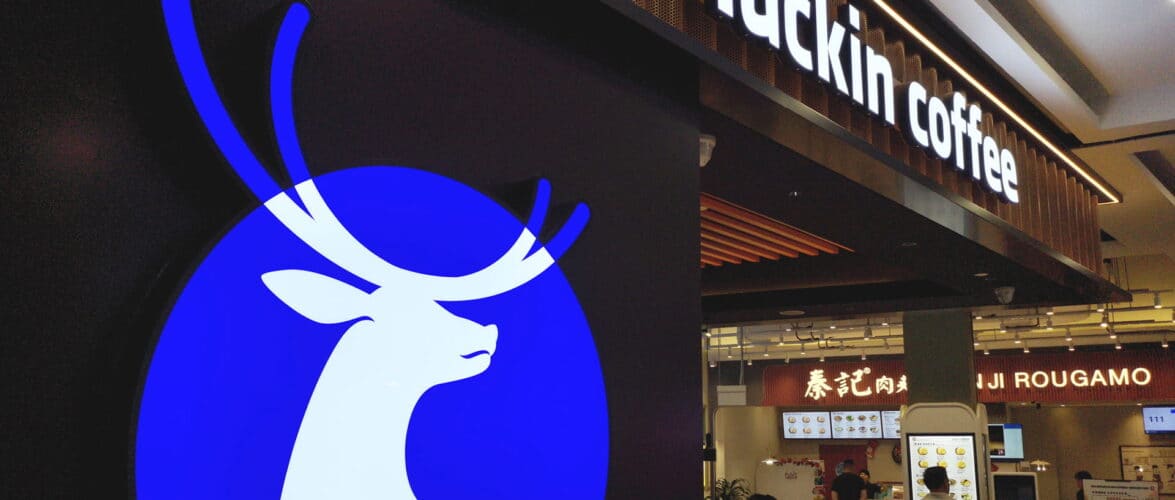
Luckin Coffee now operates more than 36,000 stores across China, cementing its position as the country's largest coffee chain by location count. The Xiamen-based company released second-quarter results on August 3, showing total net revenue of RMB 15.9 billion (USD 2.4 billion), a 28.5% increase from the same period last year.
The chain's store footprint has grown aggressively over the past eighteen months, adding thousands of outlets in lower-tier cities where coffee culture is still emerging. This push into smaller urban centers represents a strategic shift from the first-mover coastal concentration that defined its early years.
Profitability Holds Despite Scale-Up
Operating profit reached RMB 2.1 billion (USD 310.5 million) for the quarter, up 22% year-on-year, according to the company. The operating margin stood at 13.4%, a figure that reflects Luckin's ability to maintain profitability even as it opens new locations at pace.
That margin performance is noteworthy in a sector where rapid expansion often erodes unit economics. Luckin's model relies on small-format stores, digital ordering, and centralized supply chains to keep costs in check. The company has also benefited from scale advantages in procurement and logistics as its network expands.
Competitive Landscape in China's Coffee Market
Luckin faces intensifying competition from both international players and domestic rivals. Starbucks continues to expand its premium footprint, while local chains such as Manner Coffee and M Stand are carving out niches in first-tier cities. Meanwhile, convenience-store operators and tea brands are adding coffee offerings to their menus, broadening the competitive set.
The market remains fragmented, with per-capita coffee consumption in China still a fraction of levels in Japan, South Korea, or Taiwan. That gap represents both opportunity and uncertainty: growth potential is significant, but consumer preferences are still being shaped.
Operational Model Under Pressure
Luckin's franchise-heavy model has enabled rapid scaling but also introduced operational variability. Franchisees manage day-to-day operations, which can lead to inconsistencies in service quality and product execution. The company has invested in training programs and technology platforms to standardize operations, but the challenge persists as the network grows.
The digital-first approach remains central to Luckin's strategy. Mobile ordering accounts for the vast majority of transactions, allowing the company to collect granular data on customer behavior and optimize inventory in real time. This tech backbone has been a key differentiator, particularly in markets where foot traffic patterns are less predictable.
What Comes Next
Luckin's ability to sustain margin performance while adding thousands of stores will be closely watched in the coming quarters. The company has not disclosed a formal store-count target, but current expansion velocity suggests it could approach 40,000 locations by year-end.
Investor attention will also focus on same-store sales growth, a metric that reveals whether existing locations are gaining traction or merely holding steady. As the network matures, maintaining momentum in older stores will become as important as opening new ones.
The broader question is whether China's coffee market can support multiple large-scale players without triggering a margin-destructive price war. For now, Luckin's results suggest that disciplined execution and operational leverage can coexist with aggressive growth.
RELATED STORIES

Asian Tech Stocks Surge as Weak US Jobs Data Dims Rate Hike Outlook
Cheng Wei-Lun · 4 min
Hong Kong's Wealth Hub Status Faces Test as Beijing Tightens Tax Enforcement
Cheng Wei-Lun · 3 min

Hong Kong and China Regulators Announce Market Integration Reforms
Cheng Wei-Lun · 3 min

Unitree Robotics IPO Oversubscribed 2,700 Times as Investors Bet on China's Robot Push
Cheng Wei-Lun · 3 min
Spot something wrong? Email editor@briefasia.com. We log every correction publicly.