Finance · Deals
Louis Vuitton Wins $1.4 Million Trademark Case Against Chinese Tea Chain
A Suzhou court ruled Molly Tea infringed on the French luxury brand's iconic monogram, ordering damages and public corrections across six platforms
KEY TAKEAWAYS
- ·A Suzhou court ordered Molly Tea to pay Louis Vuitton 10.3 million yuan for using a logo resembling the luxury brand's registered four-petalled monogram.
- ·The ruling includes 10 million yuan in economic damages, 300,000 yuan in legal costs, and mandatory public corrections across six digital platforms.
- ·Molly Tea, which operates over 2,000 stores globally since its 2021 founding, plans to appeal the decision within the ten-day payment deadline.
Court Orders Payment Within Ten Days
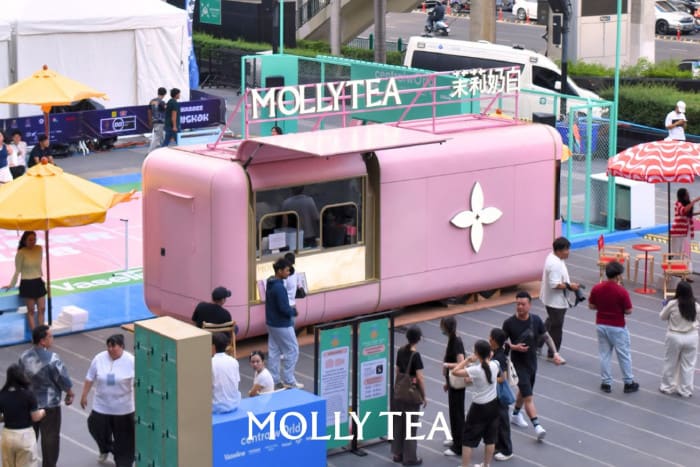
A Chinese court has ordered Shenzhen-based tea chain Molly Tea to pay Louis Vuitton 10.3 million yuan ($1.4 million) for trademark infringement, finding the beverage company used a logo that mimicked the French luxury house's protected floral monogram.
The Suzhou Intermediate People's Court in Jiangsu province issued the ruling this week, breaking down the damages into 10 million yuan for economic losses and 300,000 yuan to cover litigation costs. Molly Tea has ten days to comply and must post public statements acknowledging the infringement across its website, mini-program, and four social media accounts including Weibo, WeChat, RedNote and Douyin.
The tea chain has already updated the logo displayed on its mini-program, replacing the black-and-white design with a coloured version. The company said it plans to appeal the decision. Louis Vuitton declined to comment on the ruling.
Pattern Recognition
Louis Vuitton filed the civil case in May last year, according to Tianyancha, a corporate information database. The dispute centers on whether Molly Tea's logo created confusion with Louis Vuitton's registered four-petalled floral monogram, a design the luxury brand has protected in China through the China National Intellectual Property Administration.
That same agency rejected trademark applications filed by Molly Tea in 2024, placing them under review after Louis Vuitton raised objections. The administration confirmed Louis Vuitton holds valid registration for its monogram pattern in Chinese trademark databases.
The case ignited debate on Chinese social media. Some users argued the two companies operate in entirely different sectors or pointed to similar patterns in ancient Chinese design. But a larger share of commenters acknowledged the logo immediately brought Louis Vuitton to mind, undermining claims of independent design.
Rapid Expansion Meets IP Scrutiny
Founded in 2021, Molly Tea has grown quickly. The company operates more than 2,000 stores globally, with a footprint spanning North America, Europe, Southeast Asia and Australia. International locations include the United States, Canada, the United Kingdom, Thailand, Indonesia, Singapore and Australia.
That speed has brought the brand under sharper intellectual property scrutiny, particularly as it enters markets with established trademark enforcement regimes. The Suzhou ruling demonstrates Chinese courts are willing to award substantial damages when foreign brands can prove both registration and consumer confusion.
The decision aligns with Beijing's broader push to strengthen IP protections as part of trade commitments and efforts to attract foreign investment. Courts in eastern manufacturing hubs such as Jiangsu have become testing grounds for higher damage awards, moving beyond token penalties toward compensation that reflects actual market harm.
Compliance and Appeal
Molly Tea's requirement to publish correction statements on six platforms reflects the court's focus on reputational remedies, not just financial penalties. By forcing public acknowledgment across the company's owned digital channels, the ruling aims to undo brand confusion among Chinese consumers who may have associated the tea chain's logo with luxury goods.
The company's decision to appeal suggests confidence in distinguishing its revised branding or arguing the original design fell within acceptable bounds. However, the China National Intellectual Property Administration's prior rejection of Molly Tea's trademark applications weakens that position, indicating the agency sided with Louis Vuitton before litigation even concluded.
For multinational brands operating in Asia, the case serves as a data point on enforcement reliability. Trademark holders who register early, document consumer perception and pursue cases in specialized IP courts are seeing verdicts that carry real financial consequences. The ten-day payment window and mandatory public corrections add urgency that older rulings often lacked, signaling courts expect swift compliance rather than drawn-out negotiation.
RELATED STORIES

China's Social Security Fund Doubles Offshore Holdings to $86 Billion
Jun-ho Seo · 3 min
From Tourism Graduate to Indonesia Electronics Distributor: Wook Eyes IPO
Cheng Wei-Lun · 3 min
China Approves $6.84 Billion in New Overseas Investment Quotas
Cheng Wei-Lun · 3 min
Shein Drops 4% in Hong Kong Debut as Tariff Pressure Weighs on Valuation
Priyanka V. Rao · 4 min
Spot something wrong? Email editor@briefasia.com. We log every correction publicly.