Finance · Markets
Korean Won Surges Most in 17 Years as SK Hynix ADR Listing Pulls Capital Home
The currency gained 8.8 percent in July, marking the steepest monthly rise since the global financial crisis on foreign exchange inflows tied to the chipmaker's Nasdaq debut.
KEY TAKEAWAYS
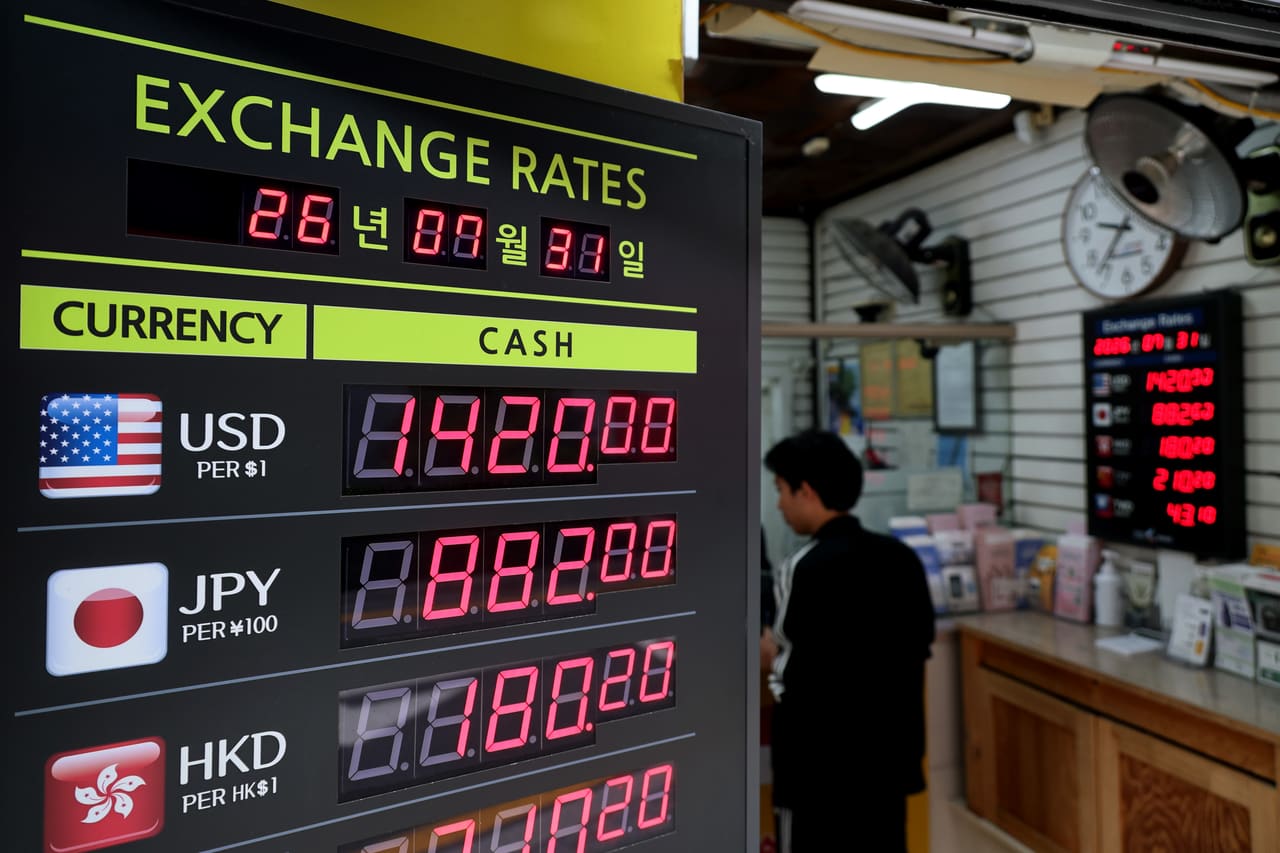
- ·The Korean won appreciated 125.4 won against the dollar in July, closing at 1,424 and marking the largest monthly gain since March 2009.
- ·SK hynix's American depositary receipt offering on the Nasdaq drove sustained dollar inflows as custodian banks converted currency to purchase underlying Korean shares.
- ·The rapid currency appreciation raises competitiveness concerns for exporters while lowering import costs and potentially giving the Bank of Korea room to pause rate moves.
Strongest Rally Since Financial Crisis
South Korea's won closed July with its sharpest monthly appreciation in over seventeen years, powered by a wave of dollar liquidity entering the country's foreign exchange market. The currency stood at 1,424 per US dollar on Friday afternoon, reflecting a 125.4 won gain from the end of June. That 8.8 percent monthly advance represents the strongest performance since March 2009, when the won climbed 150.5 won amid the tail end of the global financial crisis.
The catalyst this time is different. Instead of macro policy shifts or coordinated central bank interventions, the rally traces directly to corporate capital markets activity. SK hynix launched an American depositary receipt program on the Nasdaq, and the mechanics of that listing created sustained demand for won as international investors converted dollars to acquire the underlying Korean shares.
How ADR Mechanics Drive Currency Flows
American depositary receipts allow foreign companies to list on US exchanges without relocating their primary operations or redomiciling. When investors buy ADRs, custodian banks must purchase the corresponding local shares in the home market, then hold them in trust. For SK hynix, that means every ADR transaction on the Nasdaq triggers a purchase of ordinary shares on the Korea Exchange, paid for in won.
The size of SK hynix amplifies the effect. As the world's second-largest memory chip manufacturer by revenue and a dominant player in high-bandwidth memory used in artificial intelligence accelerators, the company commands significant investor interest. When that interest channels through an ADR structure, the result is a steady stream of dollar-to-won conversions that tightens local currency supply and pushes the exchange rate higher.
Foreign exchange data confirms the inflow pattern persisted through July. While the Bank of Korea has not disclosed intervention activity during the month, the won's steady climb suggests organic market demand rather than episodic central bank purchases. The trajectory also stands in contrast to regional peers: the Japanese yen and Chinese yuan both traded in narrow ranges over the same period, underscoring that Korea's currency strength is idiosyncratic rather than part of a broader Asian FX trend.
Implications for Export Competitiveness
A stronger won cuts both ways for South Korea's export-driven economy. On one hand, it reduces the cost of imported energy and raw materials, a meaningful benefit for manufacturers that rely on seaborne oil, liquefied natural gas, and industrial metals priced in dollars. Lower input costs can support margin expansion, particularly for sectors like petrochemicals and steel that operate on thin spreads.
On the other hand, won appreciation erodes the price competitiveness of Korean goods in overseas markets. Automakers, shipbuilders, and consumer electronics producers all face tighter competition from Japanese and Chinese rivals when the won strengthens. A 125-won move in a single month is large enough to affect contract pricing and quarterly earnings guidance, especially for companies with multi-year order books denominated in dollars or euros.
The semiconductor industry itself presents a mixed picture. SK hynix benefits from dollar-denominated revenue streams, since memory chips are globally priced commodities. A stronger won means those dollar sales convert into more won earnings. But capital expenditure for new fabrication facilities, much of it spent domestically on construction and equipment installation, becomes relatively more expensive when the currency appreciates. The net effect depends on the timing of revenue recognition versus capex outlays.
What Comes Next
Currency strategists will watch whether the ADR-driven inflow proves durable or fades as the initial listing momentum subsides. If SK hynix ADR volumes stabilize at elevated levels, the won could hold recent gains or even extend them. Conversely, any rotation out of technology stocks in US markets would reduce ADR demand and ease pressure on the exchange rate.
The Bank of Korea's policy stance adds another variable. The central bank has signaled concern about inflation persistence, but a rapidly strengthening currency acts as a natural brake on import-driven price pressures. That could give policymakers room to pause rate adjustments, though they must also weigh the impact on export sectors that employ millions of workers.
Market participants are also eyeing potential follow-on ADR listings. If other large Korean conglomerates pursue similar Nasdaq or NYSE programs to tap US capital markets, the won could see sustained structural support. For now, the July move stands as the most dramatic monthly shift in nearly two decades, a reminder that corporate finance decisions can rival monetary policy in shaping currency outcomes.
RELATED STORIES

Samsung Electronics Drops 8% as Market Questions Buyback Strategy
Cheng Wei-Lun · 2 min
Samsung Biologics Plans $2.2 Billion Rights Offering to Fund Peptide Acquisition
Jun-ho Seo · 3 min
South Korea Extends Trading Hours to Attract Foreign Capital
Anand Sundaram · 2 min

MBK Partners Chair Questioned Over Homeplus Debt Issuance Ahead of Collapse
Anand Sundaram · 3 min
Spot something wrong? Email editor@briefasia.com. We log every correction publicly.