Finance · Markets
Korean Stocks Drop 5.7% as Middle East Tensions Trigger Circuit Breaker
Seoul's benchmark index erased three days of gains in a sharp Friday sell-off that briefly halted program trading
KEY TAKEAWAYS
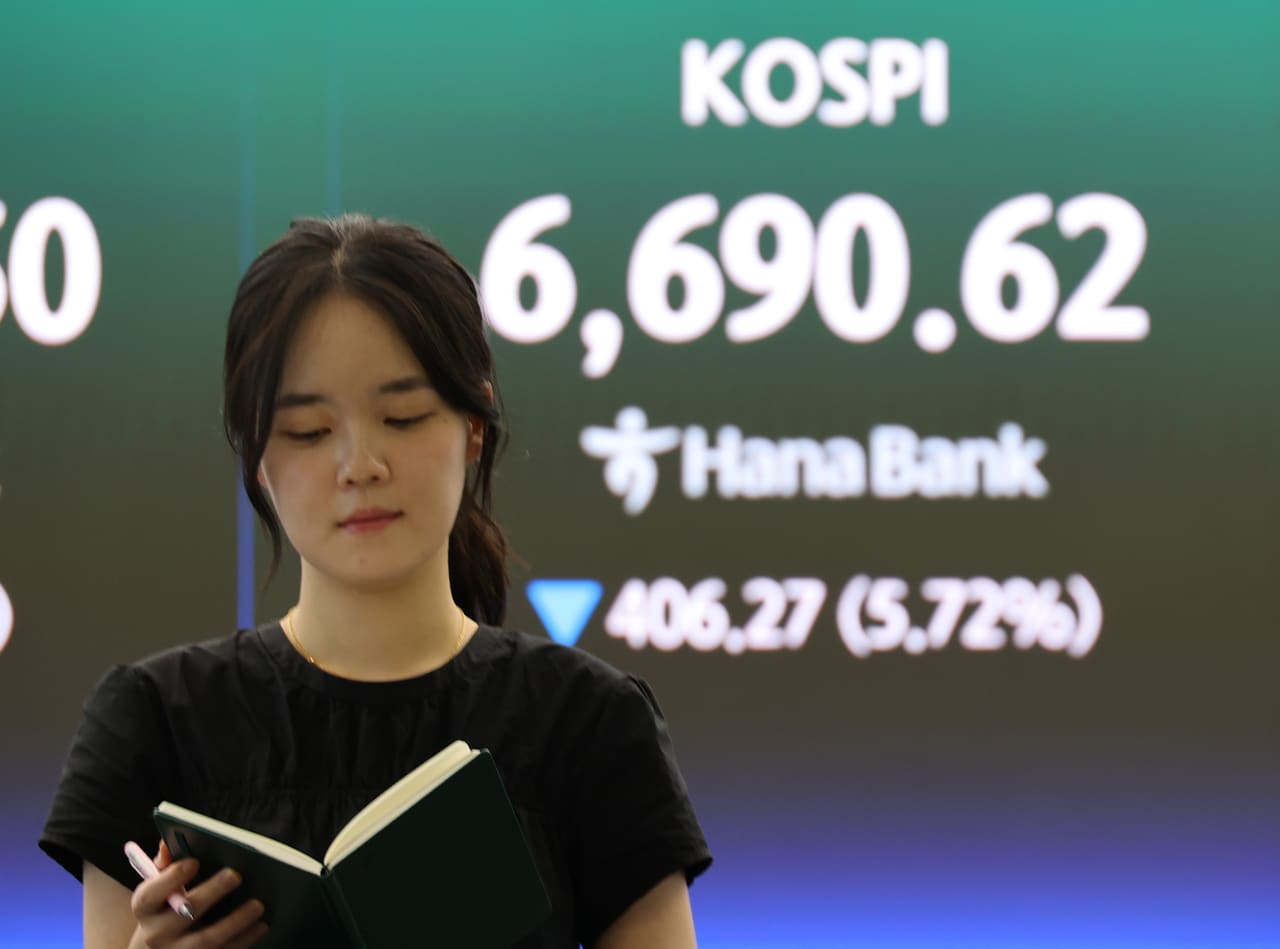
- ·Seoul's Korea Composite Stock Price Index fell 406.27 points to close at 6,690.62, a 5.72 percent decline that erased three days of gains.
- ·The sell-off triggered an automatic circuit breaker, suspending program trading for five minutes as investors fled risk assets amid Middle East tensions.
- ·South Korea's heavy reliance on imported energy makes its equity market particularly vulnerable to geopolitical disruptions in oil-producing regions.
Sharp Reversal in Seoul Trading
Seoul's equity market suffered its steepest single-day decline in months on Friday, with the Korea Composite Stock Price Index shedding 406.27 points to close at 6,690.62. The 5.72 percent drop wiped out gains accumulated over the previous three sessions and briefly sent the index below the 6,650 level during intraday trading.
The severity of the sell-off triggered an automatic circuit breaker mechanism early in the session, with the Korea Exchange suspending program trading for five minutes as a precautionary measure. Trading volume reached 395.1 million shares as investors rushed to reduce exposure to riskier assets.
Regional Spillover from Geopolitical Stress
The sell-off reflected broader anxiety across Asian markets as military tensions in the Middle East intensified. Investors moved away from equities toward safer assets, a pattern that has historically accompanied periods of heightened geopolitical uncertainty in energy-producing regions.
Korean equities are particularly sensitive to Middle East developments given the country's heavy reliance on imported crude oil and liquefied natural gas. Any disruption to energy supply routes through the region carries implications for manufacturing costs and inflation trajectories in export-dependent economies like South Korea.
The won strengthened against the dollar during the session, a counterintuitive move that suggests capital flows were driven more by technical positioning and safe-haven demand for Korean sovereign debt than by equity market fundamentals.
Broader Market Context
Friday's plunge stands in stark contrast to the steady gains Seoul stocks had posted earlier in the week. The three-day rally that preceded the decline had been supported by optimism around corporate earnings and expectations of stable monetary policy from the Bank of Korea.
The circuit breaker activation underscores the speed at which sentiment can shift in Korean markets, where foreign institutional investors account for a significant share of daily trading volume. Rapid exits by these players during periods of global risk aversion can amplify volatility.
Market participants will be watching for signs of stabilization in the coming sessions, particularly if geopolitical tensions ease or if domestic institutional investors step in to provide support at current valuation levels. The 6,700 level on the KOSPI has historically served as a technical support zone during periods of market stress.
Energy Import Vulnerability
South Korea imports nearly all of its crude oil and natural gas, making it one of Asia's most exposed economies to Middle East supply disruptions. Any sustained escalation in the region raises the prospect of higher energy costs, which flow through to manufacturers and ultimately weigh on corporate margins.
The country's major conglomerates, from petrochemical producers to automakers, maintain tight inventory management systems that leave little buffer for sudden price spikes. This structural vulnerability explains why Korean equities often react sharply to developments in the Gulf region, even when direct trade exposure is limited.
For now, the focus remains on whether Friday's decline represents a one-off reaction to headline risk or the beginning of a more sustained risk-off period across Asian markets.
RELATED STORIES
Korean Stocks Retreat as Nvidia Earnings Loom
Cheng Wei-Lun · 2 min
Seoul Markets Tumble as Tech Selloff Ripples Across Asia
Cheng Wei-Lun · 3 min
Samsung Biologics Plans $2.2 Billion Rights Offering to Fund Peptide Acquisition
Jun-ho Seo · 3 min
Japan Deploys $96.5 Billion in Currency Intervention to Halt Yen's Slide
Aiko Nakamura · 3 min
Spot something wrong? Email editor@briefasia.com. We log every correction publicly.