Technology · AI
Korean Semiconductor Giants Bring AI Infrastructure Strategy to Elite Tech Summit
Top executives from Samsung Electronics and SK Group head to Sicily gathering as Seoul positions itself across the entire artificial intelligence supply chain
KEY TAKEAWAYS
- ·Samsung Electronics and SK Group leaders attend exclusive Sicily technology conference to position Korea across the AI hardware stack from memory to packaging.
- ·Korea generated roughly 130 billion dollars in semiconductor exports in 2025, with AI-related products now the fastest-growing segment amid global competition.
- ·Executives must navigate tightening export controls and geopolitical tensions while securing long-term supply agreements that justify continued capital investment.
Korean Executives at the Table
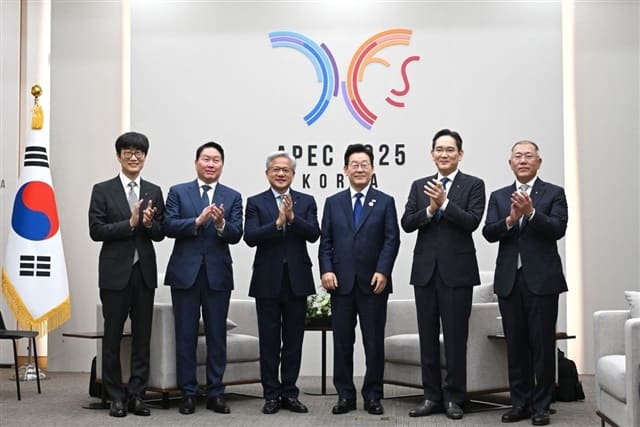
Senior leadership from Samsung Electronics and SK Group are expected to attend an exclusive technology conference in Sicily, placing Korea's semiconductor ambitions directly in front of global tech decision-makers. The gathering represents a strategic opportunity for Seoul's industrial champions to articulate their value proposition as artificial intelligence infrastructure becomes the defining investment theme of the decade.
Both conglomerates have spent the past eighteen months recalibrating operations to capture larger shares of the AI buildout. Samsung has retooled advanced packaging lines and accelerated high-bandwidth memory production. SK Group, through SK hynix, has dominated supply of HBM3E modules to Nvidia and other hyperscale customers. The Sicily event offers a rare forum to pitch integrated solutions rather than individual components.
Korea's semiconductor sector generated approximately 130 billion dollars in exports during 2025, with memory and logic chips accounting for the majority. AI-related products now represent the fastest-growing segment, and executives understand that maintaining relevance requires demonstrating capability beyond commodity DRAM and NAND. Advanced packaging, chiplet integration, and co-design partnerships have become central to the sales narrative.
Infrastructure Stack Integration
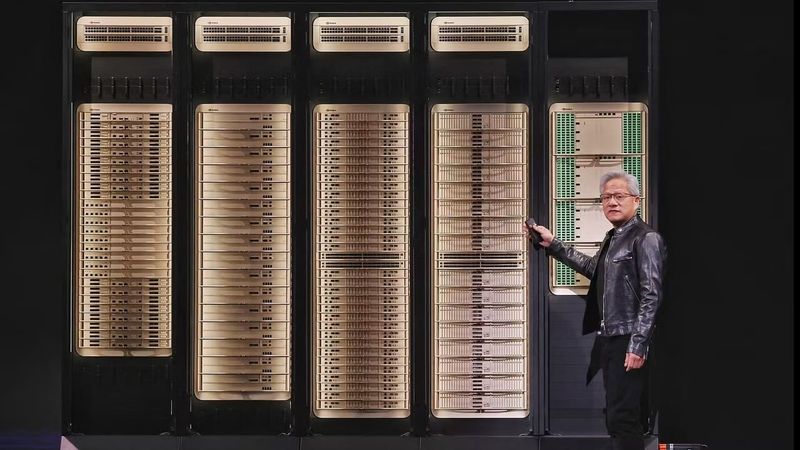
The pitch Korean firms bring to Sicily extends beyond traditional silicon manufacturing. Samsung has invested heavily in 2.5D and 3D packaging technologies that enable tighter integration of compute, memory, and networking elements. These capabilities matter as AI accelerators grow more complex and power-constrained. Hyperscalers want partners who can deliver complete subsystems, not just individual dies.
SK hynix has moved aggressively into processing-in-memory architectures and custom memory solutions tailored to specific AI workloads. The company announced a 15-billion-dollar facility expansion in South Korea earlier this year, focused on next-generation HBM and compute-express-link integration. That scale of commitment signals confidence that memory will remain a bottleneck and a profit pool as model sizes continue to expand.
Both companies face intensifying competition from domestic Chinese manufacturers and renewed investment by Western governments in onshore capacity. The Chips Act in the United States and similar programs in Europe have shifted the competitive landscape. Korean executives must convince partners that their combination of technical maturity, manufacturing scale, and geographic proximity to Asian data-center hubs offers advantages that subsidized greenfield fabs cannot replicate quickly.
Regional Context and Geopolitical Weight
Korea occupies a critical node in the AI supply chain precisely because it straddles geopolitical fault lines. Samsung and SK hynix maintain deep commercial relationships with Chinese customers while serving as primary suppliers to American tech giants. That position has grown more precarious as export controls tighten and technology transfer restrictions multiply.
The Sicily meeting occurs against a backdrop of evolving trade policy. Washington has pressed Seoul to limit shipments of advanced memory and chip-making equipment to China, while Beijing has hinted at retaliation against Korean brands in consumer markets. Executives attending the conference must navigate these tensions while securing long-term offtake agreements that justify continued capital expenditure.
Japan and Taiwan remain formidable competitors. TSMC dominates leading-edge logic production, and Tokyo has revitalized its semiconductor industrial policy with support for Rapidus and expanded partnerships with IBM and European research institutes. Korea's advantage lies in memory and packaging, but those niches require continuous innovation to defend. The conversations in Sicily will likely touch on collaboration models, joint ventures, and co-location of production near hyperscale campuses.
What the Pitch Entails
Korean firms are expected to emphasize three themes during the Sicily gathering. First, vertical integration: the ability to design, manufacture, and package complete modules under one corporate umbrella. Second, supply resilience: diversified production footprints across Korea, the United States, and Southeast Asia that reduce concentration risk. Third, roadmap alignment: willingness to co-develop custom solutions and share intellectual property in exchange for volume commitments.
Samsung has publicly discussed ambitions to challenge TSMC in foundry services, and the company views AI accelerators as a wedge opportunity. Winning design wins from hyperscalers or large enterprises would validate the foundry strategy and provide cash flow to fund further process node transitions. SK Group, meanwhile, seeks to deepen integration with cloud providers through joint engineering teams and shared development roadmaps.
The stakes extend beyond individual contracts. Korea's economic model depends on semiconductor exports, and the transition from consumer electronics to enterprise infrastructure represents an existential shift. If Samsung and SK can secure anchor customers in the AI buildout, they lock in demand visibility for the next decade. If they fall behind, capital intensity and commoditization pressures could erode returns and force consolidation.
Market Implications and Investor Attention
Investors are watching Korean semiconductor stocks closely for signals of order momentum. Memory prices have stabilized after a brutal downturn in 2023 and early 2024, but sustained recovery depends on AI demand offsetting weakness in PC and smartphone markets. High-bandwidth memory commands premium pricing, but the customer base remains concentrated among a handful of hyperscalers with significant bargaining power.
Samsung's foundry division has yet to achieve consistent profitability, and the company faces skepticism about its ability to close the process technology gap with TSMC. Demonstrating traction with AI customers would help rebuild credibility and justify the tens of billions allocated to foundry expansion. SK hynix, by contrast, enjoys strong earnings momentum but must prove it can maintain leadership as competitors ramp competing HBM products.
The Sicily conference itself is informal, but the relationships forged and commitments discussed often translate into formal agreements within months. Korean executives understand that presence at such gatherings signals tier-one status and opens doors to follow-on discussions with procurement teams and engineering leadership. In an industry where trust and execution history matter as much as technical specifications, face time with decision-makers carries strategic value.
Watching the Follow-Through
The real test will come in the quarters ahead, as supply agreements mature and production ramps either validate or undermine the promises made in Sicily. Korean firms have a track record of delivering at scale, but the AI infrastructure market moves faster and demands more customization than traditional memory and logic businesses. Execution risk is high, and competitors are not standing still.
For now, the presence of Samsung and SK leadership at the Sicily event underscores Korea's determination to remain central to the AI supply chain. Whether that translates into durable competitive advantage depends on technology roadmaps, capital discipline, and the willingness of hyperscale customers to diversify their supplier base. The conversations starting this week in Sicily will shape those outcomes.
RELATED STORIES

South Korea Records Highest September Export Start on Semiconductor Demand
Tran Quoc Bao · 3 min
Memory Makers Gain Leverage as AI Server Costs Climb
Cheng Wei-Lun · 3 min
Samsung and SK Hynix Turn Down KEPCO's Multibillion-Dollar Prepayment Demand
Cheng Wei-Lun · 4 min
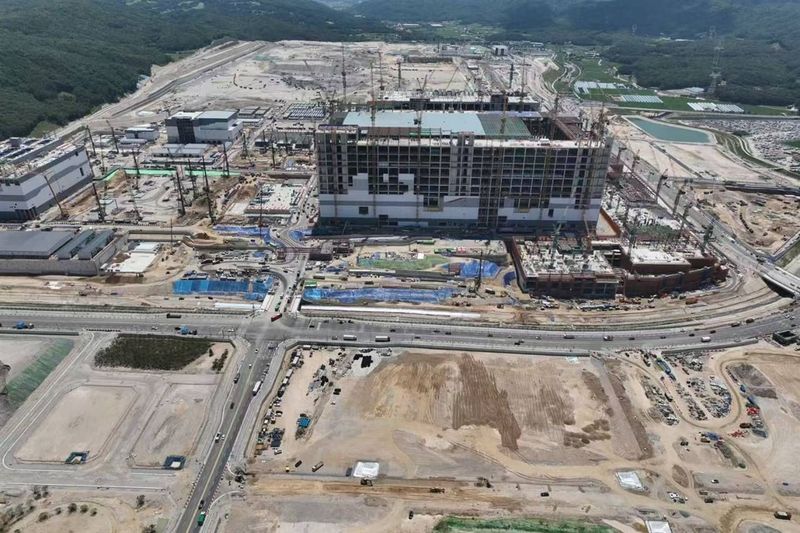
SK Hynix May Fast-Track Gwangju Fab Investment Alongside Yongin Expansion
Jun-ho Seo · 3 min
Spot something wrong? Email editor@briefasia.com. We log every correction publicly.