Lifestyle · Luxury
Korean Beauty Retail Fractures Beyond the Olive Young Template
New entrants from pharmacy aisles to warehouse clubs are rewriting the playbook for how K-beauty products reach consumers across Asia's fourth-largest economy.
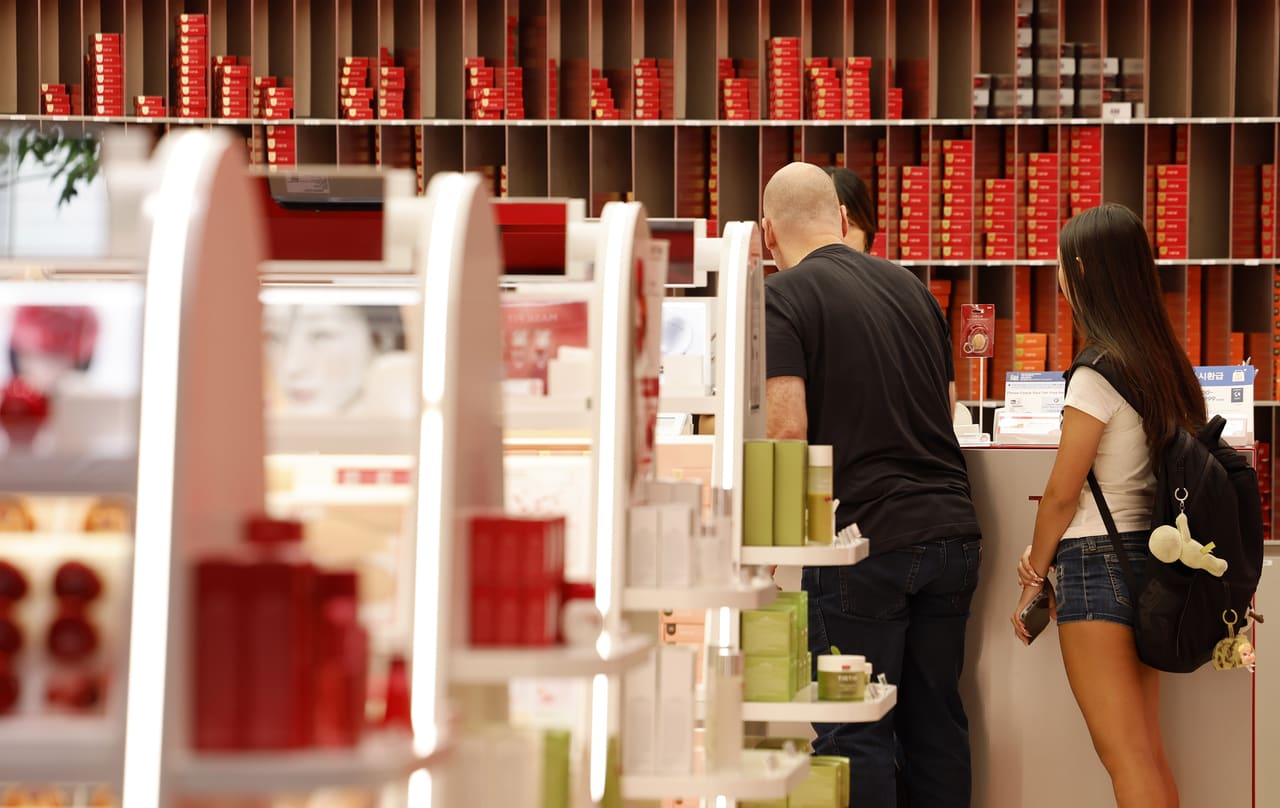
KEY TAKEAWAYS
- ·Olive Young operates 1,367 stores in South Korea, but conglomerates Shinsegae, Lotte, and Musinsa have launched competing multi-brand beauty retail concepts over the past three years.
- ·Neighborhood pharmacies now dedicate up to twenty percent of transaction volume to skincare after regulatory changes permitted over-the-counter cosmetics sales between 2023 and 2025.
- ·Warehouse clubs like Costco Korea and Emart Traders sell multi-packs of K-beauty products at discounts fifteen to twenty-five percent below specialty store prices, targeting budget-conscious households.
The Incumbent's Scale
Olive Young operates 1,367 outlets across South Korea, a density that makes it the default destination for sheet masks, cushion compacts, and serums. The chain's reach has long defined the K-beauty shopping experience, anchoring foot traffic in subway corridors and shopping districts from Seoul to Busan. Yet store count alone no longer guarantees command of the market.
Conglomerates Enter the Frame
Shinsegae, Lotte, and Musinsa have each launched multi-brand beauty retail concepts over the past thirty-six months. Shinsegae's format emphasizes curation, narrowing SKU counts to spotlight emerging indie labels alongside established names. Lotte's approach integrates duty-free pricing structures into domestic stores, blurring the line between airport retail and neighborhood shopping. Musinsa, better known for streetwear, has extended its merchandising logic to cosmetics, grouping products by lifestyle cohort rather than category.
Each conglomerate brings capital, real estate portfolios, and loyalty program infrastructure. The result is a three-way contest that replicates some of Olive Young's core functions while testing variations in assortment depth, store size, and checkout technology.
The Pharmacy Pivot
A separate front has opened in neighborhood pharmacies. Chains that once stocked analgesics and vitamins now dedicate linear footage to cleansers, toners, and sunscreens. The shift reflects regulatory loosening that permits over-the-counter cosmetics sales in licensed pharmacies, a change that took effect in stages between 2023 and 2025.
Pharmacists report that skincare now accounts for up to twenty percent of transaction volume in urban locations. The appeal rests on proximity and trust: customers picking up prescriptions add a serum or moisturizer without a second trip. For brands, pharmacy placement offers an entry point to older demographics less inclined to browse dedicated beauty stores.
Warehouse Clubs and Bulk Buys
Warehouse retailers have also carved out shelf space. Costco Korea and Emart Traders now stock multi-packs of popular Korean cosmetics brands, selling six-unit bundles of sheet masks or twin-packs of cleansing oils at discounts that undercut specialty stores by fifteen to twenty-five percent.
Volume-based pricing appeals to families and gift-givers, two segments that beauty specialty stores historically underserved. The format sacrifices discovery and tester access in favor of efficiency: shoppers know the brand they want, purchase in quantity, and move on.
What Drives the Fragmentation
Three forces underpin the retail diversification. First, K-beauty's domestic market has matured. Growth in unit sales has slowed to low single digits annually, pushing retailers to compete on format rather than category expansion alone.
Second, consumer behavior has splintered. Younger shoppers still browse curated stores for newness, but time-pressed professionals favor pharmacies, and budget-conscious households default to warehouse clubs. No single format captures all purchase occasions.
Third, real estate costs in prime districts have climbed, making smaller, specialized footprints more economically viable than sprawling flagship stores. A pharmacy can monetize beauty sales within existing square footage, while a warehouse club leverages bulk buying power to offset lower per-unit margins.
Olive Young's Response
The incumbent has not stood still. Olive Young has accelerated private-label development, introduced subscription boxes, and piloted express pickup lockers in subway stations. The chain also expanded its online marketplace, positioning itself as a platform rather than a pure retailer.
Yet the fundamental challenge persists: maintaining share in a market where customers now have eight or ten viable touchpoints for the same product. Loyalty becomes harder to secure when convenience, price, and trust are distributed across competing formats.
Regional Implications
The fragmentation in South Korea offers a preview for other Asian markets where K-beauty has gained traction. In Thailand, Vietnam, and Indonesia, multi-brand beauty retail remains concentrated in a handful of chains. If those markets follow Korea's trajectory, expect pharmacy networks and warehouse clubs to claim incremental share, pressuring the specialty store model that currently dominates.
For brands, the shift demands more complex distribution strategies. A label that once needed relationships with two or three major retailers now negotiates with a dozen channel types, each requiring different pricing, packaging, and promotional support.
What Comes Next
The immediate outlook points to continued format experimentation. Convenience store chains have begun testing beauty capsules, dedicating a few linear meters to trial-size products aimed at impulse buyers. Duty-free operators are exploring downtown pop-ups that mimic airport pricing without the boarding pass requirement.
Whether any challenger dislodges Olive Young's leading position remains uncertain. Scale, data, and brand recognition still matter. But the days when a single format could define K-beauty retail have ended. The market now belongs to whoever can meet customers where they are, whether that's a pharmacy counter, a warehouse aisle, or a subway locker.
RELATED STORIES
Olive Young's $2 Tote Becomes Korea's Newest Tourist Staple
Jun-ho Seo · 4 min

South Korea's OCI Taps AI and Space Markets as Non-China Polysilicon Alternative
Cheng Wei-Lun · 3 min

South Korea Records Biggest Tourism Surplus in Nearly Two Decades
Cheng Wei-Lun · 3 min
KAIST's New President Plans to Embed AI Across All Disciplines
Cheng Wei-Lun · 3 min
Spot something wrong? Email editor@briefasia.com. We log every correction publicly.