Technology · AI
KAIST's New President Plans to Embed AI Across All Disciplines
Bae Choong-sik takes helm of South Korea's premier research university with a mandate to transform classrooms, labs, and curricula into an AI-native ecosystem.
KEY TAKEAWAYS
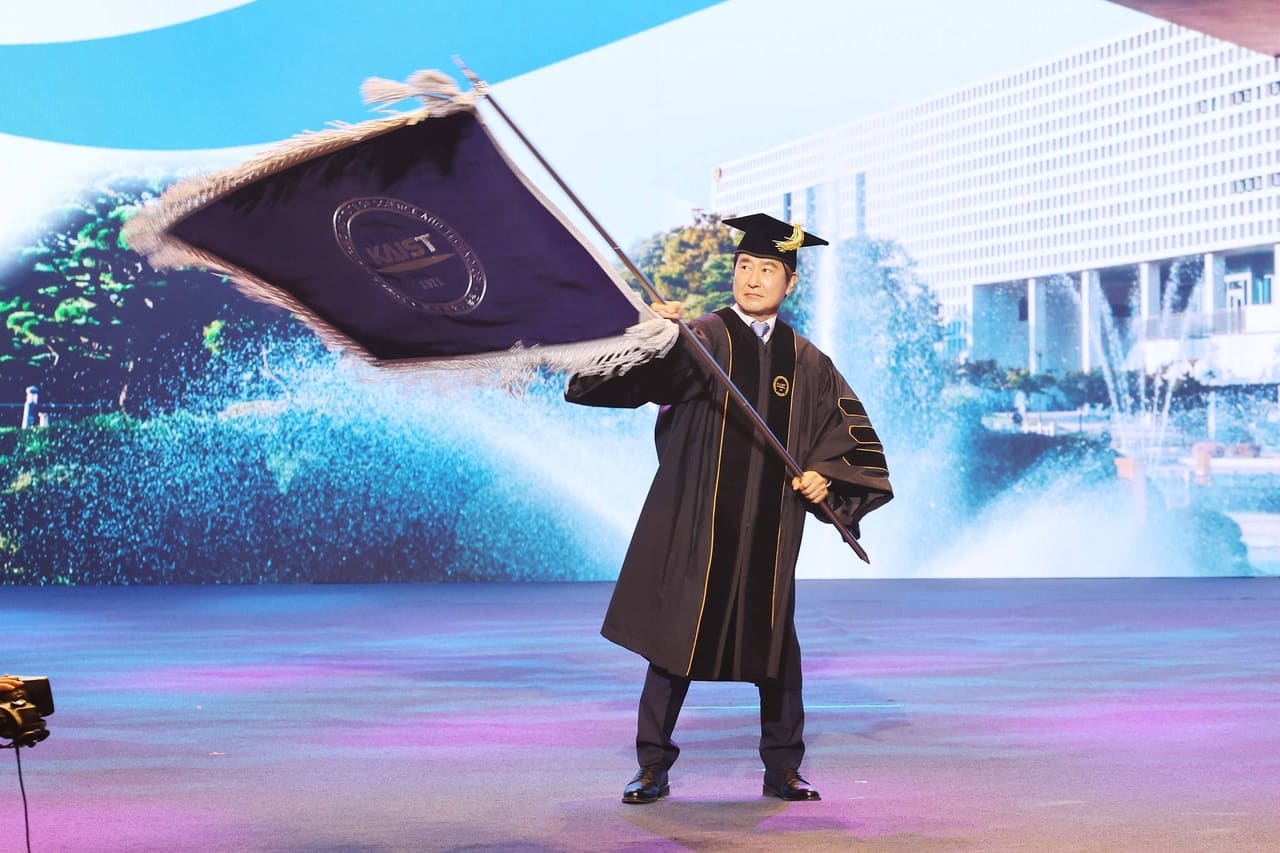
- ·Bae Choong-sik became KAIST's 18th president on Monday with plans to make AI a universal skill set rather than a specialized department.
- ·The strategy includes AI-powered classrooms, autonomous laboratories, and dedicated funding for physical AI and robotics research.
- ·KAIST's move mirrors initiatives at University of Tokyo and National Cheng Kung University as Asian institutions compete to retain AI talent against U.S. and Chinese recruitment.
A Leadership Transition in Daejeon
Bae Choong-sik officially assumed the presidency of the Korea Advanced Institute of Science and Technology on Monday, marking the start of the institution's 18th leadership chapter. His appointment comes at a moment when universities across Asia are racing to retool their infrastructures and pedagogies for machine learning and generative models.
KAIST, based in Daejeon and long regarded as South Korea's flagship research university, now has a president who views AI not as a siloed discipline but as a foundational skill set that should permeate engineering, life sciences, materials research, and beyond.
AI as Common Language, Not Specialty Track
Bae's central thesis departs from the conventional model in which artificial intelligence lives inside a single department or graduate program. Instead, he envisions AI literacy becoming as universal as mathematics or written communication. Under this framework, undergraduate students in chemistry would use machine-learning models to predict molecular behavior; mechanical engineering labs would deploy autonomous robotic systems; and business-school case studies would incorporate algorithmic decision-making as a matter of course.
The shift reflects a broader recognition in the region that competitive advantage in technology no longer belongs to institutions that teach AI in isolation. Singapore's National University, Tokyo Institute of Technology, and Tsinghua University have all launched interdisciplinary AI initiatives over the past three years, embedding computational tools into legacy curricula. KAIST's new direction places it squarely in that cohort.
Autonomous Labs and Physical AI
Bae has signaled that infrastructure investment will follow the rhetorical pivot. AI-powered classrooms, equipped with real-time analytics on student engagement and adaptive content delivery, are part of the roadmap. So are autonomous laboratories, where robotic systems handle repetitive experimental tasks, freeing researchers to focus on hypothesis formation and result interpretation.
Physical AI, a term encompassing robotics, sensor networks, and embodied intelligence, will receive dedicated research funding. The aim is to move beyond software-only applications and into systems that interact with the physical world: industrial robots that learn from human demonstration, drones that navigate unstructured environments, and medical devices that adjust treatment protocols on the fly.
South Korea's government has made physical AI a policy priority, allocating budget through the Ministry of Science and ICT for projects that bridge digital models and hardware. KAIST's institutional push aligns with that national agenda, positioning the university to capture grant funding and industry partnerships.
Regional Context and Competitive Pressure
The announcement arrives as Seoul contends with a talent drain to the United States and China, both of which have ramped up recruitment of Korean AI researchers. Salaries at U.S. tech firms and Chinese AI labs often exceed what Korean universities can offer, and visa pathways have become more streamlined. KAIST's strategy appears designed to retain domestic talent by offering cutting-edge facilities and a research environment where AI work is integrated into every domain.
Japan's University of Tokyo launched a similar "AI for All" initiative in 2024, requiring every undergraduate to complete a foundational machine-learning course regardless of major. Taiwan's National Cheng Kung University followed with an AI minor accessible to all faculties. Bae's vision for KAIST borrows from that playbook but adds a hardware and robotics dimension that reflects South Korea's manufacturing strengths in semiconductors, displays, and industrial automation.
Implementation Challenges Ahead
Translating vision into operational reality will require faculty retraining, curriculum redesign, and capital expenditure on compute infrastructure and lab equipment. KAIST's existing strengths in electrical engineering and computer science provide a foundation, but extending AI literacy to humanities and social-science programs will test institutional flexibility.
Funding timelines and partnership agreements with industry players such as Samsung, SK Hynix, and Hyundai Motor will shape the pace of rollout. Whether Bae's tenure delivers an AI-native university or a more incremental upgrade will depend on execution in the quarters ahead, as well as the durability of government support amid shifting budget priorities.
RELATED STORIES
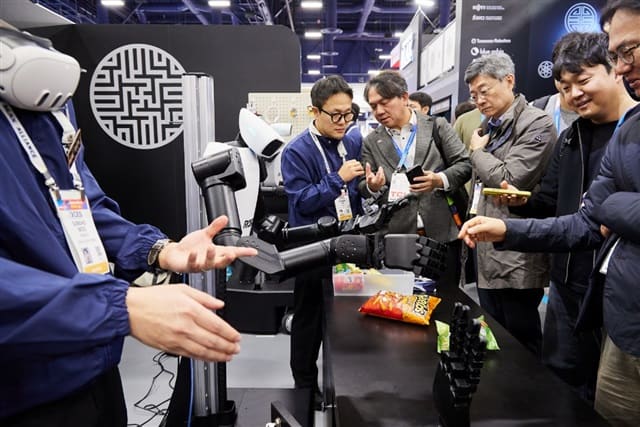
South Korea Mobilizes Conglomerates for Humanoid Robot Push
Cheng Wei-Lun · 3 min
South Korea's OCI Taps AI and Space Markets as Non-China Polysilicon Alternative
Cheng Wei-Lun · 3 min
SK Hynix Eyes Stake Sale in $3 Billion China Packaging Facility
Cheng Wei-Lun · 2 min
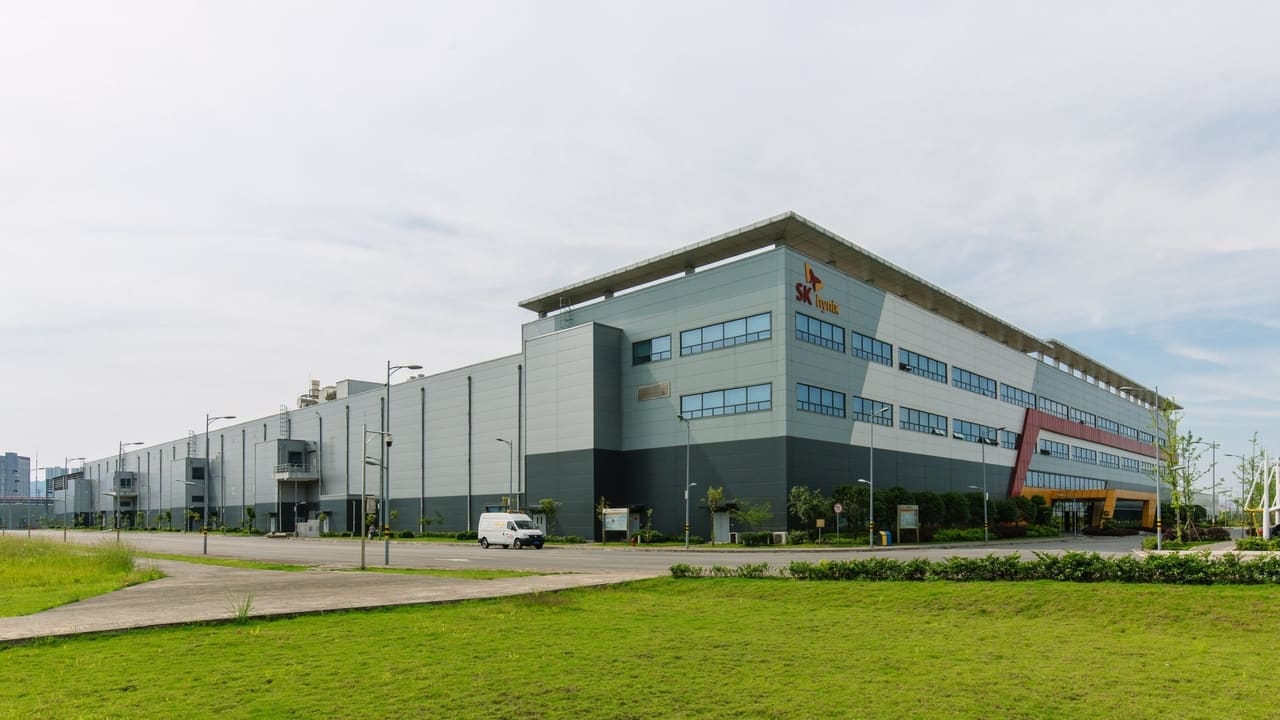
SK Hynix Reviews Future of China Packaging Facility Amid $3 Billion Valuation Talk
Cheng Wei-Lun · 2 min
Spot something wrong? Email editor@briefasia.com. We log every correction publicly.