Finance · Deals
Korea Investment Holdings Secures KDB Life in Push Beyond Brokerage
The conglomerate's near-complete acquisition of the insurer signals a strategic pivot toward diversification in South Korea's competitive financial landscape.
KEY TAKEAWAYS
- ·Korea Investment Holdings has been selected as preferred bidder for a 99.75 percent stake in KDB Life, covering 116.32 million common shares.
- ·The acquisition enables Korea Investment to diversify beyond brokerage operations into life insurance, filling a critical gap in its financial services portfolio.
- ·Regulatory approval from South Korea's Financial Services Commission is required, with integration of KDB Life's underwriting team and distribution network posing execution challenges.
A Strategic Bet on Insurance
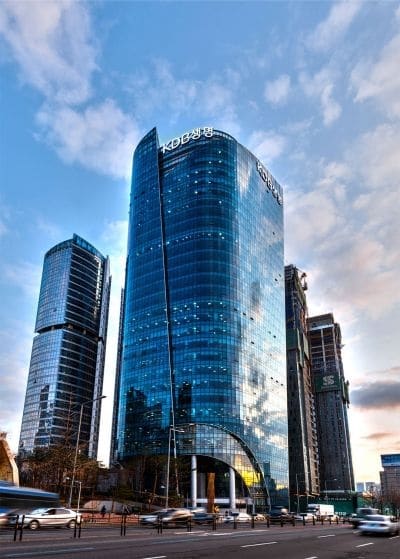
Korea Investment Holdings has locked in a deal that could redefine its position in South Korea's financial sector. The conglomerate disclosed Thursday that Korea Development Bank has selected it as preferred bidder for KDB Life, the policy lender's insurance arm. The transaction covers 116.32 million common shares, representing 99.75 percent of the insurer.
The move represents a calculated departure from Korea Investment's historical reliance on securities trading and brokerage operations. By absorbing a near-complete stake in a life insurance company, the group gains immediate access to premium revenue streams, a customer base accustomed to long-term financial products, and the regulatory licenses that typically take years to secure organically.
KDB Life itself occupies a modest but stable niche within South Korea's crowded insurance market. As a subsidiary of a state-owned development bank, it has operated with a focus on steady underwriting rather than aggressive expansion. That profile makes it an attractive platform for a financial group looking to add insurance capabilities without inheriting legacy risk or cultural friction.
Why Korea Development Bank Is Selling
Korea Development Bank's decision to divest reflects a broader policy directive to streamline state-owned portfolios and redirect capital toward strategic industrial sectors. Over the past two years, the bank has shed non-core assets, including stakes in shipping, construction, and now insurance, as Seoul prioritizes funding for semiconductor fabrication, battery production, and infrastructure.
The sale also aligns with regulatory pressure on policy lenders to reduce overlap with commercial financial institutions. By exiting life insurance, KDB can concentrate its balance sheet on corporate lending and project finance, areas where its policy mandate remains clear.
For Korea Investment, the timing is opportune. South Korean insurers are navigating a period of margin compression driven by sustained low interest rates and aging demographics. Acquiring a stable, if unspectacular, player at what market observers expect to be a reasonable valuation allows the buyer to enter the sector without overpaying for growth projections that may not materialize.
Building a Diversified Financial Conglomerate
The acquisition fits into a multi-year ambition by Korea Investment Holdings to evolve from a brokerage-centric house into a full-spectrum financial services group. Over the past five years, the conglomerate has expanded into asset management, private equity, and wealth advisory, but insurance remained a conspicuous gap.
Life insurance brings two advantages that brokerage operations cannot easily replicate. First, it generates predictable fee income and float, smoothing earnings volatility inherent in capital markets businesses. Second, it offers cross-selling opportunities, particularly in retirement planning and structured savings products, segments where Korea Investment's existing wealth management clients already show demand.
The deal also positions the group to compete more directly with South Korea's established financial conglomerates, several of which have built dominant franchises by bundling banking, securities, and insurance under one roof. While Korea Investment lacks a commercial banking license, the addition of insurance narrows the product gap.
Execution Risk and Regulatory Hurdles
Closing the transaction will require approval from the Financial Services Commission, South Korea's primary financial regulator, as well as clearance from the Fair Trade Commission on competition grounds. Neither is expected to pose a serious obstacle, given KDB Life's limited market share and Korea Investment's absence from insurance until now.
Integration presents a different challenge. Korea Investment will need to retain KDB Life's underwriting talent and distribution network while embedding the insurer into its existing digital infrastructure and client relationship management systems. Cultural alignment between a state-owned insurer and a privately held conglomerate will test management's execution capability.
Pricing details have not been disclosed, but analysts will watch closely for any indication of premium paid over book value. South Korean insurance multiples have compressed over the past 18 months, and any deal struck near or below net asset value would be viewed as a win for the buyer.
What Comes Next
Once the acquisition closes, Korea Investment Holdings will control one of the few pathways into South Korea's insurance sector that does not require building regulatory approval and distribution from scratch. The question is whether it can leverage that foothold to grow market share in a sector where customer acquisition costs are high and switching rates are low.
The company has signaled no immediate plans for further large acquisitions, suggesting it will focus on integrating KDB Life and extracting synergies before pursuing additional deals. But the transaction establishes a template: buy stable, undervalued assets from sellers under policy or regulatory pressure, then use the conglomerate's capital markets expertise to drive incremental growth.
For South Korea's financial sector, the deal underscores a continuing wave of consolidation. As profitability pressures mount and digital challengers erode traditional moats, mid-tier players face a choice between scale and exit. Korea Investment's willingness to deploy capital into insurance suggests it believes scale still matters, even in an era of fintech disruption.
RELATED STORIES
Seoul's KOSPI Extends Rally to Fifth Day on Semiconductor Strength
Cheng Wei-Lun · 2 min
Toss Parent Viva Republica Posts 53% Revenue Growth in First Half
Cheng Wei-Lun · 3 min

South Korea's Import Prices Drop 1% in July on Currency Strength and Lower Oil
Cheng Wei-Lun · 2 min

Korean Stocks Stall After First-Half Surge as Chip Cycle Concerns Mount
Cheng Wei-Lun · 3 min
Spot something wrong? Email editor@briefasia.com. We log every correction publicly.