Finance · Deals
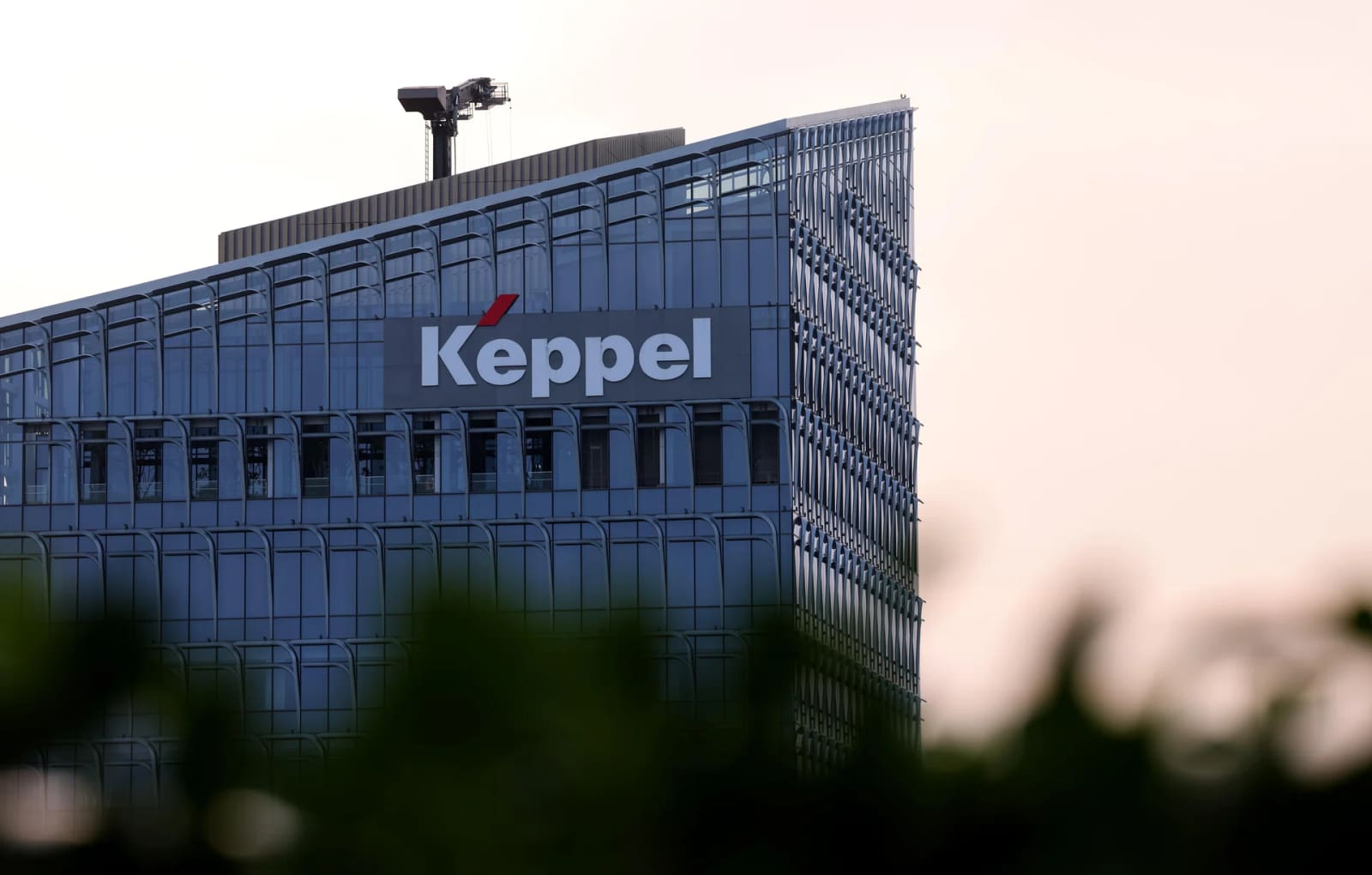
Keppel's Core Business Delivers 25% Profit Jump as Legacy Rigs Drag Headline Results
Singapore asset manager hits S$106 billion funds target six months early, while non-core portfolio posts S$375 million loss on rig impairments
KEY TAKEAWAYS
- ·Keppel's core business generated S$530 million net profit in H1 2026, up 25% year on year, while group profit fell 59% to S$155 million due to S$375 million in non-core losses and S$165 million in legacy rig impairments.
- ·The Singapore asset manager reached S$106 billion in funds under management by July 2026, clearing its interim S$100 billion target six months ahead of schedule and targeting S$200 billion by 2030.
- ·Keppel executed S$1.7 billion in asset monetization year to date and plans to divest six legacy offshore rigs for S$1.2 billion by year-end as part of its S$2 billion to S$3 billion full-year target.
Core Operations Accelerate While Legacy Assets Weigh
Keppel's headline numbers tell one story, but the underlying business tells another. The Singapore-based global asset manager reported a 59% year-on-year drop in group net profit to S$155 million for the first half of 2026, dragged down by a S$375 million loss from its non-core portfolio. That loss stemmed primarily from S$165 million in legacy offshore rig impairments, compounded by interest costs tied to those aging assets.
Strip away the legacy drag, however, and the picture brightens considerably. What Keppel calls its continuing core operations posted net profit of approximately S$530 million in H1, up 25% from S$424 million a year earlier. The divergence underscores the company's ongoing pivot from engineering contractor to global asset manager and operator focused on real estate, infrastructure, and digital assets.
Funding Milestone Reached Six Months Ahead
Keppel cleared a significant operational hurdle in July, pushing its funds under management to S$106 billion and surpassing its interim S$100 billion target originally set for year-end 2026. The group is now targeting S$200 billion in FUM by 2030, a trajectory that equity research houses view as achievable given current momentum.
The asset manager has been executing on its capital-light strategy with discipline. It carried out approximately S$1.7 billion of asset monetization through mid-2026 and remains on track to meet its full-year target of S$2 billion to S$3 billion. A recently announced plan to monetize up to ten legacy offshore rigs for about S$3.7 billion forms a key part of that effort, with six units slated for divestment by year-end for a combined S$1.2 billion.
Shifting Revenue Mix Toward Recurring Streams
Keppel's transformation is visible in its revenue composition. The company is steadily moving away from order book-based project revenue toward fees and returns generated by its portfolio assets, which span real estate, infrastructure, and digital properties. That shift is expected to improve both earnings quality and return on equity, metrics closely watched by institutional investors in the asset management space.
Research analysts noted that core earnings came in broadly in line with expectations, with several pointing to improving fundamentals as the company scales its fund management business. One Singapore-based research house highlighted Keppel's positioning as a proxy for artificial intelligence-driven infrastructure demand, a theme gaining traction among Asian investors as data center and power infrastructure needs expand across the region.
Return on Equity Target in Sight
Keppel is targeting a 15% return on equity, a benchmark that research analysts believe is within reach as FUM growth accelerates and non-core asset recovery or monetization progresses. The company's engineering heritage and track record in capital management provide operational advantages that competitors in the pure-play asset management space lack, particularly in complex infrastructure and industrial projects.
The group declared an interim dividend of S$0.15 per share, unchanged from the prior year. Analysts project a final dividend of S$0.19 per share, with the possibility of a S$0.10 special dividend, which would bring total FY2026 payouts to S$0.44 and imply a yield around 4%. That yield profile, combined with growth in asset management fees, positions Keppel as both an income and growth play for Asia-focused portfolios.
Second-Half Outlook Supported by Power Asset
Analysts expect stronger core earnings in the second half of 2026, projecting approximately S$545 million, up 22% year on year. That forecast is underpinned by a full six-month contribution from the KSC power plant, which began operations partway through H1. The power asset aligns with Keppel's green industrial focus and provides a stable, long-duration revenue stream that complements its real estate and infrastructure holdings.
Keppel shares closed at S$11.26 on August 4, up S$0.05 or 0.4%. The stock has been consolidating as investors weigh the timing of legacy asset exits against the accelerating growth in the core business. With the funding milestone now achieved ahead of schedule and asset monetization proceeding on track, the balance is tilting toward the latter.
The company's ability to scale FUM while maintaining operational control through its developer and operator capabilities differentiates it in the Asian asset management landscape. Few regional players combine deep engineering expertise with global capital-raising reach, particularly in the green industrial and digital infrastructure verticals where demand is intensifying. As legacy liabilities diminish and recurring fee income grows, Keppel's narrative is shifting from turnaround to growth platform.
RELATED STORIES

Addvalue Technologies Lands $5 Million in Space and Radio Contracts
Tran Quoc Bao · 3 min
Singapore Tightens Stablecoin Rules to Separate Regulated Tokens From Crypto Claims
Priyanka V. Rao · 2 min

Shein Drops 4% in Hong Kong Debut as Tariff Pressure Weighs on Valuation
Priyanka V. Rao · 4 min

Indonesian Digital Banks Outpace Regional Peers on Deposits and Loan Growth
Priyanka V. Rao · 3 min
Spot something wrong? Email editor@briefasia.com. We log every correction publicly.