Sustainability · Nature
Japan Bets on Forest Walls to Soften Tsunami Impact
The Chinju no Mori Project has planted 680,000 trees along the Tohoku coast, but most towns still choose concrete seawalls over nature-based defenses.
KEY TAKEAWAYS
- ·The Chinju no Mori Project has planted 680,000 trees along Japan's northeastern coast as natural tsunami barriers using the dense-planting Miyawaki method.
- ·Research covering 130 years of tsunami data shows coastal forests reduce damage from smaller events, while seawalls taller than 5 meters offer stronger protection overall.
- ·Japan has spent $8.2 billion building 432 kilometers of concrete seawalls since 2011, leaving forest-based defenses confined to a few experimental sites.
A Different Kind of Barrier
When Kazuo Monma looked out at the crowd, he saw over 1,000 volunteers who had traveled from across Japan to plant 12,000 trees along Minamisoma's coastal dunes. Some had come from Kanagawa Prefecture, more than 300 kilometers south. The mayor of this Fukushima city had worried that rain forecasts would keep people away from what had become an annual ritual.
Minamisoma is testing whether forests can complement concrete in protecting communities from tsunamis. The Chinju no Mori Project, the foundation behind the planting event, has put 680,000 trees in the ground over 14 years along Japan's northeastern coastline. The approach uses dense, fast-growing forests as natural barriers that work alongside traditional seawalls.
The question facing coastal Japan is whether this nature-based solution can gain traction in a country that has spent $8.2 billion on concrete defenses since the 2011 tsunami that killed more than 19,700 people.
The Miyawaki Method Comes to Disaster Planning
The foundation plants trees following the Miyawaki method, named after Japanese botanist Akira Miyawaki. The technique calls for planting more than 20 varieties of trees and shrubs in tight arrangements that force competition. When plants grow side by side in close quarters, they compete for light and space, driving them to grow taller and faster, according to Makoto Shinkawa, secretary-general of the initiative.
Below the canopy, shrubs and smaller bushes thrive in the shade. The result is a dense forest that grows rapidly compared to conventional planting.
A study published in the Journal of Applied Ecology notes that many claims about the Miyawaki method lack rigorous scientific backing. Yet the broader goal of using coastal forests as tsunami buffers has historical support stretching back over a century.
What 130 Years of Data Reveals
Japan's Tohoku coast has endured at least four major tsunamis over the past 130 years, and detailed records of the destruction exist for each event. Researchers have used this data to compare how different types of defenses performed during tsunamis in 1896, 1933, 1960, and 2011.
Jeremy D. Bricker, who studies coastal disaster resilience at the University of Michigan, co-authored research at Tohoku University examining damage patterns in towns protected by seawalls versus those with coastal forests. The findings show that hard infrastructure generally offers more protection, but coastal forests excel at dissipating energy from smaller tsunami events.
Seawalls taller than 5 meters reduced both death and destruction rates. Smaller seawalls often had the opposite effect, increasing casualties and damage. Coastal forests also lowered death and destruction rates, either by absorbing tsunami force or by discouraging housing construction in high-risk zones.
Shrine Forests as Blueprints
The project draws inspiration from Japan's Shinto shrines, which have long surrounded themselves with protective forest groves. Out of 27 shrines along the Tohoku coast, only two were lost in the 2011 disaster, according to research from the Public Works Research Center. Shrines in the region were often built in locations identified as safe evacuation points during previous tsunamis.
The Amaterasu-Mioya Shrine in Otsuchi, Iwate Prefecture, became the catalyst for the forest barrier initiative. When the 2011 earthquake struck, Toshiaki Fujimoto sprinted up the steps to the shrine, which sits on a 21-meter hill overlooking Kirikiri Beach. The tsunami reached 22 meters above sea level in parts of the town, submerging 52 percent of it and destroying more than 3,000 homes.
The shrine, surrounded by its guardian forest, survived. Fujimoto, now the shrine's chief priest, said the intact structure provided a mental anchor for reconstruction efforts. For many residents, the shrine became a symbol of resilience.
Yet Otsuchi ultimately chose a massive concrete seawall over forest barriers for its long-term tsunami defense.
Concrete Dominates the Coastline
Since 2011, Japan has constructed 432 kilometers of concrete seawalls at more than 620 locations along the coast, according to data from the Ministry of Land, Infrastructure, Transport and Tourism and the Reconstruction Agency. The total investment reached 1.4 trillion yen.
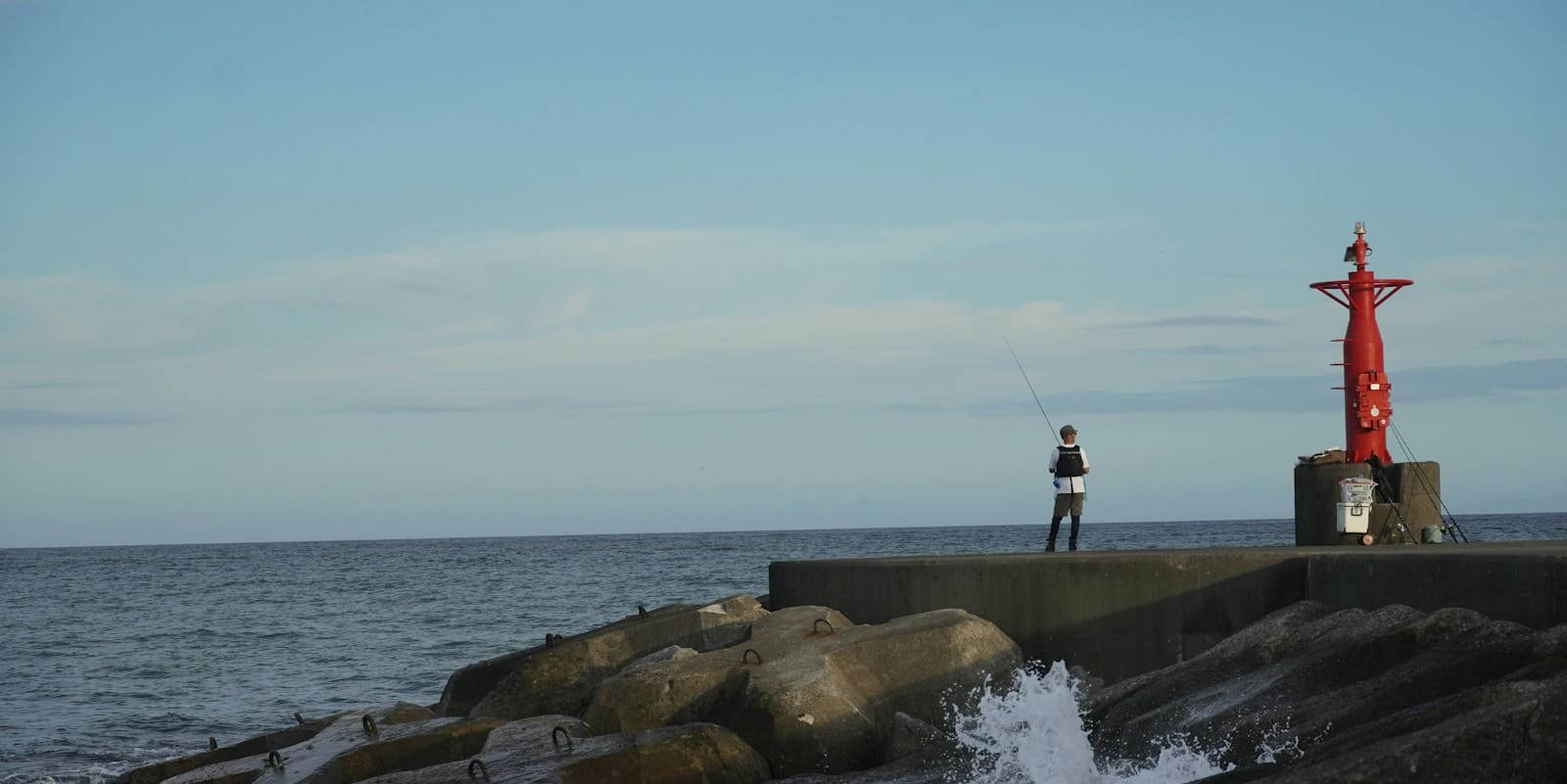
Drive along National Route 45 from Otsuchi south to Sendai and the seawalls define the landscape. Some sit low like stepped pyramids; others rise as flat grey walls so tall they hide the ocean entirely.
Ryuji Kano, owner of Denpachi Sushi in Ishinomaki, Miyagi Prefecture, lost his original restaurant and home to the tsunami. The town's solution involved raising entire districts by 9 meters and building towering seawalls. In Ogatsu district, the town itself was elevated above a large barrier.
Kano said he would have preferred investment in evacuation routes and high-ground shelters instead of the tallest seawalls. He questions whether the walls could protect the town from another 2011-scale tsunami. If one hit, he said, he would simply run.
Why Forests Haven't Spread
Despite annual planting events like the one in Minamisoma, the Chinju no Mori Project has struggled to expand its forest wall vision to other coastal towns. Some municipalities chose concrete outright. Others that favored forests couldn't agree on which species to plant.
The Tohoku region historically featured coastal forests of Japanese black pine, most of which were destroyed by the 2011 tsunami. The Chinju no Mori Project advocates for diverse broadleaf evergreens, shrubs, and bushes rather than pine-dominated forests, noting that the shallow roots of black pines contributed to their widespread destruction.
That disagreement over species selection has left many towns without any forest component in their tsunami defenses. Concrete remains the default, while forests remain an experiment confined to a handful of sites along a coast still haunted by the memory of waves.
RELATED STORIES

Japanese Chipmakers and Infrastructure Giants Lift Earnings Outlook 14 Percent
Cheng Wei-Lun · 4 min

Japan Holds Ground on Yen Support Despite Giving Back Half Its Gains
Cheng Wei-Lun · 4 min
Japan's Capital Repatriation Push Tests Global Portfolio Strategies
Cheng Wei-Lun · 3 min

Japan Bets $2.3 Trillion on AI-Driven Manufacturing Revival
Aiko Nakamura · 3 min
Spot something wrong? Email editor@briefasia.com. We log every correction publicly.