Real Estate · Land
Jakarta's MRT Extension Nears Monas With Underground Station 93 Percent Complete
The 220-meter station beneath the National Monument complex will extend the network 3 kilometers north from Bundaran HI, with two entrances and a 200-meter art corridor set to open by late 2027.
KEY TAKEAWAYS
- ·Jakarta's MRT station beneath the National Monument complex is 93 percent complete and expected to open by late 2027, extending the network 3 kilometers north from Bundaran HI.
- ·The 220-meter underground station sits 15 to 18 meters below a protected heritage site and includes a 200-meter corridor designed for art exhibitions and educational displays.
- ·The extension adds a transit node at a high-traffic civic landmark, part of Jakarta's broader push to build transit-oriented development and continue the line to Kota Tua by 2029.
Station Design Within Heritage Constraints
Jakarta's mass rapid transit system is closing in on one of the capital's most symbolic landmarks. PT MRT Jakarta reports that the underground station beneath the National Monument complex has reached 93 percent construction completion, positioning the network to reach Monas by late 2027.
The station stretches 220 meters and sits 15 to 18 meters below ground within a protected cultural heritage zone. It extends the MRT line roughly 3 kilometers north from the Bundaran HI station at the Hotel Indonesia traffic circle, threading beneath Central Jakarta's ceremonial core.
Construction director Weni Maulina described the project as balancing infrastructure needs with preservation mandates. The station incorporates a long corridor intended to house artworks, exhibitions, and educational installations, turning transit space into cultural programming.
Two entrance points have been finished: one positioned near the National Museum and another facing the Arjuna Wijaya statue. Both connect to the platform via a corridor spanning approximately 200 meters, creating a pedestrian link that doubles as gallery space.
Track Installation and Systems Integration
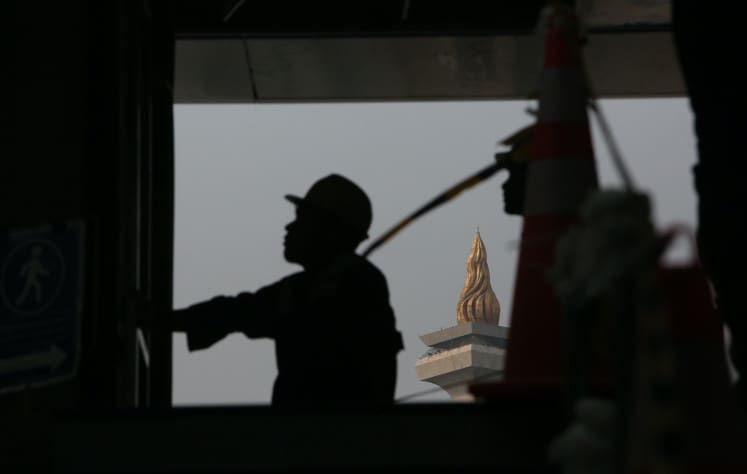
During a site visit this week, workers were laying rail tracks and installing mechanical systems inside the station. The project involves coordinating electrical, ventilation, and signaling infrastructure within the confined underground footprint, while ensuring the surface remains undisturbed.
The Monas complex draws millions of visitors annually and functions as a central gathering point for public events. Integrating a transit station into this setting requires construction methods that minimize surface disruption and align with heritage site regulations.
The station's location places it within walking distance of government ministries, museums, and the historic core of Jakarta. This positions the MRT as a direct link between the southern business districts served by the existing line and the administrative and cultural center of the capital.
Network Expansion and Urban Connectivity
The extension represents the next phase of Jakarta's effort to build out mass transit infrastructure in a city long dominated by private vehicles and informal transport. The initial MRT line, running north-south from Lebak Bulus to Bundaran HI, opened in 2019 and has since carried tens of millions of passengers.
Pushing the line to Monas adds a station at a node that already sees heavy foot traffic but lacks integrated rapid transit access. The move is part of a broader strategy to create transit-oriented development patterns in Jakarta's core, linking residential, commercial, and civic zones.
Further extensions are planned to continue the line north to Kota Tua, the city's old town district, with tunneling work already underway for multi-level sections that will rank among the deepest in Southeast Asia. That segment is scheduled for completion by 2029.
Regional Context and Execution Risk
Jakarta's MRT expansion unfolds against a backdrop of accelerated infrastructure spending across Southeast Asian capitals. Manila, Bangkok, and Ho Chi Minh City are all advancing metro and light rail projects, competing for ridership and investment in cities where congestion remains a persistent drag on productivity.
Indonesia has committed billions of dollars to transport infrastructure, but execution risk remains. Projects in Jakarta have historically faced delays related to land acquisition, permitting, and coordination among multiple government agencies. The Monas station's progress suggests tighter project management, though final delivery timelines will depend on systems testing and regulatory clearances.
The station's art corridor concept also reflects a shift in how transit authorities approach public space. Rather than purely functional platforms, newer stations are being designed as civic amenities, aiming to boost ridership by improving the user experience and embedding cultural value into infrastructure.
Completion of the Monas station will mark a visible milestone for Jakarta's transit ambitions, placing rapid rail service at the symbolic heart of the nation. Whether the timeline holds through final testing and commissioning will determine if the capital can sustain momentum on the broader network buildout.
RELATED STORIES

Indonesia Seeks 100GW Solar Build From China, But Not Chinese Ownership
Priyanka V. Rao · 3 min
Indonesia Commits $28 Billion to Jakarta and Bali Financial Hub Push
Priyanka V. Rao · 4 min
Southeast Asian Factories Adopt Proximity Planning to Retain Workers and Investors
Lim Hui Ying · 3 min

Indonesia Charges Toba Pulp Lestari in $113 Million Tax Fraud Probe
Siti Nuraini · 3 min
Spot something wrong? Email editor@briefasia.com. We log every correction publicly.