Asia · Business
Jakarta's LRT City Project Faces Ministerial Probe After Years of Delays
State-owned developer apologizes as apartment buyers wait until 2038 for completion, prompting accountability push from housing minister
KEY TAKEAWAYS
- ·Indonesia's housing minister is investigating PT Adhi Commuter Properti after buyers at LRT City Bekasi Timur face waits until 2038 and Tebet buyers until 2033 for apartment handover.
- ·The state-owned developer apologized and is drafting a phased completion plan, citing challenges that have severely disrupted construction schedules across multiple sites.
- ·The delays undermine Jakarta's transit-oriented development strategy and raise questions about accountability and project management within Indonesia's state enterprise sector.
Ministerial Action on Transit Development Stall
Indonesia's Housing and Settlements Minister Maruarar Sirait is launching an investigation into PT Adhi Commuter Properti over construction delays at the LRT City project, a transit-oriented development tied to Greater Jakarta's light rapid transit network. The probe follows mounting complaints from apartment buyers, some of whom face waits stretching into the next decade.
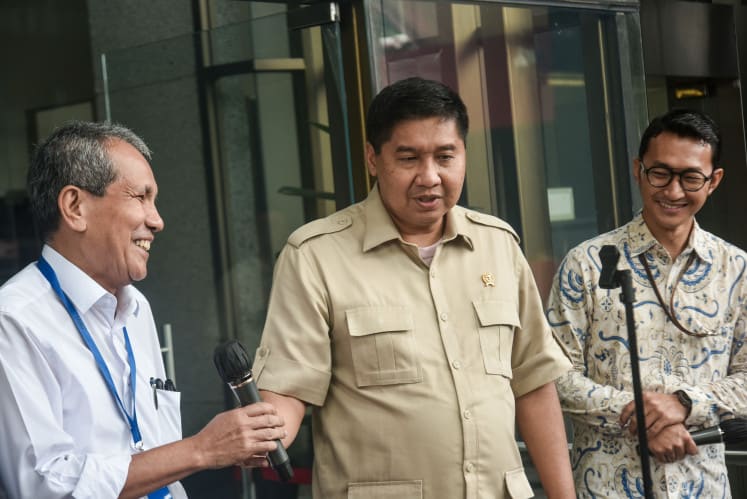
Sirait confirmed the ministry would hold the state-owned developer accountable, though he stopped short of detailing potential sanctions. The minister made the commitment during a briefing in Jakarta on Tuesday, emphasizing the urgency of resolving consumer grievances that have accumulated over years of missed deadlines.
PT Adhi Commuter Properti, a subsidiary of state construction firm PT Adhi Karya, issued a public apology acknowledging the delays. Farid Budiyanto, the company's director of operations, cited challenges that have severely disrupted construction schedules across multiple project sites.
Timeline Slippage at Multiple Sites
Buyers at LRT City Bekasi Timur Green Avenue may not receive their units until 2038, while handover at LRT City Tebet is projected for 2033, according to consumer complaints. The delays affect residential units strategically positioned near stations along Jakarta's expanding rapid transit corridors, a key selling point for buyers banking on connectivity and appreciation.
The LRT City concept was designed to integrate housing with public transport infrastructure, reducing Jakarta's notorious traffic congestion while offering residents immediate access to the capital's transit spine. However, execution has lagged far behind the original vision, leaving buyers in limbo and eroding confidence in state-backed property ventures.
Farid said the company is now drafting a phased completion plan intended to accelerate construction and meet handover commitments, though no specific timelines were disclosed. The developer acknowledged that current conditions have caused inconvenience and raised concerns among consumers who committed capital years ago.
Accountability Pressure on State Firms
The minister's intervention signals growing impatience with underperformance at state-owned enterprises tasked with delivering public infrastructure and related real estate. Indonesia has relied heavily on SOEs to anchor large-scale urban development projects, particularly those blending commercial and public-interest mandates like transit-oriented housing.
Yet chronic delays and cost overruns have plagued numerous SOE-led ventures, from toll roads to power plants. The LRT City setback adds to a lengthening list of projects where execution has failed to match ambition, raising questions about project management, financing structures, and oversight mechanisms within the state enterprise sector.
Consumer complaints have amplified in recent months, with buyers citing lack of transparency around revised timelines and limited recourse for financial losses incurred during the prolonged wait. Many purchased units off-plan, expecting completion within a few years, only to face indefinite delays as construction stalled.
Broader Implications for Transit-Linked Housing
The LRT City delays carry implications beyond individual buyers. Transit-oriented development has been central to Jakarta's strategy for managing urban sprawl and improving livability in a metropolitan area of more than 30 million people. Delays undermine that strategy and risk discouraging private investment in similar projects.
Jakarta's light rapid transit system, which began partial operations in recent years, was intended to catalyze development along its corridors. Mixed-use projects like LRT City were seen as anchors that would drive ridership, justify infrastructure investment, and generate returns for state firms tasked with both construction and property development.
If state-owned developers cannot deliver on these integrated projects, the government may need to reconsider its model for leveraging public transport investment into broader urban renewal. Alternative financing and partnership structures, including greater private-sector involvement with clearer accountability, could emerge as necessary adjustments.
The minister's probe will test whether accountability mechanisms within the SOE sector can produce tangible outcomes for aggrieved consumers and restore credibility to state-backed property ventures. How quickly the investigation proceeds, and whether it results in enforceable remedies, will signal the government's commitment to protecting buyers and maintaining standards in public-private urban development.
RELATED STORIES

Greater Jakarta's Air Quality Crisis Exposes Regional Coordination Gap
Siti Nuraini · 3 min

Indonesia Charges Toba Pulp Lestari in $113 Million Tax Fraud Probe
Siti Nuraini · 3 min

Indonesia Faces Critical Choice Between Resource Control and Industrial Growth
Tran Quoc Bao · 3 min

Indonesia Unveils Bid to Become Global Commodity Price-Setter
Priyanka V. Rao · 3 min
Spot something wrong? Email editor@briefasia.com. We log every correction publicly.