Asia · Trending
Indonesian Consumer Confidence Hits Nine-Month Low as Income Pressures Mount
June's Consumer Confidence Index fell to 117.8, its weakest reading since September 2025, as households reported deteriorating income conditions and growing employment concerns.
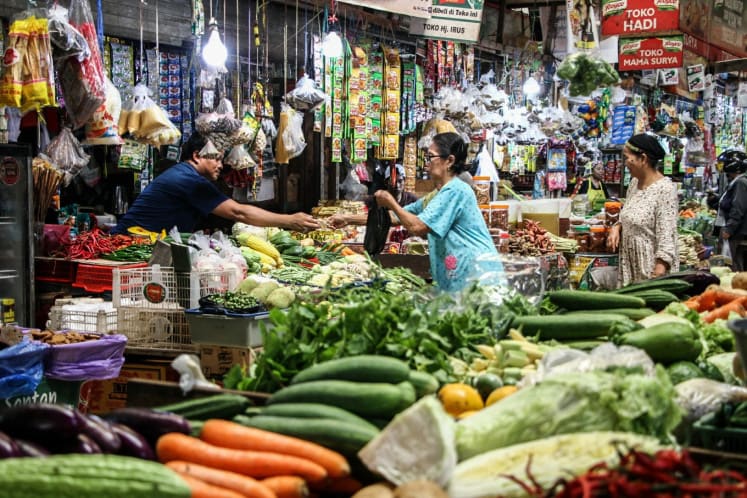
KEY TAKEAWAYS
- ·Indonesia's Consumer Confidence Index dropped 3.1 points to 117.8 in June, the lowest reading since September 2025, driven by weaker income conditions and job availability across all demographic groups.
- ·The Current Income Index fell 3.4 points to 119.8, the steepest decline among components, while the Job Availability Expectations Index dropped 3.7 points to 124.4, signaling growing employment concerns.
- ·Consumers aged 41 and above and those with postgraduate degrees registered job availability scores below 100, indicating widespread pessimism about employment prospects spanning education and age cohorts.
Confidence Erodes Across the Board
Indonesian households are tightening their belts. The Consumer Confidence Index slipped to 117.8 in June from 120.9 in May, marking the weakest sentiment reading since September 2025 when the index registered 115. The 3.1-point decline reflects mounting pressure on both present circumstances and expectations for the months ahead.
The Current Economic Condition Index fell 3.0 points to 109.2, with all three of its underlying measures showing weakness. The Current Income Index landed at 119.8, down 3.4 points in the steepest drop among components. The Job Availability Index reached 101.8, while the Durable Goods Purchase Index settled at 105.9. Households reported that their financial situations had worsened, a signal that economic headwinds are moving beyond corporate balance sheets into kitchen-table conversations.
Future outlook fared no better. The Consumer Expectation Index declined 3.3 points to 126.4. The Income Expectations Index stood at 133.6, the Job Availability Expectations Index at 124.4, and the Business Activity Expectations Index at 121.2. The sharpest deterioration came in employment expectations, which dropped 3.7 points, pointing to anxiety about job security in the coming months.
Spending Power Shapes Sentiment
Higher earners maintained relative optimism. Respondents with monthly expenditures exceeding Rp 5 million recorded the highest Consumer Confidence Index at 121.4 and Current Economic Condition Index at 129.7. Meanwhile, those spending between Rp 3.1 million and Rp 4 million posted the highest Consumer Expectation Index at 108.8. This middle-tier expenditure group was the only cohort to see forward-looking sentiment improve between May and June, suggesting some resilience among households with moderate financial buffers.
Age and Education Divide
Younger consumers between 20 and 30 years old remained the most bullish, recording a Consumer Confidence Index of 124.3 and leading across all current and future measures. Their optimism contrasts sharply with older demographics. For respondents aged 41 and above, both the Job Availability Index and the Durable Goods Purchase Index fell below 100, the threshold separating optimism from pessimism. This cohort sees limited employment opportunities and is postponing purchases of appliances, vehicles, and other big-ticket items.
Education level adds another layer. Consumers with only senior high school education registered a Job Availability Index of 98.3, dipping into pessimistic territory. Their Durable Goods Purchase Index also fell below the optimism line. Paradoxically, those holding postgraduate degrees expressed even darker views on employment, with a Job Availability Index of just 92.7. The data suggests that neither low nor high educational attainment shields Indonesians from labor market concerns; the squeeze is broad-based.
What the Numbers Mean for Southeast Asia's Largest Economy
Indonesia's faltering consumer sentiment arrives as the archipelago grapples with external trade friction and domestic structural constraints. The country's 278 million people represent Southeast Asia's largest consumer base, and household spending accounts for more than half of gross domestic product. When confidence sags, retail sales, property transactions, and discretionary services feel the chill first.
The decline in durable goods purchasing plans is particularly telling. Big-ticket items serve as a barometer for household financial security; families delay replacing cars or refrigerators when income visibility dims. The fact that older and less-educated cohorts are pulling back points to vulnerability among groups with fewer career pivots and less wage growth potential.
Employment anxiety is not confined to blue-collar workers. Postgraduate degree holders registering the lowest job availability score suggests that even skilled professionals perceive tightening opportunities, whether from automation, corporate restructuring, or a slowdown in high-growth sectors such as technology and finance. For policymakers in Jakarta, that spread of concern across income and education brackets complicates the task of targeted fiscal support.
The one bright spot is the resilience of the Rp 3.1 million to Rp 4 million expenditure group, whose forward expectations rose. This segment may be benefiting from targeted subsidies, stable public-sector employment, or regional economic pockets less exposed to external shocks. Still, a single cohort's optimism cannot offset the broader erosion in sentiment.
June's reading adds pressure on the central bank and the finance ministry to calibrate monetary and fiscal levers carefully. With households already feeling the pinch, further policy tightening risks deepening the slowdown. Conversely, inaction could allow inflation to erode purchasing power further, compounding the income squeeze. The challenge for Indonesian authorities is to stabilize confidence without fueling imbalances, a delicate act as the region navigates a turbulent global environment.
RELATED STORIES

Indonesia Charges Toba Pulp Lestari in $113 Million Tax Fraud Probe
Siti Nuraini · 3 min

Indonesia's Instant Noodle Consumption Falls for First Time in Five Years
Priyanka V. Rao · 3 min
Greater Jakarta's Air Quality Crisis Exposes Regional Coordination Gap
Siti Nuraini · 3 min
Indonesia Commits $28 Billion to Jakarta and Bali Financial Hub Push
Priyanka V. Rao · 4 min
Spot something wrong? Email editor@briefasia.com. We log every correction publicly.