Asia · Trending
Indonesia's Unemployment Rate Falls Even as Layoffs Accelerate
Official figures show joblessness declining to 4.65 percent in May, but over 126,000 workers lost formal-sector jobs in the first five months of 2026
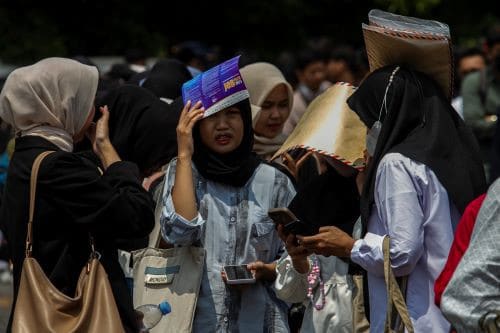
KEY TAKEAWAYS
- ·Indonesia's unemployment rate declined to 4.65 percent in May 2026, down from 4.68 percent in February, with 7.22 million people jobless.
- ·At least 126,000 workers were laid off between January and May, with West Java accounting for over 20 percent of registered dismissals.
- ·The gap suggests displaced formal workers are moving into informal employment, which keeps headline unemployment low but reduces job quality and security.
The Numbers Don't Add Up
Indonesia's labor market is sending mixed signals. Statistics Indonesia recorded 7.22 million unemployed people in May 2026, translating to an open unemployment rate of 4.65 percent. That figure represents a marginal improvement from the 4.68 percent rate recorded in February, with the number of jobless individuals falling by roughly 24,000 over the three-month period.
At the same time, the agency counted 148.19 million employed people in May, up 522,000 from February. The total labor force stood at 155.41 million.
Yet behind these ostensibly positive numbers lies a more troubling reality. The Indonesian Employers Association reported that at least 126,000 workers were dismissed between January and May. Separately, Manpower Ministry data show 43,805 workers were laid off and registered under the Job Loss Insurance program in the first half of the year. West Java accounted for 20.16 percent of those registered layoffs, the largest share of any province.
The Informal Economy Looms Large
The apparent contradiction between falling unemployment and rising layoffs points to a structural feature of Indonesia's economy: the dominance of informal work. Most Indonesian workers operate outside the formal economy, where dismissals typically go unrecorded in official statistics.
When formal-sector jobs disappear, many workers do not remain unemployed long enough to show up in the headline rate. Instead, they move into informal arrangements, from street vending and ride-hailing to contract gigs without benefits or legal protections. These transitions keep the official unemployment figure low while masking a deterioration in job quality.
The gap between employer-reported layoffs and official unemployment data suggests that a significant portion of displaced workers are finding work quickly, but not necessarily the kind of work they lost. Informal employment offers immediate income but lacks the stability, benefits, and legal safeguards that come with formal contracts.
What Drives the Layoffs
Indonesia's labor market pressures stem from multiple sources. Global economic headwinds have reduced export demand, particularly affecting manufacturing hubs in West Java and other industrial provinces. Domestic consumption has remained subdued as inflation erodes household purchasing power, prompting companies to trim payrolls.
Technology-driven automation continues to reshape labor demand across sectors, from textiles to logistics. Firms facing margin pressure have accelerated the adoption of labor-saving technologies, reducing headcount even as output holds steady or grows.
Regulatory uncertainty has also played a role. Changes to labor laws and minimum wage policies in recent years have increased compliance costs for formal employers, incentivizing some to shift operations toward contract labor or informal arrangements that fall outside regulatory scope.
The Quality Question
The disconnect between official unemployment and layoff figures raises fundamental questions about what kind of employment growth Indonesia is achieving. Adding 522,000 jobs in three months looks impressive on paper, but if those jobs are concentrated in low-productivity informal work while higher-quality formal positions are being eliminated, the net effect on household welfare and long-term growth prospects may be negative.
Informal work typically pays less, offers no health insurance or retirement benefits, and provides little protection against arbitrary dismissal. Workers in the informal sector also lack access to training and advancement opportunities that formal employment often provides. A labor market that shifts workers from formal to informal status may report lower unemployment while actually leaving households more vulnerable.
Policymakers face a challenging balancing act. Measures to protect formal-sector jobs, such as stricter dismissal regulations or higher severance requirements, can backfire by making firms reluctant to hire in the first place. Yet a hands-off approach risks accelerating the informalization of work, with long-term consequences for productivity growth and social stability.
What Comes Next
The trajectory of Indonesia's labor market will depend heavily on broader economic conditions. If global demand recovers and domestic consumption rebounds, formal-sector hiring may pick up, reversing some of the recent job losses. But if economic pressures persist, the drift toward informal work is likely to continue.
Government programs like the Job Loss Insurance scheme provide some cushion for displaced workers, but coverage remains limited. Expanding social protection to cover informal workers, who make up the majority of the workforce, would require substantial fiscal resources and administrative capacity that Indonesia is still building.
For now, the official unemployment rate offers an incomplete picture of labor market health. Behind the modest headline improvement lies a more complex reality of job churn, sectoral shifts, and a persistent divide between formal and informal work. The real test for Indonesia's economy will be whether it can generate not just more jobs, but better ones.
RELATED STORIES
Indonesia Names Interim Central Bank Chief as Sole Nominee for Permanent Role
Siti Nuraini · 2 min

Indonesia Freezes Aid to 1.5 Million Families Over Gambling Flags
Siti Nuraini · 3 min

Indonesia's Education Bill Revision Could Reopen Funding Door for Free Meals Program
Siti Nuraini · 3 min

Indonesia Begins Domestic Construction of Scorpene Submarines in Regional First
Siti Nuraini · 3 min
Spot something wrong? Email editor@briefasia.com. We log every correction publicly.