Perspectives · Analysis
Indonesia's Sovereign Fund Gets a Seat at the Financial Stability Table
When Danantara joins the KSSK, does coordination cross into conflict of interest?
KEY TAKEAWAYS
- ·President Prabowo has instructed Indonesia's Financial System Stability Committee to include Danantara, the sovereign wealth fund, in its meetings.
- ·The arrangement creates potential conflict between Danantara's investment mandate and the KSSK's role in assessing systemic risk, including from state entities.
- ·Other jurisdictions like Singapore and Norway keep sovereign fund operations separate from financial stability oversight to preserve regulatory independence.
- ·The move fits a broader pattern of centralized economic coordination under Prabowo, but financial stability depends on institutional distance from political direction.
A New Voice in the Room
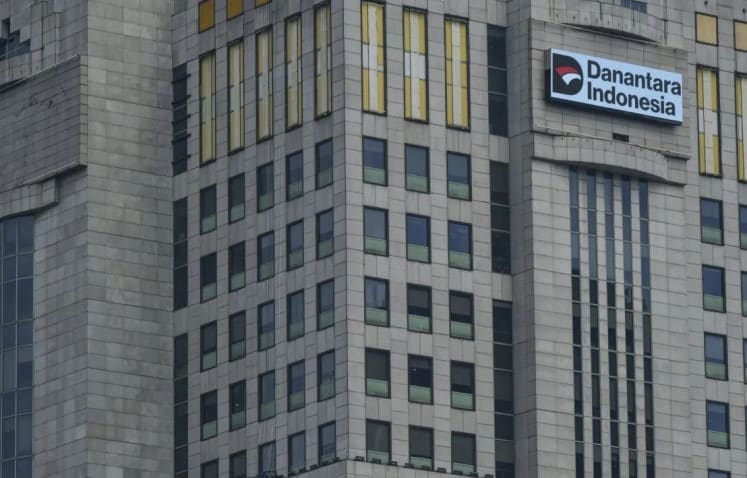
Indonesia's financial architecture just gained a new participant. President Prabowo Subianto has directed the Financial System Stability Committee to include Danantara, the country's sovereign wealth fund, in its meetings. The CEO of Danantara, Rosan Roeslani, has described the arrangement as "KSSK Plus."
On paper, the move looks like sensible coordination. The KSSK brings together Bank Indonesia, the Financial Services Authority, the Indonesia Deposit Insurance Corporation, and the Ministry of Finance to monitor systemic risk and coordinate crisis response. Danantara, as a state investor managing billions in public capital across infrastructure, energy, and strategic industries, certainly touches financial stability. Closer communication could, in theory, help regulators understand where state capital is flowing and what exposures are building.
But the logic breaks down when you consider what the KSSK actually does. This is not a policy brainstorming forum. It is the body responsible for identifying threats to the financial system and, when necessary, orchestrating intervention. Its mandate includes assessing whether individual institutions, including state-owned ones, pose systemic risk. When a sovereign fund sits in those discussions, it is effectively present while its own risk profile may be under review.
The Conflict Beneath Coordination
The problem is structural, not personal. Danantara's participation creates an implicit conflict between its fiduciary duty to maximize returns and the KSSK's duty to contain risk. Sovereign funds operate with longer time horizons and higher risk tolerance than traditional financial institutions. They take equity stakes in illiquid assets, co-invest with foreign partners, and pursue strategic rather than purely commercial objectives. That makes them useful tools of industrial policy, but it also means their balance sheets can carry exposures that regulators would flag in a bank or insurer.
If Danantara is invested in a distressed state enterprise, or co-financing a project with a leveraged developer, does its presence in KSSK meetings shape how those risks are discussed? Does it gain advance insight into regulatory thinking that other market participants do not have? The answers matter, because sovereign funds are not neutral observers. They are active allocators of capital with their own performance pressures and political stakeholders.
Other jurisdictions have wrestled with this boundary. Singapore's Government of Singapore Investment Corporation and Temasek Holdings operate at arm's length from the Monetary Authority of Singapore. Norway's Government Pension Fund Global is managed by Norges Bank Investment Management, but the central bank's financial stability work is kept separate. The principle is clear: investment decisions and systemic risk assessment should not be conflated, even when both are ultimately public functions.
What Oversight Looks Like
There is a defensible case for Danantara to brief the KSSK periodically on its portfolio, much as large banks present their risk exposures to regulators. Transparency about where state capital is deployed helps the committee understand concentrations and interconnections. But briefing is not the same as membership. The former preserves the regulator's independence; the latter dilutes it.
The timing of this move is also notable. Danantara was established in 2024 to consolidate state-owned enterprise management and attract co-investment from sovereign funds and pension systems across Asia and the Middle East. It is still building its portfolio and defining its investment strategy. Embedding it in the KSSK now, while it is still in formation, risks normalizing a governance model that other emerging markets have deliberately avoided.
Indonesia's financial system has matured considerably over the past two decades. Capital markets are deeper, banking supervision is more rigorous, and the KSSK itself was born out of lessons learned during the Asian financial crisis. The committee's credibility rests on its ability to act independently, even when that means raising uncomfortable questions about state entities. Bringing a state investor into the room tests that independence at a time when regional investors are watching Jakarta closely.
The Broader Pattern
This is not an isolated decision. President Prabowo's administration has shown a preference for centralized economic coordination, from consolidating ministries to expanding the role of the cabinet secretariat in infrastructure planning. The KSSK Plus arrangement fits that pattern. But financial stability is not a domain where centralization and speed are unambiguous virtues. Markets price in the quality of institutions, and one of the things they price is the distance between political direction and regulatory judgment.
The risk is not that Danantara will hijack the KSSK's agenda. The risk is more subtle: that the committee's deliberations become less candid, that difficult questions about state exposures are softened, and that over time, the boundary between policy coordination and institutional capture becomes harder to see.
Indonesia does not need to choose between effective coordination and institutional integrity. It can have both. But that requires keeping investment mandates and stability mandates in separate rooms, with clear protocols for information sharing and no overlap in decision rights. Other countries have built those firewalls because they learned, often the hard way, that when investors regulate themselves, systemic risk does not disappear. It just becomes harder to see until it is too late.
RELATED STORIES
Brazil's JBS Commits $2.5 Billion to Indonesia Protein Venture With Danantara
Priyanka V. Rao · 5 min

Indonesia's Education Bill Revision Could Reopen Funding Door for Free Meals Program
Siti Nuraini · 3 min
Indonesia Begins Domestic Construction of Scorpene Submarines in Regional First
Siti Nuraini · 3 min

Indonesia Car Sales Jump 34% as Electric Vehicles Reshape Southeast Asia's Auto Market
Siti Nuraini · 3 min
Spot something wrong? Email editor@briefasia.com. We log every correction publicly.