Technology · AI
Indonesia Eyes Natural Gas and Geothermal to Power AI Data Centers
The country is exploring remote energy sites as foundations for hyperscale computing infrastructure, bypassing grid constraints that threaten Jakarta's expansion plans.
KEY TAKEAWAYS
- ·Indonesia has 580 megawatts of operational AI data center capacity with 1.3 gigawatts under development, while BDx secured 1.2 gigawatts of future electricity commitments in West Java.
- ·Energy analysts warn Java's grid reserve margins could fall below safe levels by 2027 without new generation, prompting exploration of dedicated power from remote gas and geothermal sites.
- ·Indonesia is considering a dual-hub model with urban data centers handling real-time inference and remote facilities co-located with energy sources for AI training and high-performance computing.
The Power Challenge
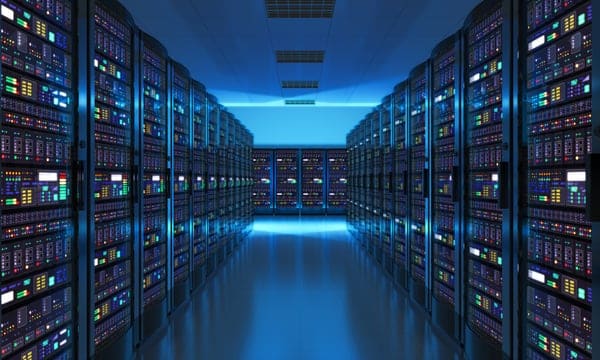
Indonesia's AI ambitions are running into a fundamental constraint: electricity. The country has 580 megawatts of operational AI data center capacity, with another 1.3 gigawatts announced or under construction. BDx, a major domestic developer, has secured commitments for approximately 1.2 gigawatts of future supply in West Java alone, according to company disclosures.
That scale of demand is creating pressure on Java's grid. Energy analysts project reserve margins on the Java-Madura-Bali system could fall below recommended thresholds by 2027 without new generation coming online, raising the prospect of political friction if data centers are perceived as competing with residential and industrial users for scarce capacity.
The bottleneck is driving hyperscale operators to negotiate electricity supply years before breaking ground, seeking dedicated substations, reserved generating capacity, and long-term purchase agreements. For Indonesia, the question is whether it can mobilize enough power to compete with regional rivals or watch investment migrate to markets with more reliable supply.
Gas and Geothermal as Dedicated Sources
Indonesia holds two underutilized assets: substantial natural gas reserves and one of the world's largest geothermal resource bases. Rather than routing all output through the national grid or export terminals, the country is exploring whether these resources can anchor a new model for AI infrastructure.
Several gas developments are entering production or expansion. INPEX's Masela LNG project, Mubadala Energy's Tangkulo field, BP's Tangguh expansion, and ENI's Kutei Basin hubs will collectively add significant volumes to Indonesia's output over the next several years.
Traditionally, remote gas has been liquefied for export or used for fertilizer and petrochemicals. The emerging alternative is to site AI data centers adjacent to LNG facilities, drawing power from dedicated independent generators that bypass the grid entirely. Natural gas provides dispatchable baseload electricity with lower emissions than coal, and co-locating infrastructure with existing industrial sites reduces land acquisition, permitting timelines, and construction costs.
Geothermal presents a parallel opportunity. Indonesia's geothermal reserves often sit far from demand centers, making transmission infrastructure expensive and projects uneconomic. Building data centers at the wellhead eliminates that cost. Geothermal plants deliver continuous power with capacity factors above 85 percent, minimal emissions, and long-term price stability. Unlike gas, which faces competing claims from LNG exports and domestic industry, geothermal has few alternative commercial uses beyond electricity generation.
A Dual Geography
The trade-off is latency. AI inference, the real-time delivery of model outputs to end users, requires proximity to population centers. Jakarta and its surrounding industrial belt will remain the hub for cloud services and consumer-facing applications.
AI model training operates under different constraints. Training large language models demands months of uninterrupted computation across thousands of graphics processing units but tolerates network delays measured in tens of milliseconds. High-performance computing, genomic analysis, and scientific simulation workloads share that tolerance.
Indonesia's strategy contemplates a two-tier infrastructure. Urban data centers would handle inference and latency-sensitive services. Remote facilities, co-located with gas fields or geothermal plants, would specialize in training, research computing, and other energy-intensive batch workloads. The model decouples geography from application, routing workloads based on power availability rather than proximity alone.
Regional Stakes
Indonesia is not moving in isolation. Malaysia is courting hyperscale investment with its own data center incentives, and Singapore continues to attract premium infrastructure despite land scarcity and energy constraints. Indonesia's advantage lies in scale: abundant industrial land, domestic energy resources, and the ability to build captive power systems that few Southeast Asian markets can replicate.
Execution will require more than generation capacity. High-voltage transmission, expanded fiber connectivity, water resources supported by recycling or desalination, and stable regulatory frameworks for long-term private investment are all critical. Indonesia must also balance competing claims on natural gas from exports, domestic power, and traditional industry.
The global contest for AI investment is increasingly a contest for energy and land. Countries that can deliver reliable, large-scale electricity at competitive cost will capture the next wave of hyperscale capital. Indonesia has the raw inputs. Whether it can translate them into operating infrastructure will determine its position in Southeast Asia's AI landscape over the next decade.
RELATED STORIES
Indonesia Takes Control of Whoosh Railway Debt as B2B Model Collapses
Siti Nuraini · 4 min
Indonesia's Mining Sector Contracts for Second Straight Quarter
Siti Nuraini · 3 min
Freeport Suspends Gresik Copper Smelter for Urgent Repairs
Siti Nuraini · 3 min
Indonesia's Village Cooperatives Lack Capacity for Carbon Market Role
Siti Nuraini · 3 min
Spot something wrong? Email editor@briefasia.com. We log every correction publicly.