Real Estate · Homes
Indonesia's Housing Push Faces Mounting Cost and Demand Headwinds
A mass mortgage signing ceremony underscores the challenges threatening President Prabowo's ambitious 3 million homes initiative
KEY TAKEAWAYS
- ·Indonesia held a mass mortgage signing ceremony on July 30 to support President Prabowo's 3 million homes program, which faces rising construction costs and slower disbursement flows.
- ·Construction material prices have climbed, squeezing developer margins, while household purchasing power has weakened due to inflation and slower employment growth.
- ·Disbursement delays and regional demand disparities complicate the program, requiring targeted policy adjustments to meet the national housing target.
A Ceremony Amid Uncertainty
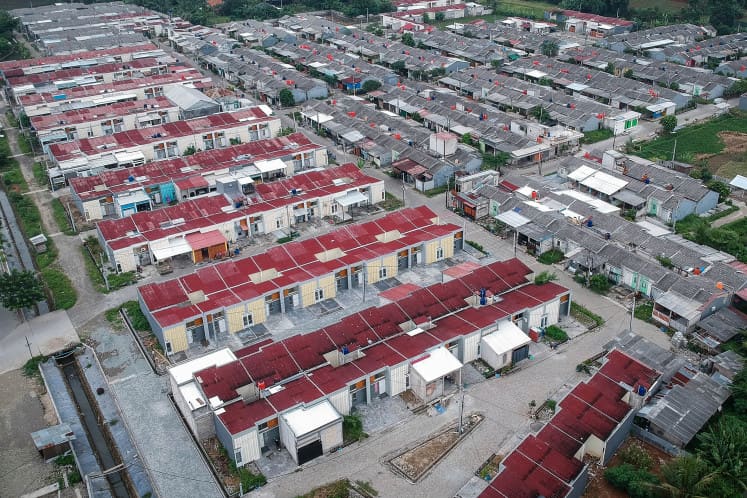
Indonesia staged a mass mortgage signing ceremony on July 30, a public display of momentum for President Prabowo Subianto's pledge to deliver 3 million homes. Yet the event also throws into relief the gathering pressures on one of Southeast Asia's most ambitious housing initiatives: construction material prices are climbing, disbursement pipelines are slowing, and household budgets are stretched thin.
The program was designed to address a chronic housing deficit in the archipelago, where rapid urbanization has left millions of families without affordable shelter. Jakarta, Surabaya, and secondary cities have seen informal settlements expand as formal housing supply struggles to keep pace with population growth and internal migration from rural provinces.
Rising Costs Squeeze Margins
Construction costs have been a persistent headwind. Cement, steel rebar, and timber prices have all moved higher over the past year, driven by global commodity swings and domestic supply constraints. Developers working on government-backed projects operate on thin margins, and the recent cost escalation has forced some to slow groundbreaking or renegotiate contract terms with state housing agencies.
Labor availability is another variable. Skilled tradespeople remain concentrated in Java, and logistics costs to outer islands add further expense. The combination has pushed per-unit construction budgets above initial forecasts, complicating the arithmetic for both public housing authorities and private contractors participating in the initiative.
Disbursement Lag
Funding flows have not kept pace with project timelines. State banks and regional development finance institutions are responsible for channeling mortgage credit to eligible buyers, but disbursement rates have lagged government targets. Administrative bottlenecks, credit assessment backlogs, and risk-averse underwriting standards have all contributed to the slowdown.
The gap between announced allocations and actual funds reaching developers has widened in recent quarters. Some contractors report delays of several months between project milestones and receipt of payment tranches, straining working capital and forcing smaller firms to rely on short-term bridge financing at higher interest rates.
Demand Under Pressure
Household purchasing power is the third constraint. Inflation has eroded real incomes for middle- and lower-income families, the core demographic the housing program aims to serve. Food and fuel price increases have left less room in household budgets for mortgage commitments, even with subsidized interest rates and government guarantees.
Employment growth in manufacturing and services has also moderated, reducing confidence among potential first-time buyers. Banks report a rise in mortgage application withdrawals and a lengthening of the decision cycle as families reassess affordability. The result is a growing inventory of unsold units in some regional markets, particularly in smaller cities where economic activity is more volatile.
Regional Disparities
The challenges are not uniform. Greater Jakarta and parts of Bali continue to see strong absorption, supported by higher incomes and better access to credit. In contrast, provinces in Kalimantan and eastern Indonesia face softer demand, longer sales cycles, and higher construction costs due to logistics. The divergence complicates national-level policy design and forces program administrators to tailor incentives and support mechanisms on a regional basis.
What Comes Next
The mass signing ceremony signals the administration's determination to keep the program visible and politically salient. Yet the underlying fundamentals require attention. Policymakers will need to address cost inflation through targeted subsidies or bulk procurement arrangements, streamline disbursement processes to improve cash flow for developers, and consider demand-side measures such as wage support or expanded down-payment assistance to shore up household capacity.
Without adjustments, the 3 million homes target risks becoming a symbolic aspiration rather than a delivered outcome. The next twelve months will test whether Indonesia can engineer the policy mix needed to translate ambition into built units and occupied homes.
RELATED STORIES

Indonesian Digital Banks Outpace Regional Peers on Deposits and Loan Growth
Priyanka V. Rao · 3 min
Indonesia's Renewable Energy Capacity Faces AI Data Centre Test
Tran Quoc Bao · 3 min

Indonesia Charges Toba Pulp Lestari in $113 Million Tax Fraud Probe
Siti Nuraini · 3 min

Indonesia's Palm Oil Zones Account for Bulk of Fire-Ravaged Land This Year
Siti Nuraini · 4 min
Spot something wrong? Email editor@briefasia.com. We log every correction publicly.