Asia · Trending
Indonesia's Free Meal Program Wastes Up to 120 Million Packages Weekly
A Jakarta think tank estimates the country's flagship nutrition initiative loses between 62 million and 120 million meal packages per week, costing the state up to $71 million in economic losses
KEY TAKEAWAYS
- ·Indonesia's free nutritious meal program wastes between 62 million and 120 million packages weekly, including 7,700 tonnes of rice and 3,400 tonnes of side dishes, costing the state up to $71 million in economic losses.
- ·The Environment Ministry is promoting circular economy practices among the program's 62 million beneficiaries and government-appointed kitchens, converting food waste into livestock feed and agricultural inputs.
- ·The National Nutrition Agency has set an August 10 deadline for all participating kitchens to obtain hygiene and sanitation certificates or face permanent closure amid broader scrutiny of the program's operational efficiency.
Scale of Waste Emerges
Indonesia's free nutritious meal program, President Prabowo Subianto's signature policy initiative launched in 2025, is generating significant food waste that has prompted concerns about economic efficiency and environmental impact.
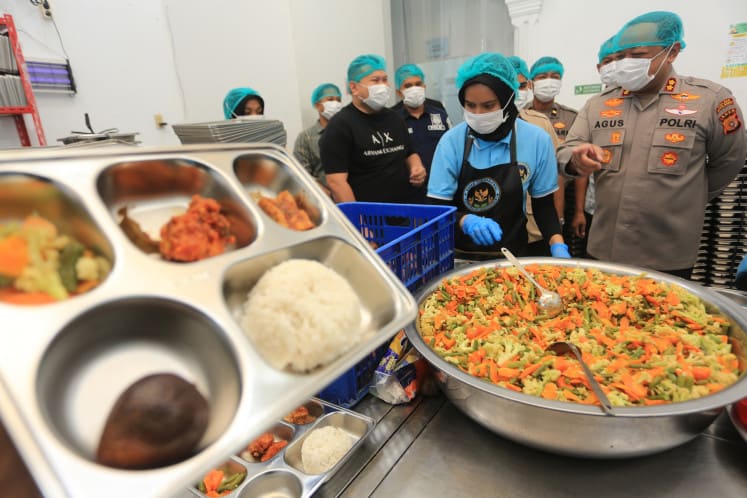
The Center for Economic and Law Studies (CELIOS), a Jakarta-based think tank, released an assessment in April showing that between 62 million and 120 million meal packages prepared under the program are wasted each week. The weekly waste includes at least 7,700 tonnes of cooked rice and 3,400 tonnes of side dishes, translating to economic losses of up to Rp 1.27 trillion ($71 million) for the state.
The National Nutrition Agency (BGN), which oversees the program, reports that approximately 62 million beneficiaries currently participate nationwide. The program distributes meals through a network of government-appointed kitchens operating across the archipelago.
Circular Economy Response
In early August, the Environment Ministry announced plans to address the waste problem by promoting circular economy practices among kitchen partners. The initiative focuses on converting food waste and wastewater into livestock feed and agricultural inputs.
Deputy Environment Minister Diaz Hendropriyono noted that some kitchens have already begun implementing these methods. "What we may achieve quickly is to make food production become circular," Diaz said on August 1, according to the ministry.
The circular approach represents an attempt to mitigate both the environmental footprint and financial drain of the program, which has faced multiple challenges since its rollout. Critics have pointed to governance issues and operational inefficiencies that have complicated implementation across Indonesia's diverse regions.
Regulatory Pressure on Kitchens
The BGN has imposed new requirements on meal preparation facilities, mandating that all participating kitchens obtain hygiene and sanitation certificates (SLHS) by August 10 or face permanent closure. The certification push comes amid broader scrutiny of food safety standards within the program, which serves vulnerable populations including schoolchildren and pregnant women.
The waste management dimension has received less attention than food safety concerns, despite the scale of economic losses documented by CELIOS. The think tank's findings suggest that between 10 and 19 percent of prepared meals end up discarded rather than consumed, raising questions about demand forecasting and distribution logistics.
Indonesia's push to provide universal access to nutritious meals reflects a regional trend toward food security programs, but the implementation challenges highlight the complexity of scaling such initiatives in countries with sprawling geographies and limited administrative capacity. The waste issue underscores the gap between policy ambition and operational execution, a pattern familiar across Southeast Asia's infrastructure and social welfare programs.
Path Forward
The Environment Ministry's circular economy framework offers one avenue for reducing waste impact, though it does not address the underlying causes of overproduction and distribution inefficiencies. Converting food waste into agricultural inputs can offset some environmental costs, but it does not recover the financial losses associated with preparing millions of uneaten meals.
The program's trajectory will depend on whether authorities can refine forecasting models and improve coordination between kitchens and distribution points. For now, the waste figures serve as a reminder that large-scale social programs require not only funding and political will, but also the logistical infrastructure to deliver services efficiently.
As Indonesia continues to expand the program's reach, the tension between ambitious coverage targets and operational realities will likely persist. The August 10 certification deadline for kitchens represents one step toward tightening quality control, but the broader challenge of waste management remains an open question for policymakers navigating the program's second year.
RELATED STORIES

Indonesia Car Sales Jump 34% as Electric Vehicles Reshape Southeast Asia's Auto Market
Siti Nuraini · 3 min
Indonesia's Education Bill Revision Could Reopen Funding Door for Free Meals Program
Siti Nuraini · 3 min
Indonesia's Growth Numbers Hide Shrinking Savings and Rising Household Debt
Priyanka V. Rao · 4 min
Brazil's JBS Commits $2.5 Billion to Indonesia Protein Venture With Danantara
Priyanka V. Rao · 5 min
Spot something wrong? Email editor@briefasia.com. We log every correction publicly.