Asia · Trade
Indonesia Expands Export Revenue Privilege to Four Trading Partners
Jakarta extends favorable foreign exchange treatment to China, Australia, and Canada alongside the US, signaling a recalibration of trade priorities as regional competition for investment intensifies
KEY TAKEAWAYS
- ·Indonesia will grant China, Australia, and Canada preferential status under revised export revenue retention rules, joining the United States in receiving favorable foreign exchange treatment.
- ·The policy shift reflects Jakarta's effort to deepen ties with its largest trading partners while navigating competition for foreign investment and supply chain realignments across Southeast Asia.
- ·Final details remain under discussion, including whether the four countries will receive full exemptions or modified compliance thresholds, and whether reciprocal trade concessions are part of the arrangement.
A Selective Privilege
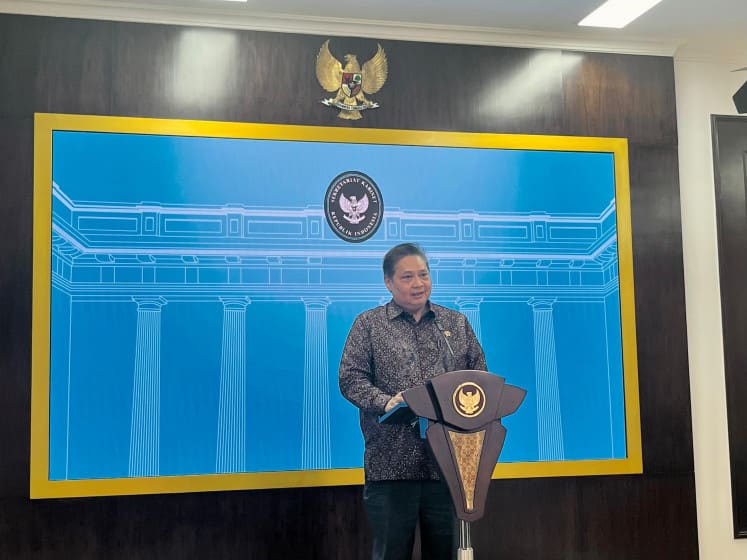
Indonesia is preparing to grant China, Australia, and Canada preferential status under revised foreign exchange retention requirements for export earnings, placing them in the same category as the United States. The senior economy minister disclosed the decision, though the government has not yet finalized the precise parameters of the arrangement or announced an implementation date.
The move marks a departure from Indonesia's traditionally uniform approach to export revenue regulations. By singling out four countries for favorable treatment, Jakarta is signaling a willingness to tailor policy to its most strategically important trade relationships. The decision arrives at a moment when Southeast Asia's largest economy is navigating intensifying competition for foreign direct investment, supply chain realignments, and shifting commodity demand patterns across the region.
Under Indonesia's existing Devisa Hasil Ekspor Sumber Daya Alam (DHE SDA) framework, exporters of natural resources must repatriate and convert a portion of their foreign currency earnings into rupiah within a specified timeframe. The policy aims to stabilize the domestic currency and ensure that commodity booms translate into broader economic benefits. However, the requirement has long been criticized by exporters and foreign investors as adding friction to capital flows and reducing Indonesia's competitiveness relative to neighbors like Malaysia and Vietnam, where capital account rules are less restrictive.
The planned exemptions or modifications for the four countries suggest Jakarta is prepared to sacrifice some degree of policy uniformity in exchange for deeper engagement with key partners. China is Indonesia's largest trading partner, accounting for more than 20 percent of total trade by value. Australia supplies critical inputs for Indonesia's steel and energy sectors, while Canada has emerged as a significant investor in mining and renewable energy projects. The United States, meanwhile, remains Indonesia's largest export market outside Asia and a crucial diplomatic partner.
Balancing Act in a Multipolar Region
Indonesia's decision reflects the pragmatic balancing act that defines much of Southeast Asian economic diplomacy today. By extending favorable treatment to both China and the United States, Jakarta avoids forcing a binary choice between the world's two largest economies. The inclusion of Australia and Canada broadens the arrangement beyond the Washington-Beijing rivalry, framing it instead as a policy calibrated to Indonesia's own trade data and investment priorities.
The timing is notable. Indonesia is in the midst of a major infrastructure and industrialization push under President Prabowo Subianto, who took office in late 2024. The administration has made clear its intention to move Indonesia up the value chain, particularly in sectors like electric vehicle battery production, processed nickel, and downstream mining. Achieving that transformation requires sustained foreign investment, technology transfer, and access to export markets. Offering regulatory flexibility to major trade partners is one lever Jakarta can pull to secure those commitments.
At the same time, the policy carries risks. Granting preferential treatment to a handful of countries may invite pressure from other trading partners who feel excluded. The European Union, Japan, and South Korea all maintain substantial trade and investment footprints in Indonesia. If those partners perceive the new arrangement as discriminatory, they may lodge complaints through bilateral channels or at the World Trade Organization. Jakarta will need to articulate a clear rationale for the selection criteria to preempt such challenges.
Unfinished Business
The senior economy minister's disclosure leaves critical questions unanswered. It remains unclear whether the four countries will receive full exemptions from the DHE SDA requirements or merely longer compliance windows and reduced conversion thresholds. The scope of eligible transactions is also undefined. Will the favorable treatment apply only to exporters domiciled in those countries, or will it extend to Indonesian companies exporting to those markets? The distinction matters enormously for compliance and enforcement.
Equally important is the question of reciprocity. Indonesia may be seeking concessions from the four countries in exchange for the preferential treatment. These could include commitments to increase imports of Indonesian manufactured goods, expedited approval processes for Indonesian investors, or support for Indonesia's bid to join the OECD. If reciprocity is part of the calculus, the final arrangement will resemble a series of bilateral trade deals rather than a unilateral regulatory adjustment.
The government has indicated it will continue internal discussions before announcing the final details. That suggests the policy is still in flux and subject to input from multiple ministries, including finance, trade, and foreign affairs. The timeline for implementation is uncertain, though officials have hinted that an announcement could come within the next quarter.
Regional Implications
Indonesia's move may prompt other Southeast Asian governments to revisit their own foreign exchange and capital control regimes. If Jakarta succeeds in attracting incremental investment or trade volume through selective liberalization, neighbors like Thailand, the Philippines, and Vietnam may feel compelled to respond with their own adjustments. That could accelerate a broader trend toward differentiated regulatory treatment based on bilateral relationships, a shift that would complicate the region's integration agenda under ASEAN.
For investors, the message is clear. Indonesia is willing to negotiate the terms of engagement on a case-by-case basis, particularly when large sums of capital and strategic sectors are involved. That creates opportunity, but also uncertainty. Companies operating in Indonesia will need to monitor not only the final DHE SDA rules but also the precedent they set for future policy adjustments.
The next few months will reveal whether Indonesia's gambit pays off. If the four-country arrangement unlocks new investment and strengthens trade ties without triggering a backlash from excluded partners, it may become a template for other policy areas. If it generates friction or proves difficult to administer, Jakarta may find itself walking back the experiment. Either way, the decision underscores a broader reality: in a multipolar Asia, economic policy is increasingly about managing relationships, not just setting rules.
RELATED STORIES
Indonesia Seeks 100GW Solar Build From China, But Not Chinese Ownership
Priyanka V. Rao · 3 min
Malaysia's Rare Earth Deposits Draw Foreign Interest Ahead of China Export Controls
Priyanka V. Rao · 3 min

Honda Demands 30% Price Cuts From Suppliers in $9.4 Billion Cost Plan
Cheng Wei-Lun · 3 min

Beijing Warns Domestic EV Makers Against Overseas Price Wars
Cheng Wei-Lun · 3 min
Spot something wrong? Email editor@briefasia.com. We log every correction publicly.