Asia · Politics
Indonesia Struggles to Enforce Corporate Ownership Transparency After Seven Years
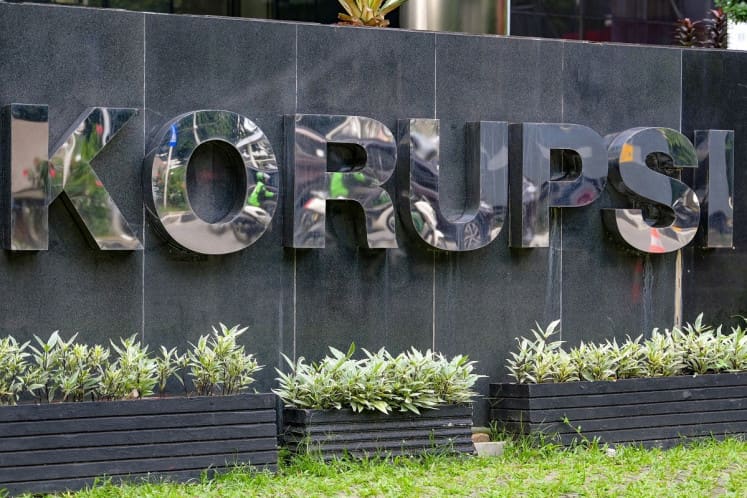
Nearly 2 million companies still evade beneficial ownership disclosure rules despite new AI-powered verification system
KEY TAKEAWAYS
- ·Nearly 2 million Indonesian companies remain non-compliant with beneficial ownership disclosure rules seven years after Presidential Regulation No. 13/2018 took effect.
- ·Law Ministry Regulation No. 2/2025 replaces self-declaration with AI-powered verification through the UBO Gateway, linking tax offices, financial intelligence, and land registries.
- ·The Corruption Eradication Commission reports most registered beneficial owners are nominees with no real connection to the corporations they supposedly control.
The Scale of Non-Compliance
Seven years after Indonesia introduced rules requiring companies to disclose their true owners, close to 2 million corporations still refuse to comply. Presidential Regulation No. 13/2018 was designed to pierce the veil of nominee arrangements and shell structures that had long concealed beneficial ownership, yet enforcement has lagged far behind the ambition of the policy.
The regulation defines a beneficial owner as an individual who can appoint or dismiss management, controls the corporation, receives direct or indirect benefits from it, or holds the real ownership of funds or shares. On paper, the framework represented a leap forward for transparency in Southeast Asia's largest economy. In practice, it has become a case study in the gap between regulatory intent and corporate behavior.
Indonesia's anti-corruption watchdog and financial intelligence unit continue to confront preventable scandals rooted in opaque ownership. Recent corruption cases have repeatedly featured nominees and secretive corporate forms that obscure the identity of actual owners, enabling large-scale tax evasion and illicit fund flows.
Self-Declaration and Its Failures
The core weakness of the 2018 regulation lies in its reliance on self-declaration. Companies were trusted to voluntarily report their beneficial owners, an approach that assumed good faith in an environment where anonymity often serves strategic purposes.
The Corruption Eradication Commission has acknowledged that most names submitted as beneficial owners are nominees with no genuine connection to the corporations or their operations. The system created a paper trail that satisfied formal compliance while leaving the underlying reality unchanged. For companies intent on concealment, the regulation became a procedural hurdle rather than a substantive barrier.
A New Verification Model
Law Ministry Regulation No. 2/2025 marks a shift from voluntary disclosure to cooperative verification. The updated framework introduces a two-stage process: notaries conduct an initial review of ultimate business ownership data, followed by validation by the ministry itself.
The ministry has deployed the UBO Gateway, an artificial intelligence platform that links tax offices, the Financial Transaction Reports and Analysis Centre, and land registries. The system is designed to cross-reference data across agencies, identifying inconsistencies and flagging entities that fail to report. It represents one of the more ambitious uses of AI in regulatory enforcement in the region.
The Persistence of Resistance
Despite the technological upgrade, the compliance rate remains stubbornly low. The backlog is not administrative. It reflects active resistance from corporations that benefit from opacity. Each unreported entity represents a potential channel for money laundering, tax avoidance, and corruption.
Indonesia ranks poorly in global transparency indices, not because it lacks regulatory frameworks but because enforcement remains weak. Opaque corporations function as fortresses, shielding assets and actors from scrutiny. The challenge is less about drafting new rules than about compelling adherence to existing ones.
What Comes Next
The effectiveness of the 2025 regulation will hinge on the ministry's willingness to impose consequences for non-compliance. Technology can streamline verification, but it cannot substitute for political will. The UBO Gateway is a tool, not a solution.
For Indonesia's anti-corruption infrastructure to function as intended, the gap between policy and practice must close. The country's economic credibility in regional and global markets depends on its ability to demonstrate that transparency is more than a regulatory checkbox. Nearly 2 million companies are testing whether the government will enforce its own rules.
RELATED STORIES

Indonesia's Education Bill Revision Could Reopen Funding Door for Free Meals Program
Siti Nuraini · 3 min

Indonesia Car Sales Jump 34% as Electric Vehicles Reshape Southeast Asia's Auto Market
Siti Nuraini · 3 min

Indonesia's Growth Numbers Hide Shrinking Savings and Rising Household Debt
Priyanka V. Rao · 4 min
Brazil's JBS Commits $2.5 Billion to Indonesia Protein Venture With Danantara
Priyanka V. Rao · 5 min
Spot something wrong? Email editor@briefasia.com. We log every correction publicly.