Finance · Fintech
India's Largest Discount Broker Files for Merchant Banking License
Zerodha's application to SEBI signals ambition to capture IPO advisory fees as startup listings accelerate across South Asia's most active primary market
KEY TAKEAWAYS
- ·Zerodha filed for a Category-I merchant banking license with SEBI in April, seeking authority to manage IPOs and advise on equity fundraising across India's expanding primary market.
- ·The Bengaluru broker reported revenue of 8,847 crore rupees and net profit of 4,237 crore rupees in fiscal 2025, reflecting moderation as it diversifies beyond core trading commissions.
- ·Entry into merchant banking will pit Zerodha against entrenched players like JM Financial and Kotak Mahindra Capital in a market seeing accelerated startup listing activity.
Retail Brokerage Giant Eyes Corporate Finance
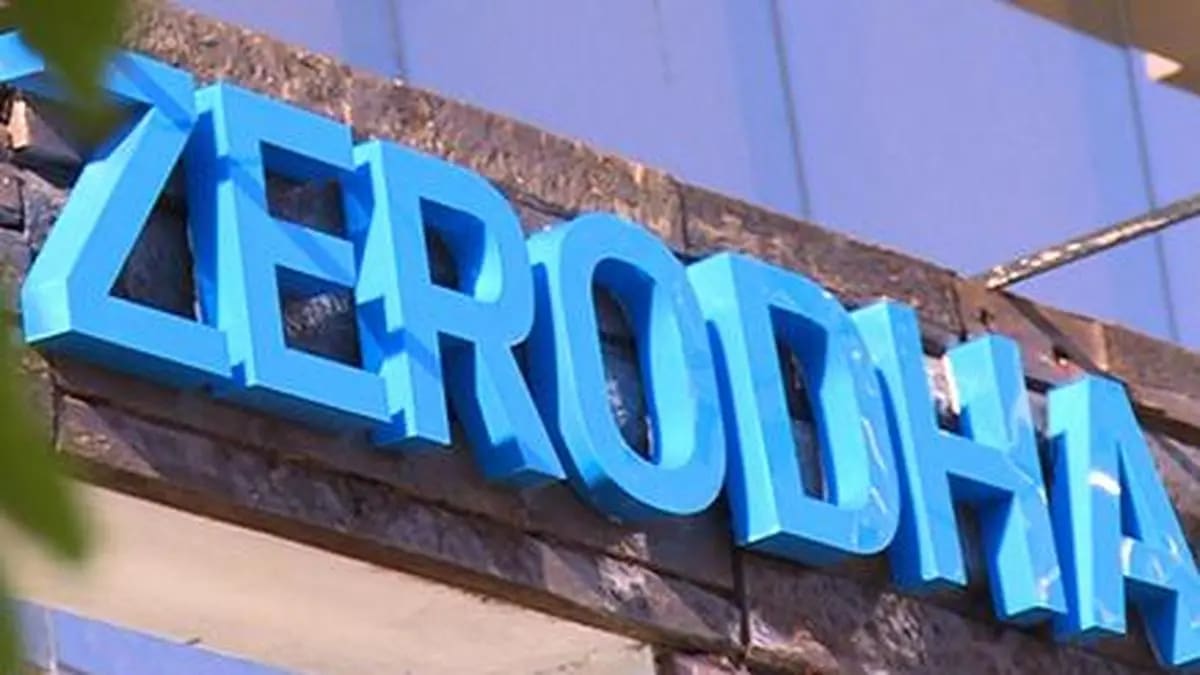
Zerodha, the Bengaluru fintech that commands the largest retail trading volumes in India, submitted an application in April for a Category-I merchant banking license with the Securities and Exchange Board of India. The filing positions the discount broker to enter the lucrative business of managing initial public offerings and advising companies on capital raising.
A company spokesperson confirmed the regulatory application to local media but declined to outline specific business plans until approval is secured. The Category-I designation would authorize Zerodha to underwrite equity issues, structure fundraising transactions, and provide the full suite of corporate advisory services typically reserved for established investment banks.
The timing aligns with a structural shift in India's capital markets. After a subdued period during the pandemic years, the pipeline of companies preparing to list has expanded sharply. Startups that raised private capital between 2020 and 2023 are now reaching the scale and profitability thresholds that make public listings viable. Regulatory reforms introduced by SEBI over the past two years have also streamlined the approval process, reducing the time from filing to listing by several months.
Strategic Diversification Beyond Trading Commissions
The merchant banking push represents the latest step in Zerodha's multi-year effort to reduce reliance on brokerage fees. Founded in 2010, the platform pioneered the zero-commission model for equity delivery trades in India and rapidly captured market share from legacy brokers. At its peak, Zerodha accounted for roughly 15 percent of daily retail trading volumes on the National Stock Exchange.
Yet the core brokerage business faces structural headwinds. Competition from rivals offering similar pricing has compressed margins. Trading activity, while cyclical, has moderated from the euphoric highs of 2021 when lockdowns drove a surge in retail participation. Zerodha's revenue from operations reached 8,847 crore rupees in the fiscal year ending March 2025, with net profit of 4,237 crore rupees, according to company disclosures. While still highly profitable, growth rates have decelerated compared to the previous three-year period.
In response, the firm has systematically expanded into adjacent financial services. It launched Coin, a platform for direct mutual fund investing that bypasses traditional distributors and their commissions. It established Rainmatter, a venture fund that backs early-stage fintech and climate-tech startups across India and Southeast Asia. More recently, Zerodha added international equities trading and introduced fixed deposit products through banking partnerships, allowing customers to open term deposits directly from the Coin interface.
Merchant banking fits this pattern. By advising companies on fundraising and managing IPO processes, Zerodha can monetize its brand recognition and technology infrastructure in a segment with higher per-transaction economics than retail brokerage. Advisory fees for a mid-sized IPO typically run into tens of millions of rupees, split among a syndicate of merchant bankers.
Intensifying Competition in a Concentrated Market
Zerodha will enter a merchant banking landscape dominated by a handful of large players. JM Financial, Kotak Mahindra Capital, Axis Capital, and ICICI Securities have historically controlled the majority of IPO mandates. These firms benefit from decades-old relationships with promoters, institutional investors, and corporate finance teams. They also maintain large research departments and distribution networks that smaller entrants struggle to replicate.
However, the market is not static. Over the past five years, boutique advisory firms and new-generation investment banks have won mandates by offering lower fees and faster execution. Digital-first brokers entering merchant banking can leverage their retail customer bases for IPO distribution, a pitch that resonates with issuers seeking broader retail participation in their listings.
Zerodha's user base, estimated at over 7 million active trading accounts, provides a built-in distribution channel. If the firm can direct even a fraction of its customers toward IPO applications, it gains a competitive edge over traditional merchant banks that rely on third-party brokers for retail allocation.
Regulatory approval is not automatic. SEBI's licensing process for Category-I merchant bankers involves scrutiny of capital adequacy, governance structures, and the professional qualifications of key personnel. The regulator has tightened standards in recent years following lapses in due diligence by some merchant bankers during the 2017-2018 IPO boom. Applicants must demonstrate that they have the systems and talent to conduct thorough financial assessments and manage conflicts of interest.
Regional Context and Implications for Asia's Fintech Ecosystem
Zerodha's move mirrors a broader trend across Asian fintech, where platforms that began with a single product are now building full-stack financial services. In Southeast Asia, firms like Grab Financial and GoTo Financial have obtained banking and securities licenses. In China, Ant Group and Tencent's WeBank expanded from payments into wealth management and lending before regulatory crackdowns curtailed their ambitions.
India's regulatory environment has proven more accommodating, provided firms meet capital and compliance standards. SEBI has issued licenses to multiple fintech-native players over the past three years, reflecting a policy preference for competition over consolidation. This openness has accelerated the unbundling of traditional banking and brokerage services, with specialized platforms capturing discrete parts of the value chain.
For India's startup ecosystem, the entry of a high-profile fintech into merchant banking could alter the economics of going public. If Zerodha undercuts incumbent fee structures or offers bundled services that reduce friction for issuers, it may lower the effective cost of accessing public capital. That would be particularly relevant for mid-sized companies that have historically found IPO advisory fees prohibitive.
The application also signals confidence in the durability of India's equity market rally. Benchmark indices have climbed steadily since mid-2024, supported by sustained foreign inflows and strong domestic institutional buying. Valuations for new listings have held up even as global risk appetite has fluctuated. For a firm contemplating a multi-year investment in merchant banking infrastructure, those conditions matter.
Watching for Execution
Approval timelines for merchant banking licenses typically range from six to twelve months, depending on the completeness of the application and the regulator's workload. Assuming Zerodha secures the license by late 2026 or early 2027, the firm will face immediate questions about talent acquisition. Investment banking is a relationship-driven business, and hiring experienced bankers from incumbent firms will be essential.
The firm will also need to decide whether to target large-cap IPOs, where fees are higher but competition is fiercest, or focus on mid-market and growth-stage companies where relationships and speed can differentiate. The latter strategy would align with Zerodha's existing positioning as a challenger to legacy institutions.
Market participants will watch how Zerodha balances its merchant banking ambitions with its retail brokerage identity. Conflicts of interest can arise when a firm advises on an IPO while also distributing shares to its own customers. SEBI's regulations require clear separation of advisory and distribution functions, but perception matters in a business built on trust.
If the license is granted, Zerodha will join a small but growing cohort of fintech platforms in Asia that have successfully transitioned from consumer-facing products to institutional financial services. The outcome will offer a test case for whether digital-native firms can compete on equal terms with established investment banks, or whether the structural advantages of incumbents prove too durable to overcome.
RELATED STORIES
Tata Group Shares Sink More Than 5% Following Chandrasekaran Resignation
Priyanka V. Rao · 3 min
Renminbi Faces Upward Pressure After US-Japan Yen Intervention
Cheng Wei-Lun · 3 min
Zepto Shelves IPO Plans as India's Quick Commerce Faces Profitability Test
Priyanka V. Rao · 3 min

Manipal Health Jumps 13% on Debut After $975 Million India IPO
Priyanka V. Rao · 3 min
Spot something wrong? Email editor@briefasia.com. We log every correction publicly.