Sustainability · Energy
India's Solar Manufacturing Ambitions Stall as China Dependency Deepens
Domestic factories sit idle despite government incentives, exposing the gap between policy goals and supply chain realities in Asia's renewable energy race
KEY TAKEAWAYS
- ·India's solar factories operate below capacity despite $24 billion in government incentives since 2021, as manufacturers struggle to compete with Chinese cost and scale advantages.
- ·China controls approximately 80 percent of global polysilicon supply and dominates wafer production, creating upstream bottlenecks that Indian assembly plants cannot bypass.
- ·Domestic manufacturers face equipment lead times exceeding eighteen months and lack the vertically integrated operations needed to capture value beyond final module assembly.
The Idle Capacity Problem
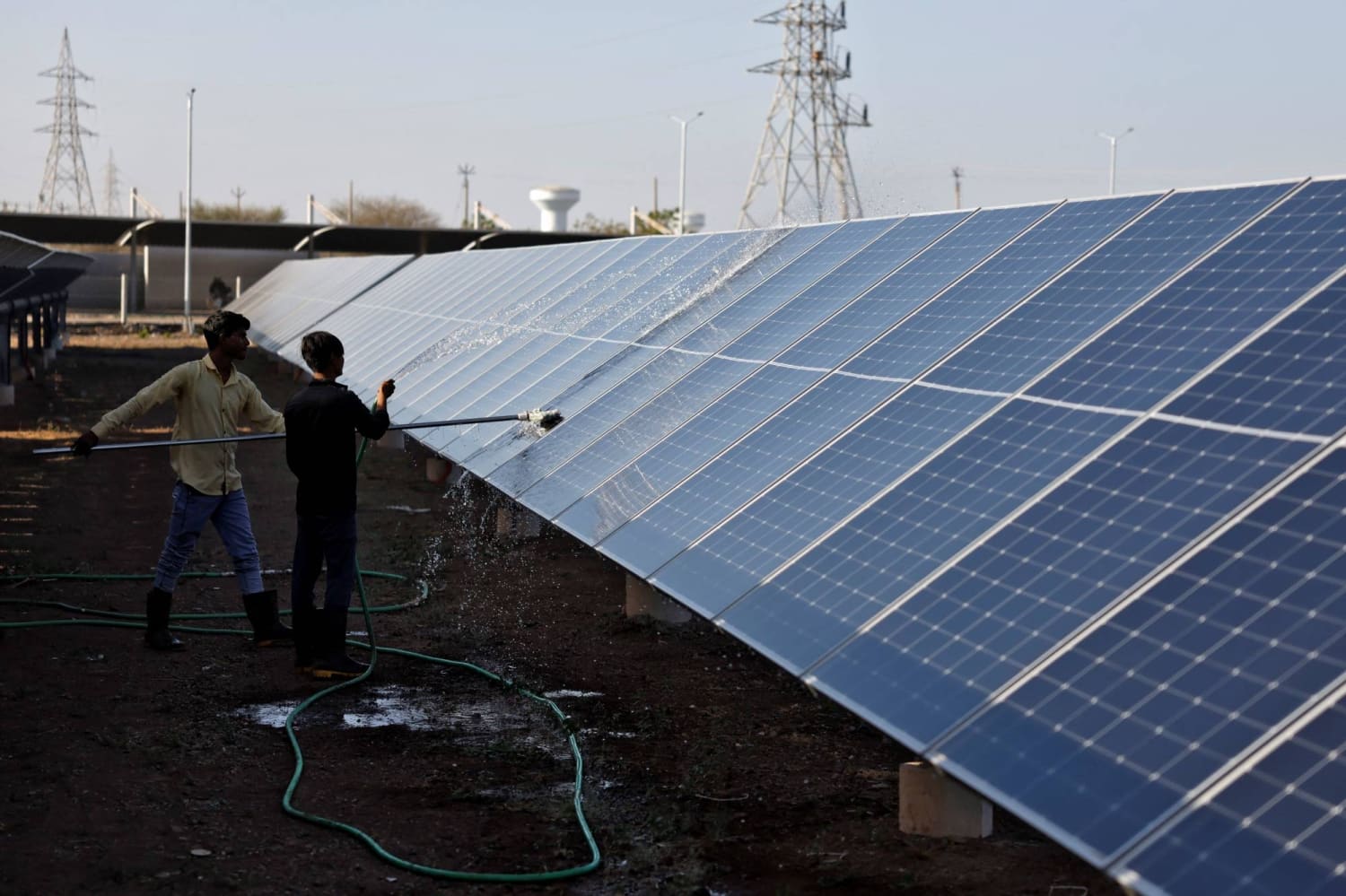
India's solar manufacturing sector faces a paradox: billions of dollars in government incentives have failed to translate into operational capacity. Factories across Gujarat and other industrial hubs report utilization rates well below projections, while the country's solar installations continue to rely heavily on imported Chinese components.
The gap between ambition and execution reveals deeper structural challenges in Asia's renewable energy supply chains. Despite tariff barriers and production-linked incentive schemes worth approximately $24 billion announced since 2021, domestic manufacturers have struggled to compete on cost and scale with established Chinese producers.
Supply Chain Bottlenecks
The core issue extends beyond final assembly. India's solar manufacturing ecosystem lacks depth in upstream materials. Polysilicon production, the foundational raw material for solar cells, remains concentrated in China's Xinjiang region, which controls roughly 80 percent of global supply according to industry data.
Wafer manufacturing presents a similar constraint. Chinese firms dominate this critical intermediate step, benefiting from decades of capital investment and vertically integrated operations that Indian startups cannot replicate quickly. Even factories that have come online in India often source wafers and cells from Chinese suppliers, repackaging them as "Made in India" modules that technically comply with local content requirements but capture minimal value.
Equipment dependency compounds the problem. The specialized machinery needed to produce high-efficiency solar cells comes primarily from Chinese and European vendors, with lead times stretching beyond eighteen months. Indian manufacturers face both capital constraints and technology gaps that prevent backward integration into equipment production.
Policy Misalignment
Government programs designed to boost domestic manufacturing have encountered implementation challenges. The Production Linked Incentive scheme for solar modules set ambitious capacity targets but did not adequately address the upstream supply chain. Subsidies flow to companies that meet production thresholds, yet without a coordinated strategy for polysilicon and wafer production, these facilities operate as assembly units rather than true manufacturers.
Tariff structures add complexity. Import duties on solar modules were intended to protect domestic producers, but they have raised project costs for developers without guaranteeing domestic supply. Some developers report delays as they navigate approval processes for imported components when domestic alternatives fall short on quality or delivery timelines.
State-level incentives vary widely, creating a fragmented market. Gujarat and Tamil Nadu offer land subsidies and power concessions, while other states provide minimal support. This patchwork approach has discouraged the formation of industrial clusters that could generate economies of scale.
The China Cost Advantage
Chinese solar manufacturers operate with structural advantages that extend beyond labor costs. State-backed financing allows them to invest in research and capacity expansion at rates that private Indian firms cannot match. Vertical integration reduces per-unit costs, while massive production volumes enable continuous process improvements.
Energy costs in China's manufacturing provinces remain lower than in many Indian industrial zones, despite India's own solar capacity additions. Chinese firms also benefit from established relationships with global buyers, making it difficult for Indian entrants to secure long-term offtake agreements that justify capital expenditure.
Technology licensing presents another barrier. Leading solar cell designs remain proprietary, and Indian firms often pay royalties or accept lower-efficiency alternatives. Domestic research institutions have made progress in lab settings, but commercialization requires partnerships that transfer know-how, a process that unfolds over years rather than quarters.
Regional Implications
India's struggle mirrors broader challenges across Southeast Asia. Vietnam and Thailand have attracted solar manufacturing investment, yet they too rely on Chinese raw materials and equipment. The regional supply chain remains anchored in East Asia, with limited diversification despite policy efforts.
Japan and South Korea, which once led in solar technology, have ceded market share to Chinese competitors. Their experience suggests that reversing supply chain concentration requires sustained investment and acceptance of higher costs during a transition period. India's willingness to absorb those costs will determine whether its solar manufacturing ambitions move from policy documents to operational reality.
For now, the idle factories stand as a visible reminder that energy transition goals require more than subsidies and tariffs. Building a competitive solar manufacturing base demands coordinated industrial policy, patient capital, and technology development that few nations have managed to execute at scale.
RELATED STORIES
India's Semiconductor Push Extends to Supply Chains and Advanced Manufacturing
Priyanka V. Rao · 4 min

Human Development Patterns Drive Assam's Deadly 2026 Floods
Priyanka V. Rao · 3 min
India Receives 20 Bids to Build Rare Earth Magnet Production Capacity
Rajesh K. Iyer · 3 min

India's Semiconductor Fabs Face Critical Yield Challenge as Production Begins
Priyanka V. Rao · 4 min
Spot something wrong? Email editor@briefasia.com. We log every correction publicly.