Asia · Business
ICTSI Extends Manila Port Control Through 2063
Philippine Ports Authority approves 25-year concession renewal for country's largest container terminal, triggering $300 million expansion program
KEY TAKEAWAYS
- ·ICTSI secured Philippine Ports Authority approval to extend its Manila International Container Terminal concession from 2038 to 2063, maintaining control of the country's largest cargo gateway for another 25 years.
- ·The operator is building Berth 8 to lift annual capacity to 3.5 million TEUs, with a $300 million AIIB loan funding further expansion to 3.7 million TEUs by 2027.
- ·The extension reflects rising Southeast Asian port competition and ties ICTSI's growth to Philippine trade volumes, which remain driven by consumer imports and electronics exports.
The Deal
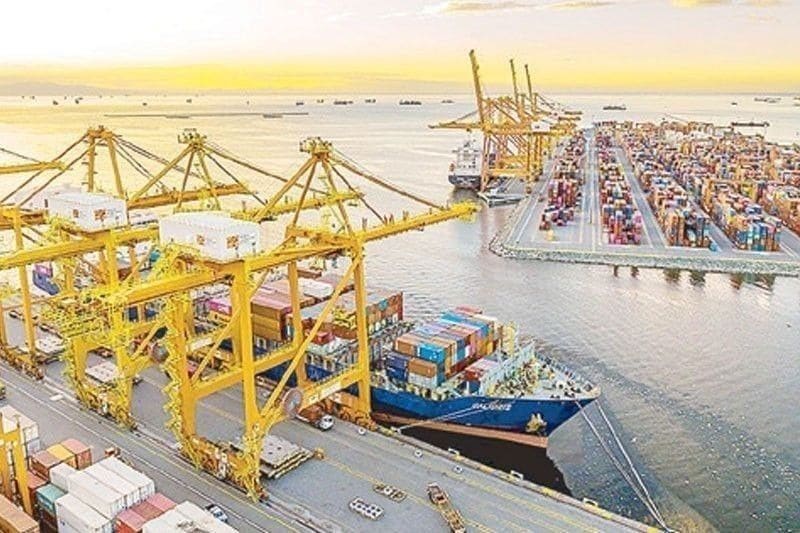
International Container Terminal Services Inc. has secured a 25-year extension for its flagship Manila International Container Terminal, pushing the concession horizon from 2038 to 2063. The Philippine Ports Authority approved the renewal in late July, cementing ICTSI's grip on the busiest non-transshipment gateway in Southeast Asia.
The Port of Manila terminal handles the bulk of containerized imports and exports flowing through the capital region. ICTSI has operated the facility since the early 1990s, when the government privatized port operations to attract capital and modernize infrastructure.
The extension hinges on capacity commitments. ICTSI is midway through construction of Berth 8, a deep-water quay designed to accommodate vessels carrying up to 18,000 twenty-foot equivalent units. When the berth opens, the terminal's annual throughput will climb to 3.5 million TEUs, according to ICTSI. A second phase funded by a $300 million loan from the Asian Infrastructure Investment Bank will push capacity to 3.7 million TEUs by 2027.
Financing and Modernization
The AIIB loan, finalized earlier this year, marks the multilateral lender's first Philippine credit extended without a sovereign guarantee. The Beijing-based institution typically requires government backing for emerging-market projects, but ICTSI's balance sheet and cash flow persuaded underwriters to accept corporate risk alone.
ICTSI is pairing the expansion with equipment upgrades. The terminal now operates eight near-zero emission rubber-tired gantries, part of a broader shift toward hybrid and electric machinery. Hybrid trucks account for 83 percent of the yard fleet, a figure ICTSI plans to lift as battery technology improves and charging infrastructure spreads.
Gate automation has cut average truck dwell time to 47.82 minutes, down from over an hour two years ago. Faster turnaround reduces congestion on arterial roads leading to the port, a chronic bottleneck in Metro Manila logistics.
Regional Context
The renewal arrives as port operators across Asia race to accommodate larger vessels and rising cargo volumes. Singapore, Hong Kong, and Shanghai have all expanded berth capacity in the past five years, while secondary hubs in Vietnam and Indonesia court transshipment business with tax incentives and infrastructure spending.
Manila remains primarily an origin-destination port, serving domestic consumption and export manufacturing rather than acting as a transshipment node. That profile limits ICTSI's exposure to the cutthroat regional competition for hub status, but it also ties the terminal's fortunes to the Philippine economy's growth trajectory.
Trade volumes through Manila have climbed steadily over the past decade, driven by consumer imports, electronics exports, and agricultural shipments. The terminal's efficiency metrics rank among the highest globally for facilities of comparable size and traffic patterns.
Operational Outlook
ICTSI has added 43 terminal trailers, 17 skeletal trailers, and 11 tractors to the MICT fleet in the past year. The equipment refresh supports higher throughput and reduces downtime from mechanical failures, a persistent challenge in tropical operating environments.
The company framed the concession extension as a vote of confidence in long-term Philippine trade growth. Domestic consumption remains robust despite inflation pressures, and electronics manufacturing continues to attract foreign investment, particularly in semiconductor assembly and testing.
Port infrastructure typically requires decades to recoup capital outlays, making long concession terms essential for private operators. The 2063 deadline gives ICTSI visibility to plan multi-phase expansions and justify spending on automation, electrification, and digital systems that may take years to deliver returns.
The PPA's approval process weighed capacity commitments, service quality benchmarks, and tariff structures. Philippine port regulation has historically balanced operator profitability with shipper cost concerns, a tension that periodically flares during tariff reviews.
ICTSI's domestic portfolio also includes terminals in Subic Bay, Batangas, and several provincial ports. The company operates facilities in over a dozen countries, spanning Latin America, Europe, the Middle East, and Africa. Manila remains the largest single asset by revenue and throughput, anchoring a global network that generated over $1.5 billion in consolidated revenue last year.
RELATED STORIES

Philippine Water Operator Earmarks $400 Million for Southeast Asia Expansion
Mariel D. Santos · 2 min
Philippine Manufacturing Expands at Fastest Pace Since 2016
Priyanka V. Rao · 3 min

Philippines Energy Budget Climbs 26% as Electric Vehicle Funding Surges
Priyanka V. Rao · 3 min

Southeast Asian Firms Overlook Digital Pact Worth USD 2 Trillion
Lim Hui Ying · 4 min
Spot something wrong? Email editor@briefasia.com. We log every correction publicly.