Real Estate · Land
Hyundai Brings Industrial Exoskeletons to Korean Construction Sites
Builder deploys wearable robotic lift from Hyundai Motor Group's robotics division to reduce worker fatigue and injury risk on job sites
KEY TAKEAWAYS
- ·Hyundai E&C has become the first Korean builder to deploy shoulder-assist exoskeletons on job sites, using devices from Hyundai Motor Group Robotics Lab.
- ·The wearable technology aims to reduce musculoskeletal injuries and fatigue among workers performing repetitive overhead tasks in construction.
- ·Successful adoption could trigger wider deployment across Korea's aging construction workforce and establish a new market for industrial wearables in Asia.
First Deployment in Korean Construction
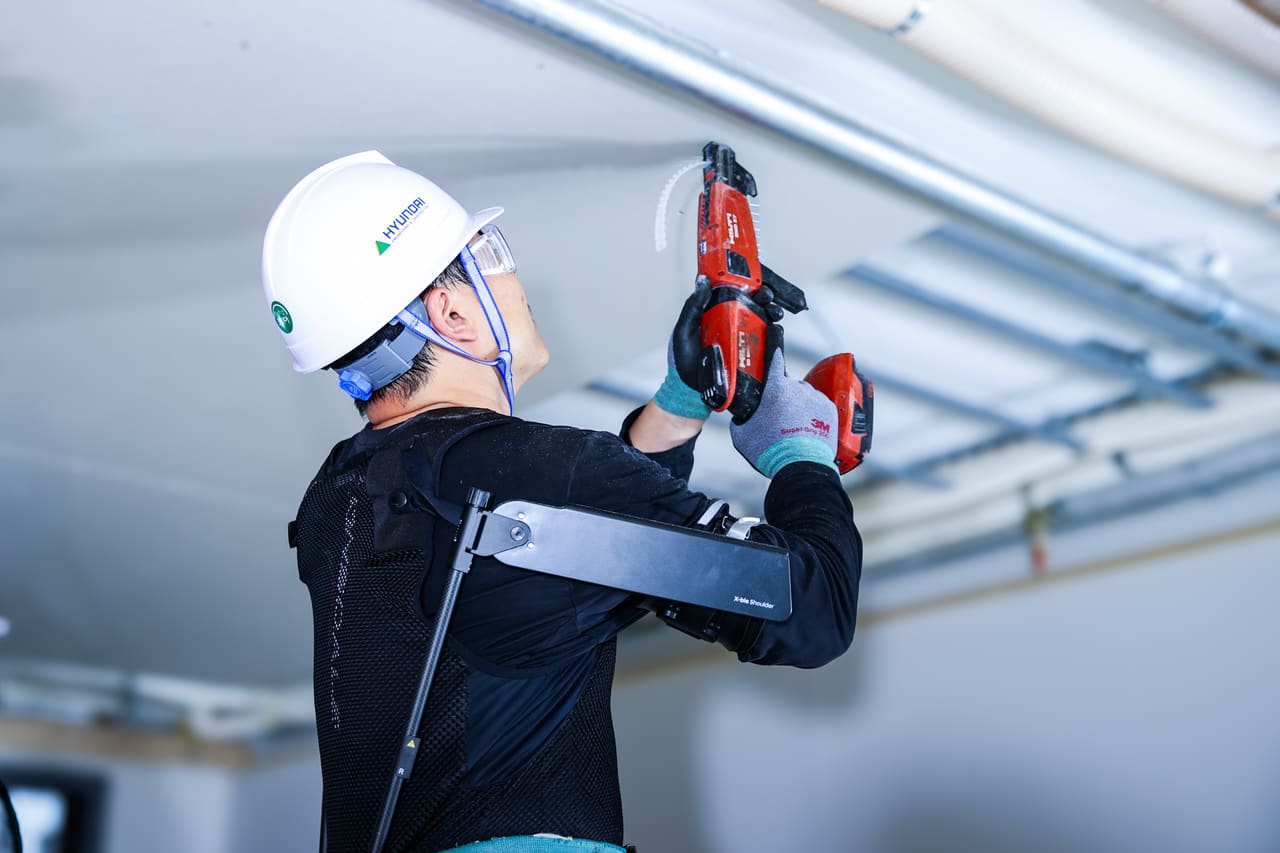
Hyundai Engineering & Construction has begun equipping job site workers with shoulder-assist exoskeletons, marking the first commercial deployment of such wearable robotics in Korea's construction industry. The X-ble Shoulder device, developed by Hyundai Motor Group's internal robotics division, supports workers performing overhead and repetitive lifting tasks.
The builder announced the rollout on Wednesday, positioning the technology as a safety and productivity tool rather than a replacement for human labor. Workers wearing the device can maintain elevated arm positions for extended periods without the muscle fatigue that typically leads to injury and reduced focus.
Addressing a Persistent Safety Gap
Musculoskeletal disorders remain one of the leading causes of lost work time in Asian construction. In South Korea, shoulder and back injuries account for a substantial portion of industrial accident claims filed by construction workers each year. Traditional safety measures like training and tool redesign have plateaued in their effectiveness, prompting builders to explore mechanical assistance.
The X-ble Shoulder uses passive spring mechanisms and lightweight carbon-composite frames to redistribute load away from the shoulder joint. Unlike powered exoskeletons that require batteries and motors, the passive design minimizes weight and maintenance while still delivering measurable fatigue reduction. Workers can don or remove the device in under a minute, and it adjusts to different body sizes without specialized fitting.
Hyundai E&C's decision to trial the technology reflects broader regional trends. Japanese and Singaporean contractors have experimented with similar devices over the past two years, though adoption has been limited by cost and worker acceptance. The Korean deployment represents one of the larger-scale tests in Asia, with potential implications for labor productivity in markets facing skilled-worker shortages.
Robotics Lab Expands Beyond Automotive
Hyundai Motor Group Robotics Lab has historically focused on factory automation and mobility solutions for the automotive sector. The X-ble Shoulder represents a strategic pivot toward industrial wearables, a segment analysts expect to grow as aging workforces across Northeast Asia seek productivity enhancements without adding headcount.
The lab's engineering team designed the exoskeleton with field durability in mind. Construction sites expose equipment to dust, moisture, and temperature extremes that would disable consumer-grade devices. The X-ble Shoulder features sealed joints and corrosion-resistant materials, and early field tests have validated its performance in outdoor conditions.
By partnering with Hyundai E&C, the robotics division gains access to real-world validation data that can inform future product iterations. The builder, in turn, positions itself as an early adopter of workplace technology, a branding advantage in competitive bidding for large public-works contracts that increasingly emphasize worker welfare.
Implications for Regional Labor Markets
Korea's construction workforce is aging rapidly. The average age of skilled tradespeople has climbed above 50, and younger workers have shown limited interest in physically demanding roles. Exoskeletons and similar assistive devices may extend the productive careers of older workers while making the industry more attractive to recruits concerned about long-term health impacts.
The technology also carries economic implications. If fatigue-related errors decline and task completion times shorten, builders can reduce contingency buffers in project schedules. That efficiency gain translates directly to margin improvement on fixed-price contracts, a critical advantage in markets where raw-material costs have been rising.
Other major Korean builders are likely monitoring Hyundai E&C's deployment closely. A successful rollout could trigger wider adoption across the industry, creating a local market for wearable robotics and potentially spurring domestic suppliers to enter the segment. Hyundai Motor Group's robotics lab may find itself with a new revenue stream if demand materializes beyond its parent conglomerate's internal operations.
RELATED STORIES
Samsung and SK Hynix Turn Down KEPCO's Multibillion-Dollar Prepayment Demand
Cheng Wei-Lun · 4 min

South Korea Records Highest September Export Start on Semiconductor Demand
Tran Quoc Bao · 3 min
Hyosung Heavy Gains Ground in US Power Grid Market With Early Manufacturing Push
Jun-ho Seo · 4 min
LG Pivots to AI-Defined Vehicle Platform as Korea Chases China's Self-Driving Lead
Jun-ho Seo · 3 min
Spot something wrong? Email editor@briefasia.com. We log every correction publicly.