Asia · Business
Hugel Brings Letybo Botulinum Toxin to India's Growing Aesthetics Market
Korean medical aesthetics firm partners with local distributor to launch its flagship product at major industry conference in Goa
KEY TAKEAWAYS
- ·Hugel launched its botulinum toxin brand Letybo in India through distributor Aakaar Medical at a conference in Goa last week.
- ·The entry targets India's rapidly expanding aesthetics market, driven by rising incomes and shifting attitudes toward cosmetic procedures among urban consumers.
- ·Success will hinge on practitioner training, distribution scale, and pricing strategy in a cost-sensitive but high-growth market.
Korean Aesthetics Player Enters Subcontinent
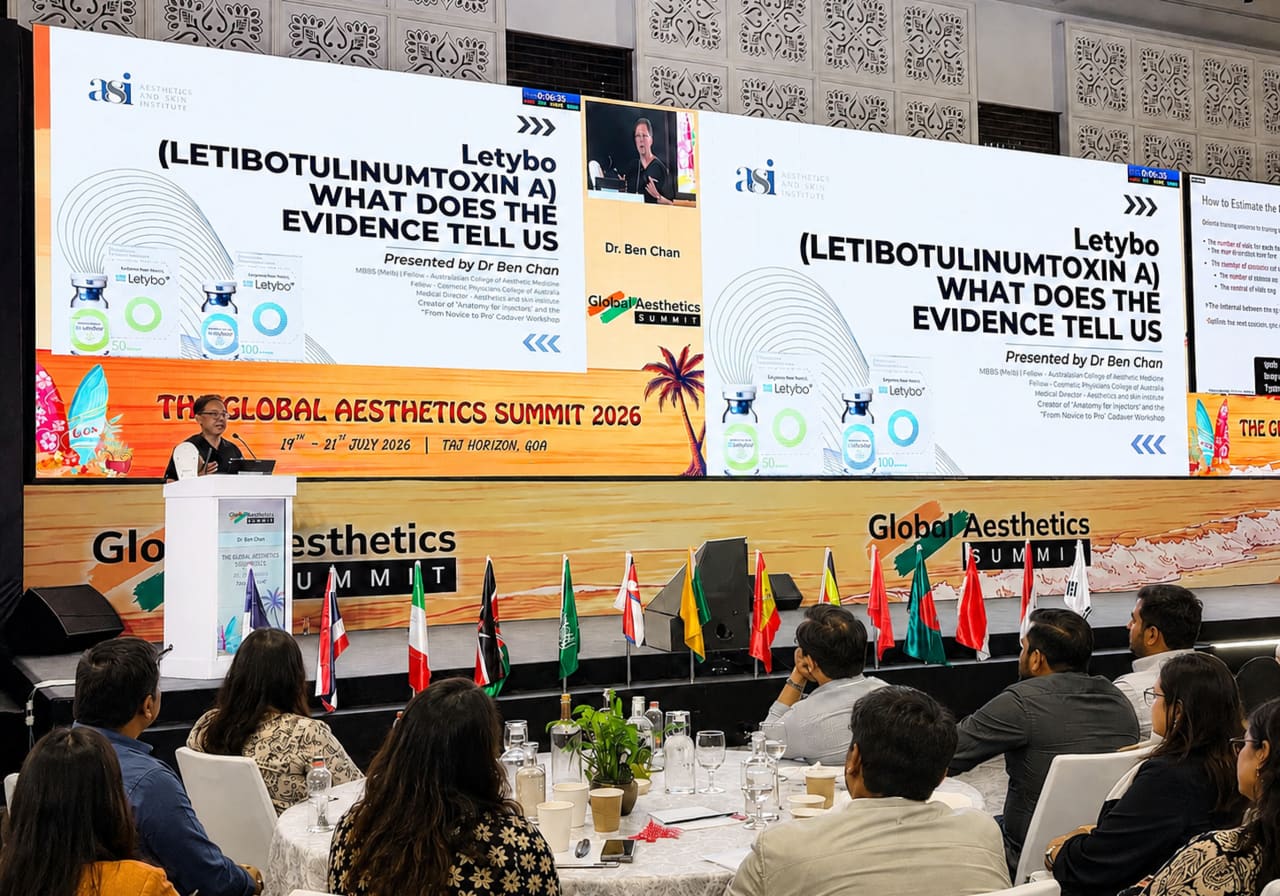
Hugel launched Letybo, its botulinum toxin product, in India last week, staking a claim in a market where rising incomes and shifting beauty standards are fueling double-digit growth in non-surgical cosmetic procedures. The Korean medical aesthetics company unveiled the product during the Global Aesthetics Summit held July 19-21 in Goa, according to Hugel.
The move positions Hugel alongside established players in India's aesthetics sector, where demand for injectable treatments has accelerated in tier-one cities and is now spreading to secondary urban centers. India's medical aesthetics market has grown rapidly over the past five years, driven by a younger demographic willing to spend on appearance-related procedures and an expanding network of trained dermatologists and plastic surgeons.
Distribution Strategy
Hugel has partnered with Aakaar Medical, a local distributor, to handle commercialization and market penetration. The partnership reflects a common playbook for foreign aesthetics firms entering India: rely on established local networks to navigate regulatory requirements, build practitioner relationships, and manage logistics across a geographically fragmented market.
At the Goa conference, Hugel and Aakaar Medical focused on raising brand awareness among dermatologists, plastic surgeons, and aesthetics clinic operators. The company conducted product demonstrations and training sessions aimed at familiarizing practitioners with Letybo's formulation and injection protocols.
Botulinum toxin products require careful handling and precise administration, making practitioner education a critical component of any market entry. Hugel's emphasis on training signals an intent to build long-term relationships with Indian clinicians rather than simply flooding the market with product.
Market Context
India's aesthetics sector presents both opportunity and complexity. The country has a large and growing middle class, with disposable incomes rising in major metropolitan areas. Cultural attitudes toward cosmetic procedures have shifted, particularly among urban professionals and younger consumers who view injectables as routine maintenance rather than taboo.
However, price sensitivity remains high. Indian consumers typically pay less for aesthetics procedures than their counterparts in East Asia or the Gulf, creating pressure on margins and requiring companies to balance volume with profitability. Regulatory approval processes can be lengthy, and market access often depends on relationships with key opinion leaders in dermatology and plastic surgery.
Hugel's entry comes at a time when several international and regional aesthetics companies are expanding their presence in South Asia. The competitive landscape includes established global brands as well as newer entrants from Korea and China seeking to replicate their success in other markets.
Letybo's Regional Trajectory
Letybo has been available in South Korea and select Southeast Asian markets for several years. The product competes in the crowded botulinum toxin category, where brand differentiation often hinges on pricing, onset time, diffusion characteristics, and the strength of clinical data.
Hugel has positioned Letybo as a cost-effective alternative to premium brands while emphasizing quality and safety profiles. The Indian launch represents part of a broader regional expansion strategy aimed at building market share in Asia before tackling more saturated markets in North America and Europe.
The company's decision to prioritize India reflects confidence in the market's growth trajectory and a belief that early entry can yield long-term advantages. Establishing brand recognition and practitioner loyalty now may prove valuable as the market matures and consolidates.
What Comes Next
Hugel's success in India will depend on execution: how effectively it trains practitioners, how quickly it scales distribution, and how well it manages pricing in a cost-conscious market. The partnership with Aakaar Medical will be tested as the companies work to convert initial interest into sustained adoption.
For India's aesthetics sector, the entry of another international player adds to the competitive intensity and may accelerate the professionalization of the market. More competition typically drives investment in training, quality standards, and consumer education, all of which can benefit the sector over time.
The Indian launch also serves as a bellwether for Hugel's broader ambitions in Asia. If the company can carve out meaningful share in a challenging market like India, it strengthens the case for expansion into other high-growth territories across the subcontinent and beyond.
RELATED STORIES

South Korea Breaks Full-Year Export Record in September
Tran Quoc Bao · 3 min
SK Chemicals Targets Europe's Can-Coating Shift After BPA Ban
Cheng Wei-Lun · 2 min
SK Hynix Union Rejects Wage Deal in Razor-Thin Vote
Cheng Wei-Lun · 3 min

Hyundai Motor Faces First Full-Day Strike in a Decade as Wage Talks Stall
Jun-ho Seo · 2 min
Spot something wrong? Email editor@briefasia.com. We log every correction publicly.