Technology · Products
Huawei Unveils Kirin X90 Plus and XE90 Processors for New HarmonyOS Laptops
The Chinese tech giant extends its in-house chip strategy to high-performance and ultra-light computing as it deepens independence from Western silicon suppliers.
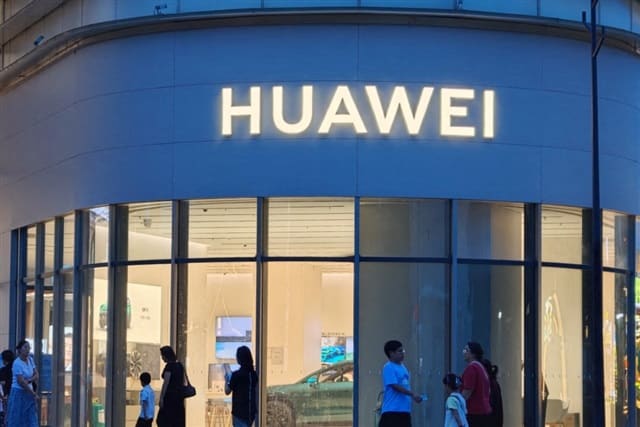
KEY TAKEAWAYS
- ·Huawei launched the Kirin X90 Plus and XE90 processors to power new HarmonyOS laptops, including its lightest model and a second-generation foldable PC.
- ·The move extends Huawei's in-house chip design strategy to the laptop segment, reducing reliance on Western silicon amid ongoing US export controls.
- ·HarmonyOS integration across smartphones, wearables, and laptops creates a unified ecosystem for Chinese users, mirroring Apple's cross-device continuity model.
Two Chips, Divergent Targets
Huawei has launched the Kirin X90 Plus and Kirin XE90 processors, marking a significant expansion of its chip design ambitions beyond smartphones and into the laptop market. The two processors anchor a new generation of HarmonyOS-powered laptops, according to Huawei, and signal the company's intent to reduce reliance on foreign silicon across its entire hardware ecosystem.
The X90 Plus targets performance-focused users, while the XE90 is optimized for ultra-light form factors. Together, they underpin what Huawei describes as its lightest laptop to date and a second-generation foldable PC, both running HarmonyOS rather than Windows. The move positions Huawei as one of the few firms globally to design chips, operating systems, and end devices in-house for the PC segment.
The Asia Semiconductor Context
Huawei's vertical integration comes as China accelerates domestic chip production in response to US export controls that have curtailed access to advanced process nodes and tools from ASML, Applied Materials, and others. While the company has not disclosed fabrication partners for the new Kirin PC chips, industry watchers expect SMIC or other mainland foundries to be involved, likely on mature nodes given current equipment restrictions.
The timing is notable. Samsung and TSMC continue to dominate leading-edge logic production, but Chinese firms are pouring capital into trailing-edge capacity. Huawei's ability to field competitive laptop processors on older process technology, if confirmed, would demonstrate progress in design efficiency and architectural optimization, areas where Asian fabless houses have historically closed gaps with Western incumbents.
HarmonyOS as the Connective Tissue
HarmonyOS, Huawei's proprietary operating system, has gained traction in smartphones, wearables, and smart-home devices across China. Extending it to laptops creates a unified software layer across form factors, a strategy reminiscent of Apple's ecosystem integration. For enterprise and consumer users in Asia already invested in Huawei's mobile and IoT hardware, the new laptops offer seamless device continuity without dependence on Microsoft or Google platforms.
The foldable PC powered by the Kirin XE90 represents Huawei's second attempt at the category, following earlier experiments with flexible displays. Foldable notebooks remain a niche segment globally, but brands including Lenovo and ASUS have shipped units in limited volumes. Huawei's entry, backed by its own silicon and OS, could accelerate adoption in China's premium market, where early-adopter appetite for novel form factors runs high.
What Comes Next
Huawei has not released benchmark data, pricing, or availability timelines for the X90 Plus and XE90 chips or the laptops they power. The company also has not confirmed which foundries will manufacture the processors or at what process node. Industry observers will be watching for performance comparisons with Intel's Core Ultra and AMD's Ryzen AI series, both of which have established footholds in Asia-Pacific OEM lineups.
The broader question is whether Huawei can scale production and distribution beyond China, given ongoing sanctions. For now, the domestic market offers ample volume. China's PC shipments remain substantial, and Huawei's brand strength in mobile devices provides a ready base for cross-selling laptops. If the Kirin PC chips prove competitive on power efficiency and workload performance, they could reshape the landscape for domestic buyers seeking alternatives to x86 and Arm-based Windows machines.
Huawei's chip roadmap now spans baseband, application processors, AI accelerators, and PC CPUs. Each generation tightens the loop between silicon, software, and hardware, a model that has proven resilient in the face of supply-chain disruption. The X90 Plus and XE90 are the latest iterations of that strategy, and their reception will test how far in-house design can carry a platform in a market long dominated by a handful of Western semiconductor giants.
RELATED STORIES
China's Chip Makers Split Three Ways Beneath the Revenue Growth
Tran Quoc Bao · 3 min
JCET Eyes $968 Million to Scale AI Packaging Lines
Tran Quoc Bao · 3 min
AliExpress Shifts Focus to Brand Building as AI Hardware Sales Surge Overseas
Cheng Wei-Lun · 2 min
China Targets 84% Share of AR-HUD Production by 2031
Cheng Wei-Lun · 3 min
Spot something wrong? Email editor@briefasia.com. We log every correction publicly.