Real Estate · Offices
Hong Kong Universities and Schools Drive Commercial Real Estate Rebound
Educational institutions accounted for nearly 40% of commercial property investment in the first five months of 2026, signaling a shift from leasing to ownership as student enrollment surges.
KEY TAKEAWAYS
- ·Educational institutions invested HKD11.1 billion in Hong Kong commercial property in the first five months of 2026, representing nearly 40% of total market investment and already exceeding the HKD5.6 billion deployed across all of 2024.
- ·Student visas reached 94,517 in 2025, more than double the 46,821 issued in 2022, while non-local enrollment in international schools rose 11% to nearly 30,000 students.
- ·Colliers projects education-driven real estate investment will exceed HKD15 billion by year-end 2026, with institutions shifting from leasing to ownership as teaching space becomes a core asset class in the city.
Schools Anchor New Investment Wave
Hong Kong's commercial property sector has found an unexpected lifeline in educational institutions, which deployed HKD11.1 billion (USD1.4 billion) in acquisitions during the first five months of 2026. That figure represents nearly 40% of total commercial property investment in the city, according to Colliers, and already surpasses the HKD5.6 billion invested by schools and universities across all of 2024.
The shift reflects a strategic pivot among leading universities and international schools, which are increasingly choosing to purchase rather than lease as they expand to accommodate record student numbers. Student visas climbed to 94,517 in 2025, more than double the 46,821 issued in 2022. International school enrollment by non-local students now stands near 30,000, an 11% increase over the same period.
Thomas Chak, head of capital markets and investment services at Colliers, noted that the current pace suggests 2026 could become one of the most active years on record for education-driven real estate investment. He projects transaction volume will exceed HKD15 billion by year-end, reflecting what he described as very strong momentum as institutions shift from leasing to ownership.
Leasing Deals Reshape Urban Footprints
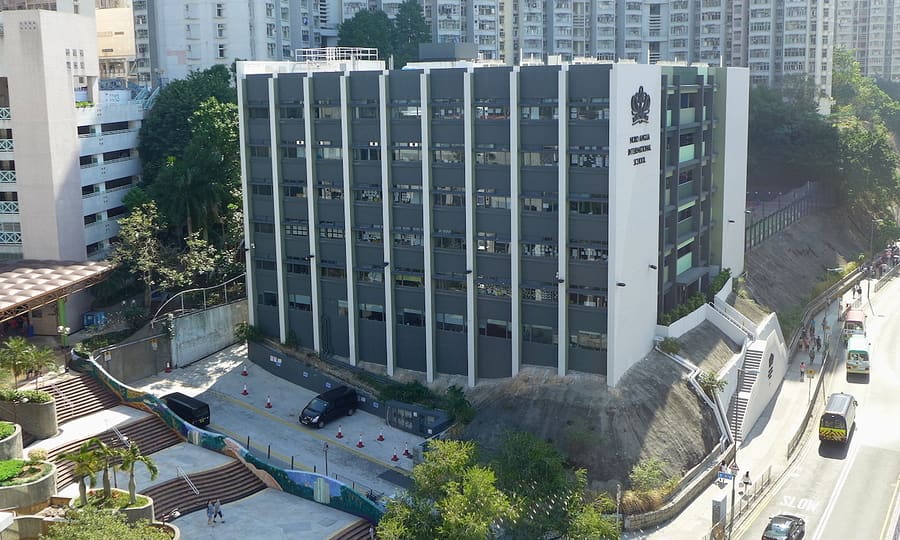
Large-scale leasing transactions underscore the sector's appetite for space. Nord Anglia International School secured 73,800 square feet at Harbourfront Landmark in the first half of 2026 for a sixth-form center, while Stamford American School took 95,000 square feet at Imperial Cullinan in early 2025 to establish a senior school campus. Both deals converted underutilized commercial inventory into long-term educational facilities.
The trend arrives as Hong Kong's office market contends with oversupply and weak demand, and retail properties struggle against e-commerce growth and cross-border shopping trips to mainland China. Education-related leasing and investment have provided crucial support, absorbing space that might otherwise remain vacant.
Teaching Space Emerges as Core Asset Class
Kathy Lee, head of research and retail consultancy at Colliers Hong Kong, observed that the city's property challenge has evolved beyond student accommodation shortages. The real constraint now is teaching and academic space, a shift that is transforming education into a core real estate asset class.
Landlords are repositioning underutilized commercial properties to capture stable, long-term income from educational tenants, who typically sign longer leases and require fewer tenant improvements than traditional office or retail occupiers. The model offers predictable cash flow in a market where vacancy rates have climbed and rental growth has stalled.
Regional Context and Forward Pressure
Hong Kong's experience mirrors broader trends across Asian financial hubs, where international schools and branch campuses are competing for prime urban real estate. Singapore, Tokyo, and Seoul have all seen education-related property transactions rise as middle-class families prioritize international curricula and universities chase regional enrollment growth.
The HKD11.1 billion committed through May represents a sharp acceleration from the HKD4 billion invested in 2025, suggesting that institutions are moving quickly to lock in favorable pricing before the market tightens. Whether the momentum continues will depend on sustained enrollment growth and the availability of suitable properties in central districts where families and students prefer to locate.
For now, the sector is providing a rare bright spot in a commercial property market that has otherwise struggled to find its footing. The question is whether education-driven demand can broaden beyond a handful of large transactions to support wider market recovery, or whether it remains a niche tailwind in a market still searching for direction.
RELATED STORIES

Hong Kong Housing Market Tests Durability as Flipper Activity Drops
Cheng Wei-Lun · 3 min

Hong Kong Awards First Northern Metropolis Land to Mainland-Local Consortium
Cheng Wei-Lun · 3 min
Sino Land Posts 14% Profit Increase Despite Core Business Headwinds
Cheng Wei-Lun · 3 min
Hong Kong's Distressed Property Sales May Ease as Market Stabilizes
Priyanka V. Rao · 3 min
Spot something wrong? Email editor@briefasia.com. We log every correction publicly.