Finance · Markets
Hong Kong's Push to Drop Trading Lunch Break Echoes Singapore's Failed Experiment
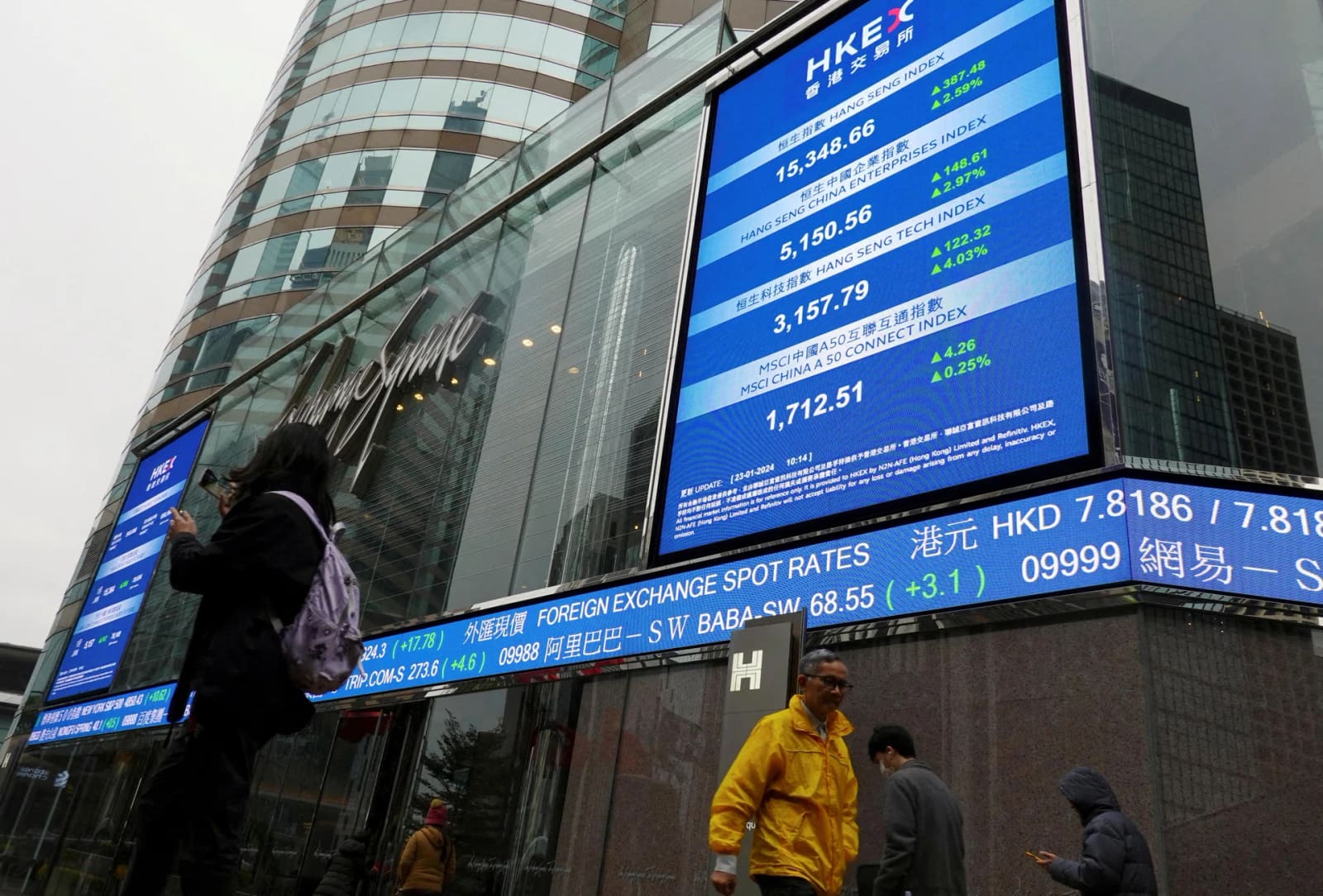
HKEX proposes continuous trading from 9 a.m. to 4 p.m., but SGX abandoned a similar model in 2017 after six years of thin midday volumes
KEY TAKEAWAYS
- ·Hong Kong Exchanges and Clearing plans to start trading at 9 a.m. and eliminate its lunch break, closing at 4 p.m. instead of the current schedule.
- ·Singapore Exchange removed its midday pause in 2011 but reinstated it in 2017 after market participants reported thin volumes and reduced trading intensity.
- ·Southbound Stock Connect flows accounted for roughly one-fifth of Hong Kong equity turnover in 2025, making continuous access appealing for mainland Chinese investors.
Singapore's Midday Session Proved Unpopular
Hong Kong Exchanges and Clearing plans to eliminate its traditional lunch break and begin trading at 9 a.m., mirroring a strategy Singapore Exchange tested and abandoned. SGX removed its midday pause in 2011, aiming to boost accessibility for international investors, but brought it back in 2017 after market participants pushed back.
The proposal from HKEX would shift the opening bell forward by 30 minutes and run continuously until 4 p.m. Singapore currently operates from 9 a.m. to 5 p.m. with a break between noon and 1 p.m.
During Singapore's six-year trial, the additional midday hour generated minimal activity. Dan Chang, an investment specialist at PhillipCapital who traded through that period, noted that volumes during the extended session remained sparse and that the broader trading day lost some of its intensity as activity spread thinner across more hours.
Regional Exchanges Race to Extend Access
The Hong Kong move fits a wider pattern among global bourses stretching their operating windows. London Stock Exchange will launch LSE 24 in early 2027, offering overnight trading from 5 p.m. to 7:59 a.m. for select exchange-traded products. Nasdaq will begin near-continuous trading from Sunday evening through Friday night starting December 6, pausing only for a daily one-hour system maintenance window.
Zavier Wong, a market analyst at eToro, argued that extra hours alone do not generate fresh capital or deeper investor conviction. He described Singapore's experience as evidence that schedule changes need stronger fundamentals behind them to deliver meaningful results.
Professor Lawrence Loh, who directs the Centre for Governance and Sustainability at NUS Business School, characterized trading hours as a baseline requirement rather than a competitive edge. He emphasized that factors such as regulatory clarity, liquidity depth and the quality of listed companies carry more weight in attracting institutional and retail flows.
Operational Costs and Limited Liquidity Gains
Extending market hours brings infrastructure adjustments across trade processing, settlement systems and back-office operations. Lee Yong Heng, deputy head of global markets at Phillip Securities, highlighted the strain on smaller brokerage firms that may struggle with the added expense and staffing demands.
Jeyson Ng, chief executive of Moomoo Singapore, pointed out that round-the-clock access through online platforms already addresses time-zone challenges more effectively than any single exchange can by lengthening its schedule. He stressed that the overall trading experience depends on factors beyond the clock, including execution speed, product range and transaction costs.
David Gerald, founder of the Securities Investors Association Singapore, noted that long-term investors are unlikely to change behavior based on closing times. He argued that sound investment outcomes rest on business quality, valuation discipline and risk management, none of which shift with an extra hour of market access.
Hong Kong's Mainland Connection Adds Complexity
Hong Kong shortened its lunch break from two hours to one in 2011, despite opposition from brokers and restaurant workers. The current proposal aims to strengthen the city's role as a conduit for mainland Chinese capital through the Stock Connect program, which allows investors in China to trade eligible Hong Kong-listed shares.
Chang at PhillipCapital estimated that Southbound Stock Connect flows accounted for roughly one-fifth of Hong Kong equity turnover in 2025. A continuous trading session could capture more order flow when other regional markets are closed or paused, particularly during periods when Chinese investors are most active.
Malcolm Koo, chief executive of CGS International Securities Singapore, suggested that extended windows may facilitate cross-border portfolio adjustments and give institutional investors more flexibility to manage risk without being constrained by narrow operating schedules.
Limited Overlap Between Singapore and Hong Kong
Market observers expect minimal competitive pressure on SGX from the Hong Kong proposal. Lee at Phillip Securities noted that the two exchanges serve distinct segments, with Singapore known for real estate investment trusts, ASEAN equities and commodities derivatives, while Hong Kong focuses on mainland Chinese listings and financials.
An SGX spokesperson said any schedule extension would require substantial changes across the market ecosystem and must deliver clear benefits for participants. The spokesperson referenced the Equities Market Review Group's recommendations, which focus on improving market-making arrangements, reducing board lot sizes and modernizing post-trade custody infrastructure rather than lengthening the trading day.
Gerald at SIAS acknowledged that market conditions have evolved since Singapore last reviewed its hours and suggested that a fresh evaluation could be worthwhile, particularly as the Global Listing Board initiative takes shape. He described the global trend toward longer sessions as a natural response to electronic and self-directed trading becoming the norm.
When Extra Hours Make Sense
Lee observed that smaller, less liquid markets often lack the demand to justify extended schedules. He noted that as mobile trading becomes standard, continuous market access is shifting from a convenience to an expectation, especially when material news breaks outside traditional hours.
For active participants such as market makers, proprietary traders and institutional desks managing multi-listed securities, extended hours can provide more opportunities to execute trades and support liquidity. Lee added that Hong Kong's proposal is designed to reinforce the city's position as a regional financial hub and support mainland-related capital flows rather than to compete directly with Singapore.
Whether the elimination of lunch breaks becomes a lasting feature of Asian trading depends less on schedule mechanics and more on whether exchanges can deliver the liquidity, product diversity and regulatory environment that investors demand around the clock.
RELATED STORIES
Shein Drops 4% in Hong Kong Debut as Tariff Pressure Weighs on Valuation
Priyanka V. Rao · 4 min
Private Capital Floods Asia's MedTech Sector as Brain Interfaces and Robotics Draw Investors
Priyanka V. Rao · 4 min

Buddy Bites Secures $4.2 Million to Grow Pet Food Subscription Across Asia
Priyanka V. Rao · 2 min
China's Social Security Fund Doubles Offshore Holdings to $86 Billion
Jun-ho Seo · 3 min
Spot something wrong? Email editor@briefasia.com. We log every correction publicly.