Asia · Business
Hong Kong Positions Itself as Asia's Next Biotech Research Hub
A recent summit drew 3,000 attendees as the city leverages its regional connectivity to attract global pharmaceutical investment and clinical trial infrastructure.
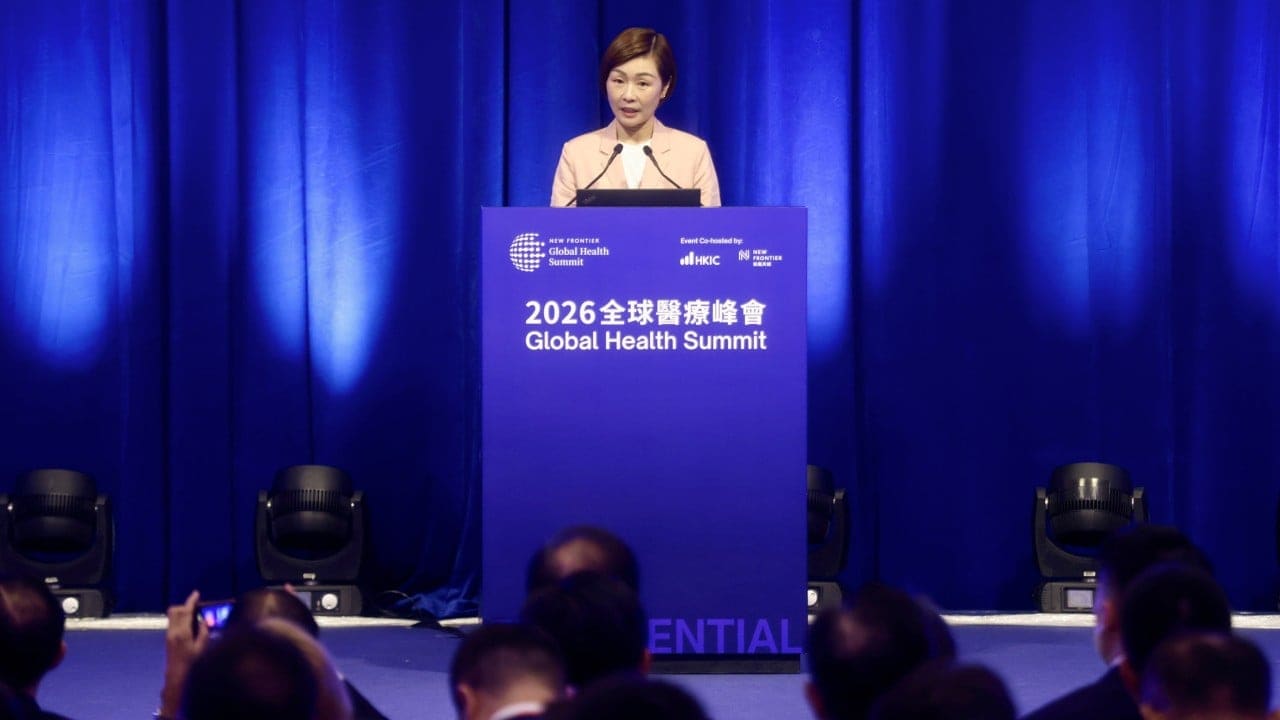
KEY TAKEAWAYS
- ·Hong Kong hosted a Global Health Summit with 3,000 participants and over 150 speakers across 80 sessions focused on pharmaceutical and biotech advances.
- ·The city leverages airport connectivity to 220 destinations, established financial markets, and proximity to mainland China's patient populations for clinical trial access.
- ·Hong Kong competes with Singapore, South Korea, and Japan in attracting biotech investment, with results dependent on sustained policy execution over the next decade.
A Regional Convergence Point
Hong Kong is making a calculated push to establish itself as a premier location for life sciences research and pharmaceutical development in Asia. The city hosted a Global Health Summit that brought together roughly 3,000 participants across more than 80 sessions, according to organizers Hong Kong Investment Corporation and New Frontier Group. The gathering featured over 150 speakers addressing advances in medical technology and drug development.
The summit's scale reflects a broader strategic direction. Hong Kong possesses advantages that few Asian cities can match: established financial infrastructure, regulatory frameworks recognized internationally, and geographic proximity to both mainland China's massive patient populations and Southeast Asia's emerging markets. For pharmaceutical companies seeking to conduct clinical trials or establish regional headquarters, these factors reduce both operational friction and time-to-market.
Infrastructure Meets Ambition
The city's appeal rests on practical considerations. Its airport connects to over 220 destinations, facilitating movement of research personnel and biological samples under controlled conditions. Financial markets provide liquidity for biotech startups navigating the capital-intensive early stages of drug development. Legal systems offer intellectual property protections that international corporations require before committing research budgets.
What Hong Kong now pursues is a coordinated ecosystem. The summit highlighted partnerships between academic institutions, venture capital firms, and pharmaceutical manufacturers. This convergence matters because biotech development requires sustained collaboration across disciplines, from basic research through regulatory approval to manufacturing scale-up.
Competing in a Crowded Field
Hong Kong enters a competitive landscape. Singapore has cultivated a biomedical sciences sector over two decades, anchored by government investment in research facilities and tax incentives for pharmaceutical companies. South Korea channels substantial public funding into biotechnology, particularly cell therapy and precision medicine. Japan maintains deep expertise in pharmaceutical manufacturing and has streamlined approval processes for regenerative medicine products.
Hong Kong's differentiator lies in access. The city serves as a gateway to mainland China's 1.4 billion people, a patient population that can support large-scale clinical trials across diverse disease profiles. Regulatory pathways are evolving to allow data generated in Hong Kong to inform approval decisions in other jurisdictions, reducing duplication and cost.
What Comes Next
The summit's sessions covered gene therapy, artificial intelligence applications in drug discovery, and manufacturing innovations for biologics. These topics signal where investment capital is flowing. Companies attending the event were evaluating Hong Kong not only as a conference destination but as a potential location for laboratories, clinical trial coordination centers, and regional offices.
The city's government has indicated support through funding mechanisms and streamlined licensing for research facilities. Whether this translates into sustained growth depends on execution. Biotech hubs require years of consistent policy, talent pipelines from universities, and willingness to absorb failures inherent in early-stage research.
For now, Hong Kong is assembling the pieces. The infrastructure exists. The capital flows are present. The question is whether the ecosystem can mature quickly enough to capture investment decisions being made now, before competitors lock in those commitments. The summit was a signal of intent. The results will unfold over the next five to ten years as research projects progress from concept to clinical application.
RELATED STORIES
Hong Kong Opens Kuala Lumpur Office in Asia Network Push
Cheng Wei-Lun · 4 min
Cathay Pacific Cargo Reports 9% Tonnage Growth in First Half
Cheng Wei-Lun · 3 min
Crude Surges Past $90 as Hormuz Talks Stall
Cheng Wei-Lun · 3 min
Shein Retreats From Vietnam Warehouse Bet as China Manufacturing Proves Irreplaceable
Cheng Wei-Lun · 4 min
Spot something wrong? Email editor@briefasia.com. We log every correction publicly.