Lifestyle · Luxury
Hong Kong's Pokemon Card Market Transforms Into Alternative Asset Class
Trading cards once confined to schoolyards now attract institutional interest, professional grading services, and tokenized investment vehicles as collectors treat rare Pikachus like equities.
KEY TAKEAWAYS
- ·Pokemon trading cards in Hong Kong now feature professional grading services, climate-controlled storage vaults, and tokenized investment funds that treat cards as portfolio assets.
- ·Rising card valuations have triggered increased theft and fraud, prompting dealers to implement security protocols comparable to those used for jewelry and precious metals.
- ·Hong Kong's zero capital gains tax on collectibles and position as a regional trading hub have made it a center for high-value Pokemon card transactions between Japan and Southeast Asia.
From Playground to Portfolio
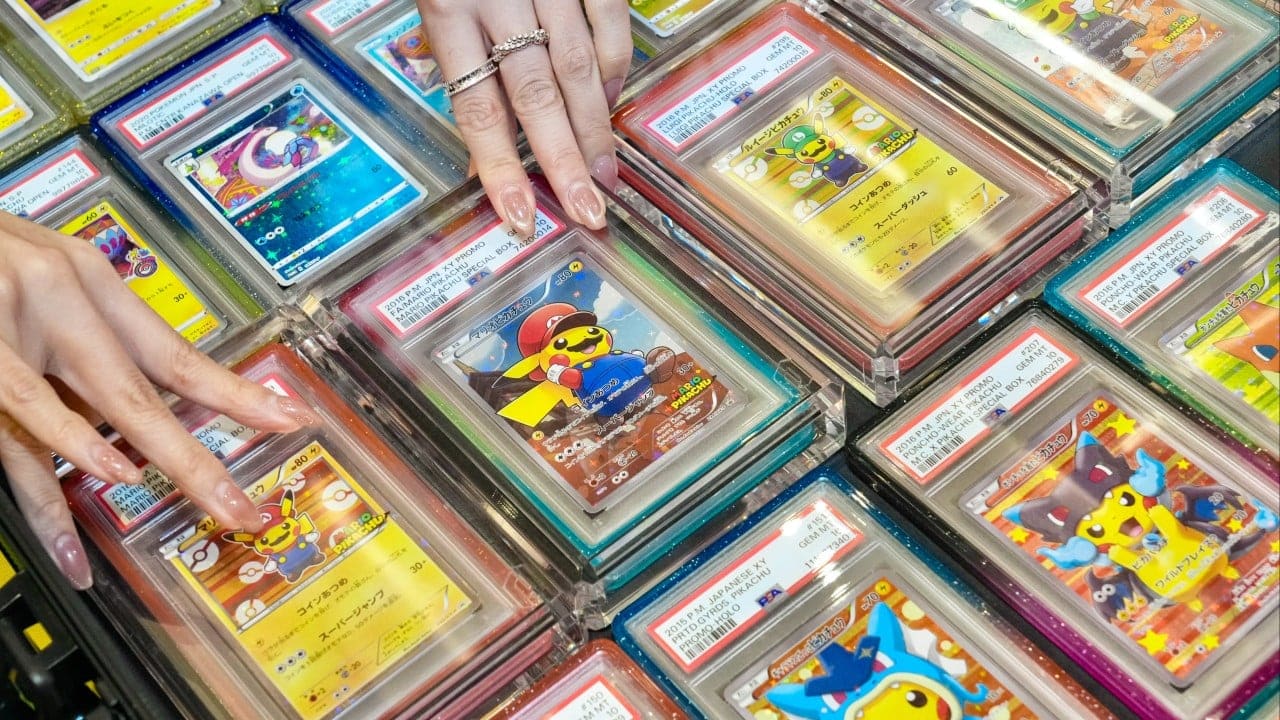
Pokemon trading cards have shed their reputation as children's playthings in Hong Kong. What began as schoolyard collectibles now commands serious attention from investors, complete with infrastructure that mirrors traditional financial markets. Rare cards featuring characters like Pikachu trade hands for substantial sums, while a growing ecosystem of professional services supports buyers who approach these purchases with the same rigor they apply to equities or commodities.
The shift reflects broader patterns across Asia, where nostalgia-driven collectibles have attracted capital seeking alternatives to conventional asset classes. Millennials who grew up with Pokemon in the late 1990s and early 2000s now possess disposable income and an appetite for tangible investments that carry personal meaning. In Hong Kong, this demographic overlap has created conditions for a market that operates with increasing formality.
Infrastructure Mirrors Financial Markets
Professional grading services have become central to the Hong Kong Pokemon card market. Third-party authentication companies assess cards based on condition, centering, edges, and surface quality, then seal authenticated items in tamper-proof cases with numerical grades. This standardization allows buyers and sellers to transact with confidence, establishing a common language for valuation that did not exist when cards circulated informally.
Storage facilities designed for high-value collectibles have emerged alongside grading services. Climate-controlled vaults with security protocols comparable to those protecting precious metals now house collections worth hundreds of thousands of dollars. Some facilities offer insurance coverage and detailed inventory management, treating cards as portfolio assets rather than memorabilia.
Tokenized investment vehicles represent the latest development. Funds that pool capital to acquire rare cards and issue fractional ownership stakes through digital tokens have begun operating in Hong Kong. These structures lower the barrier to entry for investors who want exposure to the asset class without purchasing individual cards, while providing liquidity mechanisms absent from traditional collectibles markets.
Crime Follows Value
Rising valuations have attracted criminal activity. Theft reports involving Pokemon cards have increased in Hong Kong over the past eighteen months, according to local law enforcement. High-profile cases include break-ins targeting collectors' homes and card shops, as well as fraud schemes involving counterfeit grading labels and altered cards sold as authentic rarities.
The concentration of value in small, portable objects makes Pokemon cards particularly vulnerable. A single card measuring roughly nine by six centimeters can command five- or six-figure price tags, creating incentives for theft that rival those surrounding jewelry or electronics. Authentication expertise remains scarce, leaving some buyers exposed to sophisticated counterfeits that pass casual inspection.
Market participants have responded by tightening security protocols. Dealers increasingly conduct high-value transactions in neutral locations with witnesses present, while collectors invest in safes and insurance policies tailored to collectibles. Online marketplaces have implemented verification requirements and escrow services to reduce fraud risk.
Pricing Dynamics and Volatility
Pokemon card prices exhibit volatility comparable to speculative assets. Auction results for specific cards can swing by double-digit percentages within months, driven by factors including celebrity purchases, social media trends, and the release of new Pokemon video games or films that reignite interest in particular characters.
Supply constraints amplify price movements. Many of the most valuable cards were printed in limited quantities more than two decades ago, and the surviving population in mint condition represents a fraction of original print runs. As grading services remove damaged cards from circulation by assigning low grades, the supply of top-tier specimens contracts further.
Demand patterns differ from traditional collectibles. While vintage baseball cards or stamps often appeal to older demographics, Pokemon cards draw buyers across age groups, with particular strength among thirty- to forty-year-olds who experienced the franchise during childhood. This cohort's earning power and willingness to pay premium prices for nostalgia have reshaped market dynamics.
Regional Positioning
Hong Kong's role as a trading hub extends to Pokemon cards. The city's position between Japanese suppliers and collectors across Southeast Asia, combined with its established auction houses and luxury goods infrastructure, has made it a natural center for high-value transactions. Dealers report steady flow of rare cards through Hong Kong from Japan, where the franchise originated and where some of the scarcest early editions were distributed.
Tax treatment also matters. Hong Kong does not levy capital gains tax on collectibles, making it attractive for investors who trade cards frequently or hold them as appreciating assets. This contrasts with jurisdictions where such transactions trigger tax liabilities, giving Hong Kong an edge in capturing trading volume.
The city's auction houses have begun dedicating sales to trading cards, a development that would have seemed unlikely five years ago. These events attract international bidders and generate prices that feed back into market valuations, establishing benchmarks that dealers and collectors reference when negotiating private sales.
What Comes Next
Market maturation will test whether Pokemon cards can sustain institutional interest. The development of futures contracts, options, or other derivatives tied to card indices would represent a further step toward financialization, though liquidity and standardization challenges remain. Some market observers question whether demand will persist if nostalgia fades or if economic conditions shift, reducing appetite for alternative assets.
For now, Hong Kong's Pokemon card market continues to build out infrastructure that treats illustrated cardboard with the seriousness once reserved for art or wine. Whether this represents a durable asset class or a speculative episode will become clearer as the market matures and the first generation of investors begins to exit positions.
RELATED STORIES

Shein Files for Hong Kong IPO With $1.8 Billion Target
Cheng Wei-Lun · 3 min
Hong Kong Housing Market Tests Durability as Flipper Activity Drops
Cheng Wei-Lun · 3 min

Shein Drops 4% in Hong Kong Debut as Tariff Pressure Weighs on Valuation
Priyanka V. Rao · 4 min

Sino Land Posts 14% Profit Increase Despite Core Business Headwinds
Cheng Wei-Lun · 3 min
Spot something wrong? Email editor@briefasia.com. We log every correction publicly.