Technology · Dev
Google Warns 48V Power Standard Reaches Limit as AI Racks Scale Toward Megawatts
Search giant tells OCP Summit that rising current demands are forcing converters and busbars to consume growing portions of rack real estate
KEY TAKEAWAYS
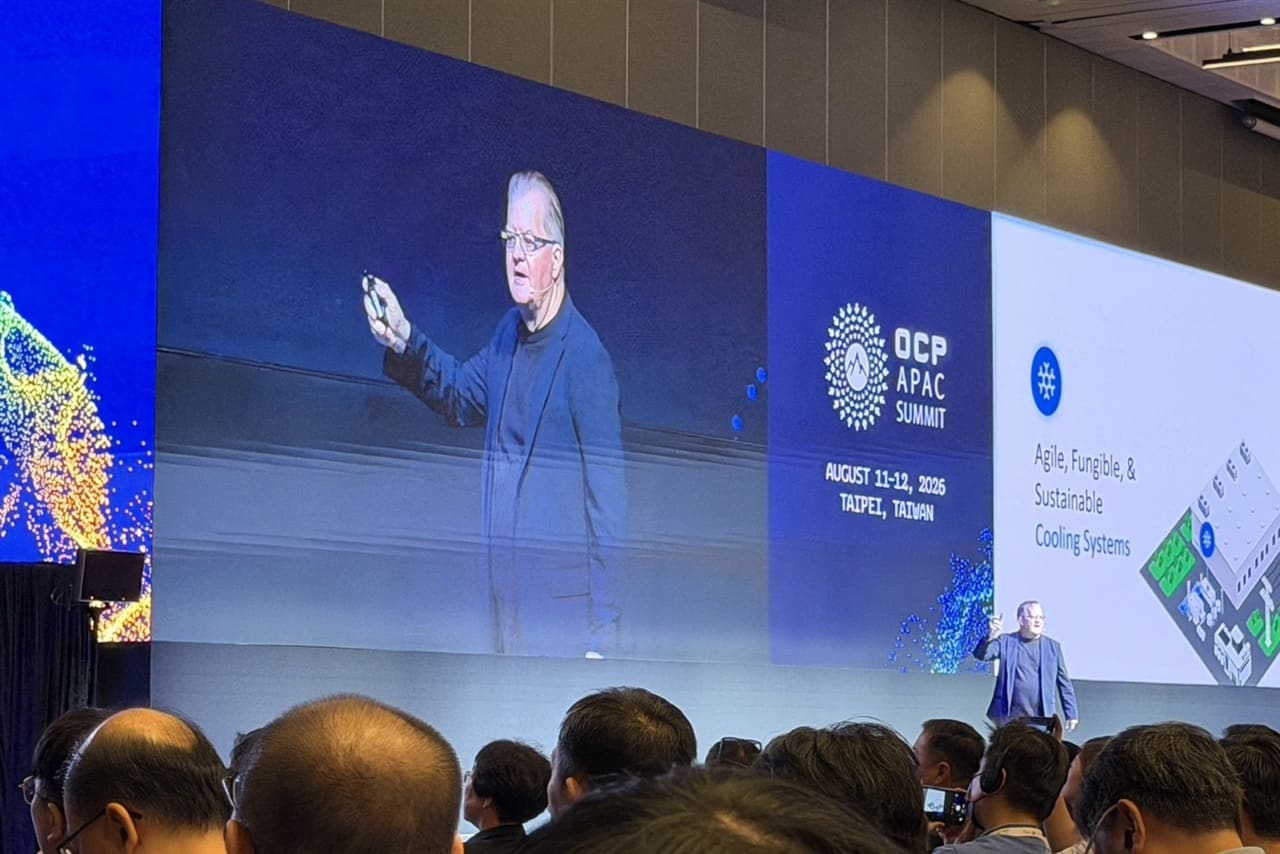
- ·Google stated at the OCP APAC Summit in Taipei that 48V power distribution is running out of headroom as AI racks scale toward megawatt power levels, with converters and busbars consuming increasing rack space.
- ·The constraint stems from rising current at fixed voltage, requiring larger conductors and conversion hardware that claim rack volume otherwise used for compute and accelerators.
- ·The industry may need to adopt higher distribution voltages such as 380V DC to manage current and thermal loads, though such a transition involves safety, regulatory, and supply chain challenges.
The Ceiling on 48V
Google told attendees at the Open Compute Project APAC Summit in Taipei that the industry's widely adopted 48V power delivery architecture is approaching practical limits. Speaking on August 11, the company explained that as AI server racks push toward megawatt-scale power consumption, the physical space required for converters and busbar infrastructure is becoming unsustainable.
The constraint is rooted in basic electrical physics. At fixed voltage, higher power demands translate directly into higher current. As current rises, the conductors and conversion hardware needed to deliver that power must grow proportionally larger to manage heat and maintain efficiency. In high-density AI deployments, that means power delivery components are claiming an ever-larger fraction of the rack footprint that would otherwise house compute, memory, or accelerators.
Why 48V Became Standard
The 48V standard emerged as a compromise in hyperscale data centers over the past decade. It offered better efficiency than traditional 12V rails by reducing resistive losses, while remaining low enough to avoid the safety and regulatory complexity of higher voltages. Major cloud providers and the OCP community rallied around 48V as a common backbone for power distribution within racks.
But AI workloads have rewritten the economics. Training clusters built around GPUs and custom accelerators like Google's Tensor Processing Units can pull tens of kilowatts per server, and racks are increasingly designed to handle loads well above 100 kW. At those power levels, 48V distribution requires currents measured in thousands of amperes, forcing engineers to use thicker busbars, larger connectors, and more robust conversion stages.
The Space Trade-Off
Google's argument centers on rack density. In a traditional enterprise server environment, power infrastructure occupies a small percentage of the chassis. In a megawatt-scale AI rack, the busbars, DC-DC converters, and thermal management for the power path can take up as much volume as several compute nodes.
That trade-off becomes critical when capital expenditure, cooling capacity, and floor space are all constrained. Hyperscalers are building data centers where every square meter of raised floor and every watt of cooling carry a price. If a quarter of a rack's volume is dedicated to moving electricity rather than processing data, the return on infrastructure investment drops.
The issue is not just theoretical. As power density climbs, resistive heating in conductors intensifies, requiring heavier copper or aluminum busbars and more aggressive cooling. Connector contact resistance, once negligible, becomes a meaningful source of loss and potential failure at kiloampere currents. Voltage drop along the distribution path also grows, forcing designers to over-provision upstream or accept reduced efficiency at the load.
What Comes Next
Google did not announce a specific alternative architecture during the keynote, but the implication is clear: the industry will need to consider higher distribution voltages to keep current manageable. Moving to 380V DC, for example, would reduce current by nearly an order of magnitude for the same power load, shrinking conductor cross-sections and simplifying thermal design.
Higher voltages bring their own challenges. Safety interlocks, arc flash protection, and regulatory compliance all become more complex above 60V DC. Connector and busbar standards would need to be reworked, and the installed base of 48V equipment represents billions of dollars in sunk cost. Any transition would be measured in years, not quarters.
Still, the physics are unforgiving. If AI infrastructure continues its trajectory toward higher rack-level power, something in the power delivery chain must change. Google's comments at OCP signal that the conversation has moved from whether 48V will hit a wall to how the industry will navigate the transition beyond it.
Regional Context
The OCP APAC Summit in Taipei is a fitting venue for this discussion. Taiwan is home to the world's most advanced semiconductor manufacturing and a dense ecosystem of server ODMs, power supply makers, and thermal solution providers. Companies like Delta Electronics, Lite-On, and a host of contract manufacturers in the region supply the power components that hyperscalers depend on.
As Google and its peers push the envelope on AI infrastructure, the supply chain will need to retool. New busbar geometries, higher-voltage DC-DC converter topologies, and revised connector standards will all require engineering and production capacity that is concentrated in Asia. The shift away from 48V, if it accelerates, will ripple through procurement, design validation, and manufacturing timelines across the region.
For now, 48V remains the de facto standard in most deployments. But Google's public acknowledgment of its limitations suggests that the clock is ticking, and the next generation of power architecture is already under discussion in the labs and boardrooms of the world's largest cloud providers.
RELATED STORIES
Formosa Plastics and Daicel Launch Chip Materials Joint Venture in Taiwan
Cheng Wei-Lun · 3 min
Taiwan's Server Supply Chain Posts Mixed July Results Amid AI Build-Out
Cheng Wei-Lun · 4 min
Power Constraints Emerge as AI Data Center Bottleneck
Cheng Wei-Lun · 2 min
Asia's AI Chip Startups Face Manufacturing Reality Check
Priyanka V. Rao · 4 min
Spot something wrong? Email editor@briefasia.com. We log every correction publicly.