Real Estate · Homes
Frasers-Led Dunearn House Moves 212 Units at S$3,140 PSF in Weekend Launch
The first residential project in Singapore's Turf City precinct sold 56 percent of its inventory, with three-bedroom apartments fully subscribed within two days
KEY TAKEAWAYS
- ·Dunearn House sold 212 of 380 units at S$3,140 per square foot during its weekend launch, with all 96 three-bedroom apartments fully subscribed.
- ·The project is the first private residential development in Singapore's Bukit Timah Turf City precinct, where limited new supply has launched since 2018.
- ·The 56 percent take-up trails the 75.8 percent average for nine projects launched in the first half of 2026, suggesting possible buyer fatigue.
First-Mover Advantage in Bukit Timah
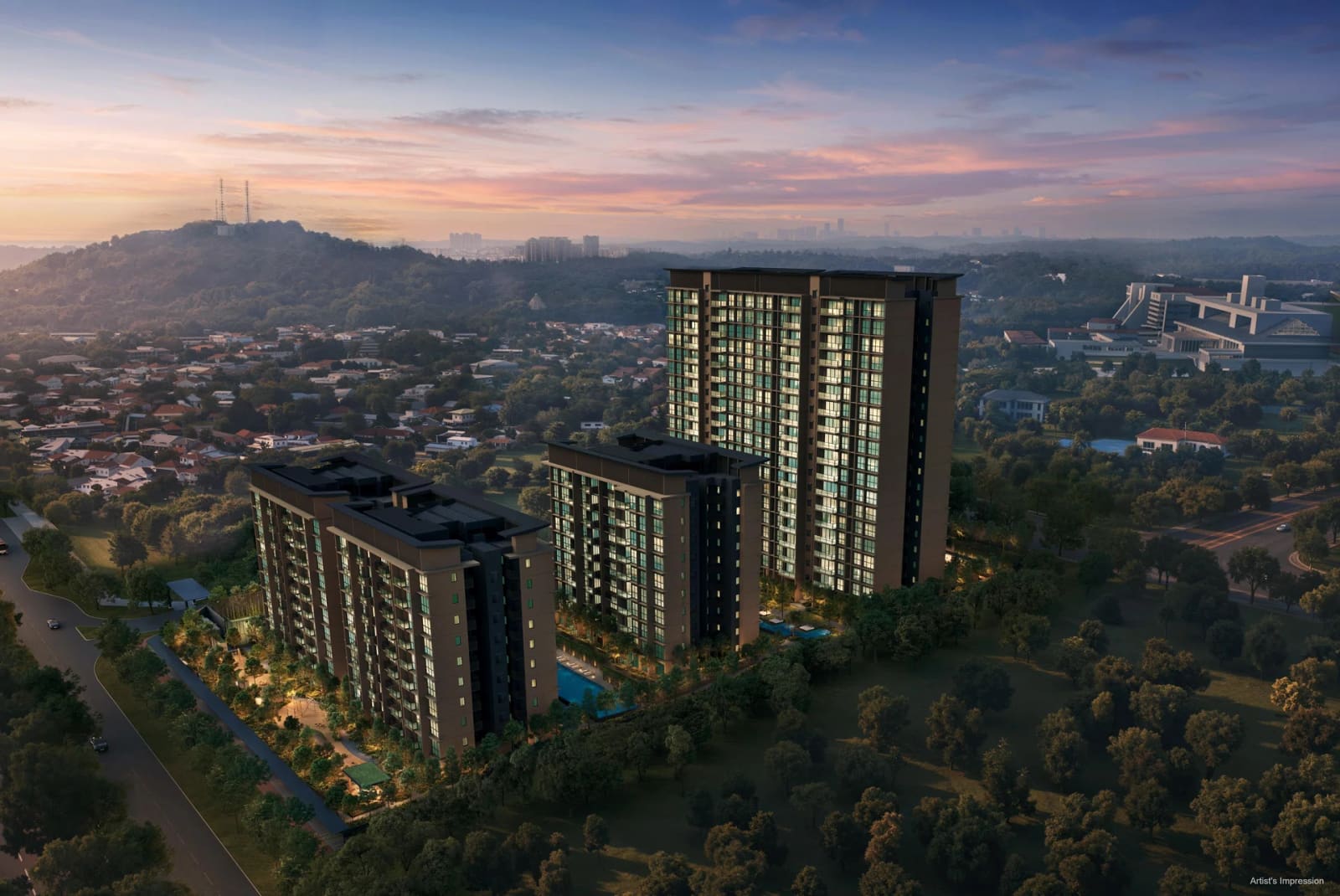
Dunearn House, a 380-unit condominium developed by a consortium of Frasers Property, CSC Land Group, and Sekisui House, moved 212 apartments during its weekend launch at an average price of S$3,140 per square foot. The project marks the first private residential development in Singapore's Bukit Timah Turf City master plan, a precinct set to receive new transport infrastructure and community facilities over the coming years.
All 96 three-bedroom units sold out within the launch period, according to the developers. The five-block development comprises 176 two-bedroom apartments (46 percent of inventory), 96 three-bedroom units (25 percent), and 108 four-bedroom homes (28 percent). Entry prices started at S$1.475 million for two-bedroom units ranging from 527 to 678 square feet, S$2.597 million for three-bedroom units between 872 and 1,001 square feet, and S$3.588 million for four-bedroom apartments spanning 1,184 to 1,378 square feet.
The consortium holds equal stakes in the development, which capitalizes on a location that has seen limited new 99-year leasehold supply since 2018. Approximately 3,400 units have launched in the Bukit Timah area since 2010, creating a supply gap that developers expect will support pricing.
Buyer Demographics and Market Context
Singaporean citizens accounted for 86 percent of purchasers, while permanent residents from China, Indonesia, Malaysia, South Korea, and other countries made up 13 percent. U.S. buyers represented 1 percent of transactions.
The 56 percent take-up rate lands Dunearn House in the middle of recent launch performance in Singapore's primary market. Nine projects totaling 4,854 units launched in the first half of 2026 achieved an average 75.8 percent take-up during their launch weekends, according to market data. River Modern, a River Valley project, sold 90 percent of its 455 units during its debut, while Lentor Gardens Residences moved 54 percent of 499 units when sales bookings opened the previous week.
Market observers note that 39 residential projects with 17,917 units have launched in Singapore over the past 18 months. This sustained pipeline has tested buyer appetite as developers push pricing envelopes with each successive project. Recent government land sale tenders have seen residential land prices in the Rest of Central Region exceed S$1,400 per square foot per plot ratio, while Core Central Region sites have crossed the S$1,800 mark.
Pricing Strategy and Supply Dynamics
The Dunearn House pricing reflects a calibration between developer margins and buyer capacity in a market where new launches have consistently trended upward. The consortium acquired the site through earlier land tender processes, though specific acquisition costs were not disclosed in launch materials.
PropNex CEO Kelvin Fong highlighted the project's position as the inaugural development in the Turf City precinct, suggesting early buyers are securing access to a neighborhood that will mature with government-planned amenities and green spaces. SRI head of research Mohan Sandrasegeran pointed to the balance between entry pricing and product quality as a factor in attracting buyer interest despite macroeconomic uncertainties.
ERA Singapore CEO Marcus Chu noted the multi-year gap in new 99-year leasehold launches in Bukit Timah, creating pent-up demand among buyers seeking homes in the established residential belt. However, Mogul.sg chief research officer Nicholas Mak observed that recent launches, including Dunearn House and Lentor Gardens Residences, have posted lower take-up rates compared to earlier 2026 projects, potentially signaling buyer fatigue and price resistance.
What the Numbers Signal
The Dunearn House launch provides a data point on how Singapore's primary residential market is absorbing supply after an 18-month period of elevated developer activity. The full subscription of three-bedroom units suggests that mid-sized family homes remain in demand among upgraders and young families, while the slower uptake of two- and four-bedroom inventory may reflect price sensitivity at the upper and lower ends of the project's range.
Land acquisition costs continue to push launch prices higher, creating a tension between developer return expectations and household purchasing power. The consortium's decision to price Dunearn House at S$3,140 per square foot on average positions the project within the current market range for Outside Central Region developments with good school access and future infrastructure connectivity.
As Singapore's residential pipeline continues to deliver new supply through 2026 and into 2027, the pace and pricing of absorption will clarify whether the market has reached a ceiling or whether buyers anticipate further appreciation. For now, Dunearn House's 56 percent weekend take-up reflects a market that is still transacting, if not at the breakneck pace seen earlier in the year.
RELATED STORIES
Frasers Property Wins Shareholder Backing for S$2.1 Billion Hospitality Reshuffle
Lim Hui Ying · 3 min
China's Beverage Giants Face Profitability Test After Rapid Expansion
Jun-ho Seo · 3 min

Singapore Dollar Gains Ground as Currency Diversification Pick
Tran Quoc Bao · 2 min

Southeast Asian Firms Overlook Digital Pact Worth USD 2 Trillion
Lim Hui Ying · 4 min
Spot something wrong? Email editor@briefasia.com. We log every correction publicly.