Asia · Business
Five Tests Awaiting Tata Sons' Next Chair
From Air India's revival to AI integration, Natarajan Chandrasekaran's successor inherits an agenda shaped by technology, scale, and global ambition
KEY TAKEAWAYS
- ·Natarajan Chandrasekaran's successor at Tata Sons will confront challenges including the Air India turnaround, AI adoption across the group, and disagreements over IPO strategy.
- ·Air India's profitability remains elusive despite fleet renewal and restructuring, requiring the next chair to decide on investment pace and strategic priorities.
- ·Disagreements over taking subsidiaries public and recent operational setbacks demand sharper capital allocation and portfolio discipline across the conglomerate.
A Historic Transition
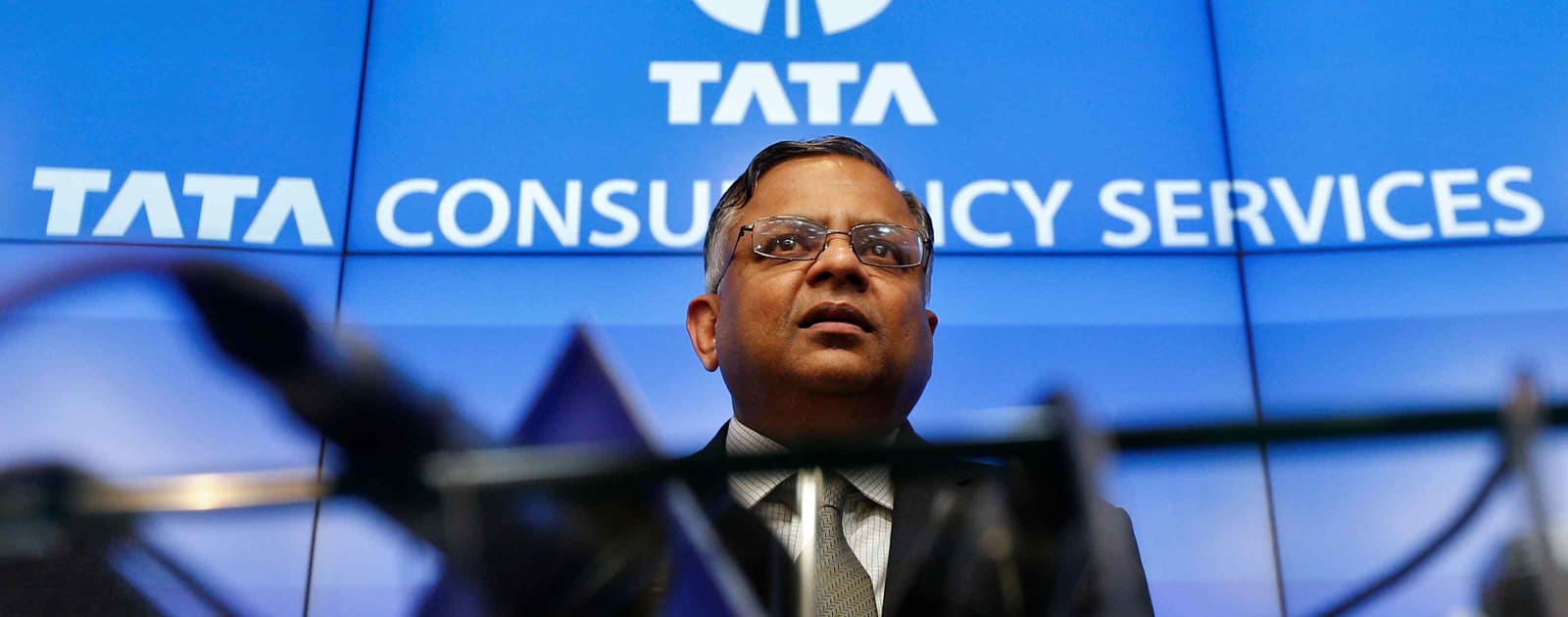
When Natarajan Chandrasekaran took the helm of Tata Sons in 2017, he broke a century-old pattern. For the first time, someone without family ties to the founders led one of India's most prominent industrial groups. His tenure redefined what the conglomerate could be, steering it through digital transformation, international acquisitions, and ambitious bets on aviation and technology.
Now, as the search for his successor begins, the incoming chair will inherit a portfolio both vast and complex. The challenges ahead span industries, from completing the overhaul of a national airline to integrating artificial intelligence across dozens of businesses. Disagreements over IPO timing and recent operational setbacks have added urgency to the transition.
The Air India Equation
Air India remains one of the most visible tests. Tata Sons reacquired the carrier in 2021 after decades of state ownership left it with aging aircraft, bloated costs, and a tarnished reputation. The turnaround has been methodical but slow. Fleet renewal, route expansion, and staff restructuring are all in motion, yet profitability remains elusive.
The next chair will need to decide whether to accelerate investment or recalibrate expectations. Aviation is capital-intensive, and Air India competes in a market where low-cost carriers dominate domestic travel and Gulf airlines control long-haul connecting traffic. The margin for error is thin, and patience among stakeholders is finite.
Artificial Intelligence and the Digital Pivot
Artificial intelligence represents both opportunity and existential risk. Tata Consultancy Services, the group's largest revenue generator, has built its business on IT services and digital consulting. As generative AI automates tasks that once required armies of engineers, the traditional outsourcing model faces pressure.
The successor must steer TCS and other Tata entities toward AI adoption without cannibalizing existing revenue streams. This means investing in proprietary AI tools, retraining talent, and positioning the group as a solutions provider rather than a labor arbitrage play. Other Tata businesses, from steel to consumer goods, will also need AI strategies tailored to their operations.
IPO Disagreements and Capital Allocation
Disagreements over initial public offerings have surfaced as a point of tension. Some within Tata Sons have pushed for listing certain subsidiaries to unlock value and provide liquidity. Others argue that premature IPOs could expose underperforming units to market scrutiny or dilute the conglomerate's control over strategic assets.
The next chair will inherit this debate. Deciding which businesses to take public, and when, requires balancing investor appetite with operational readiness. Misjudging either can erode confidence or leave capital trapped in illiquid holdings.
Operational Setbacks and Portfolio Discipline
Recent business setbacks have raised questions about portfolio discipline. Not every Tata venture has delivered on its promise, and some units continue to consume capital without clear paths to profitability. The successor will need to assess which businesses warrant continued investment and which should be restructured or divested.
This is not just a financial exercise. Tata Sons carries symbolic weight in India, and decisions to exit businesses can carry reputational costs. Yet holding on to underperformers for sentimental reasons undermines the group's competitive position.
Navigating India's Industrial Policy Shift
India's industrial policy has shifted toward self-reliance, with incentives for domestic manufacturing in semiconductors, batteries, and renewable energy. Tata Sons has responded with investments in chip assembly, electric vehicles, and solar capacity. The next chair will need to navigate this policy landscape, securing government support while managing execution risk.
These sectors are capital-heavy and require long gestation periods. Success depends on coordinating across Tata entities, partnering with global technology providers, and maintaining alignment with New Delhi's evolving priorities. The stakes are high, both financially and strategically.
What Comes Next
The successor to Chandrasekaran will step into a role defined by complexity. The conglomerate spans more than a hundred companies, from automotive and steel to hospitality and technology services. Each business faces its own competitive pressures, and the chair must allocate capital, talent, and attention across a sprawling portfolio.
The challenges ahead are not abstract. Air India needs a clear path to profitability. TCS must reinvent itself for the AI era. IPO decisions will shape the group's financial flexibility. Operational discipline will determine which businesses thrive and which fade. And India's policy environment will influence where and how Tata Sons deploys its next wave of investment.
Whoever takes the chair will inherit a legacy built over more than 150 years. The task now is to ensure it remains relevant for the next 150.
RELATED STORIES
Tata Sons Chairman Chandrasekaran to Exit After Decade-Long Tenure
Priyanka V. Rao · 2 min
Tata Sons Chairman Chandrasekaran Won't Seek New Term Amid Charity Arm Dispute
Priyanka V. Rao · 3 min
Tata Sons Chairman Exits After Board Deadlock on Reappointment
Priyanka V. Rao · 2 min
Singapore Airlines Board Monitors Air India Stake at Every Meeting
Priyanka V. Rao · 2 min
Spot something wrong? Email editor@briefasia.com. We log every correction publicly.