Asia · Business
Fire Erupts at Dormant Colonial-Era Oil Well in North Sumatra
Authorities probe unexplained blaze at Indonesia's oldest petroleum site as emergency teams secure the historic Telaga Said field
KEY TAKEAWAYS
- ·A fire erupted Wednesday at dormant well T-130 in North Sumatra's Telaga Said field, Indonesia's first producing oil site from the Dutch colonial era, prompting police and Pertamina investigations.
- ·The well has been non-operational for years, yet gas and flames emerged, highlighting infrastructure decay risks at century-old petroleum sites across the archipelago.
- ·Authorities are examining well integrity and potential unauthorized activity while Pertamina emergency teams secure the area to protect nearby residents in Langkat regency.
Blaze at Inactive Well
A fire broke out Wednesday at well T-130 in the Telaga Said oil field, approximately 110 kilometers from Medan, the capital of North Sumatra province. The well, part of Indonesia's oldest petroleum extraction site dating to the Dutch colonial period, has been non-operational for years. Gas and flames erupted from the dormant installation despite its inactive status, according to PT Pertamina Exploration and Production (EP) Pangkalan Susu.
The incident raises immediate questions about the integrity of aging infrastructure at legacy petroleum sites across the archipelago. Telaga Said, located in Sei Lepan district of Langkat regency, represents more than a century of Indonesian oil history. The field predates the country's independence and stands as a tangible link to the colonial extraction economy that shaped the region's industrial development.
Adj. Comr. Eben Tarigan, head of the Pangkalan Brandan Police sub-precinct, confirmed that investigators have yet to determine the cause of the fire. Langkat Police deployed a forensic team to the site Thursday to examine the circumstances surrounding the ignition. The well's dormant status complicates the investigation, as standard operational factors such as active drilling or production processes can be ruled out.
Emergency Response and Safety Measures
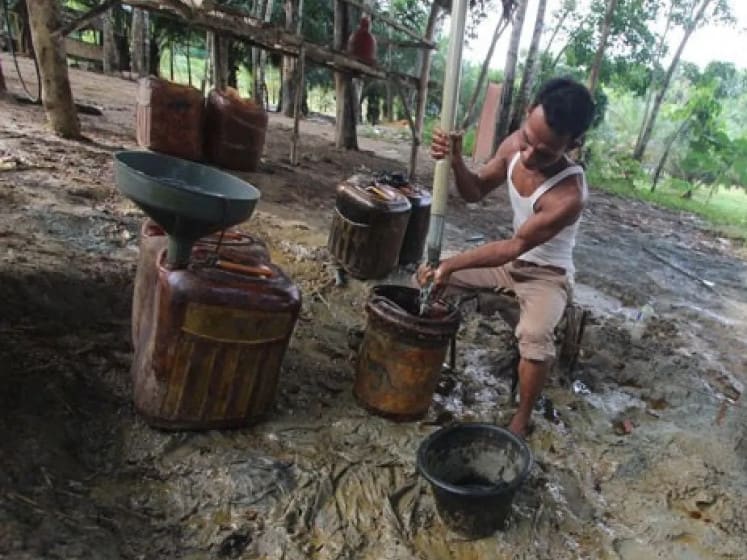
PT Pertamina EP Pangkalan Susu field manager Edwin Susanto said the company dispatched an emergency response unit to the location immediately following reports of the fire. The team's mandate includes securing the perimeter, monitoring air quality and potential hazards, and ensuring the safety of residents in surrounding communities. Telaga Said village, where the well is situated, contains approximately 100 legacy oil wells previously operated by state-owned Pertamina, many of which have been abandoned or left idle for decades.
Susanto acknowledged the unusual nature of the incident. A suspended well should not produce gas discharge or combustion under normal conditions, he told local media Thursday. Pertamina is conducting its own internal investigation parallel to the police inquiry to understand how a non-operational installation could ignite. The company has not yet released preliminary findings or estimated timelines for containment.
The fire underscores broader challenges facing Indonesia's energy sector as it grapples with a dual mandate: expanding production to meet domestic demand while managing a sprawling legacy infrastructure network that spans colonial-era installations to modern offshore platforms. North Sumatra's petroleum fields, among the oldest in Southeast Asia, have experienced decades of extraction that left behind wells in varying states of maintenance and documentation.
Historical Significance and Infrastructure Decay
Telaga Said holds symbolic weight in Indonesia's energy narrative. As the country's first commercially producing oil field, developed under Dutch colonial administration in the early twentieth century, the site helped establish the economic model that would later underpin state oil company formation and national resource policy. Pertamina inherited these aging assets following nationalization, but budget constraints and shifting production priorities have left many historic wells in limbo, neither fully decommissioned nor actively maintained.
The village economy around Telaga Said evolved alongside the oil industry. Residents have historically relied on small-scale extraction from abandoned wells, using traditional equipment to collect crude oil for local sale. This informal sector operates in a regulatory gray zone, with minimal oversight and limited technical standards. While Wednesday's fire occurred at a well under Pertamina's nominal control, the broader field's patchwork of ownership and responsibility complicates accountability.
Indonesia's energy ministry has periodically announced plans to address unlicensed and dormant wells, particularly in legacy fields like Telaga Said. Proposals have included formalizing artisanal extraction, conducting comprehensive site surveys, and prioritizing decommissioning for wells that pose environmental or safety risks. Implementation has lagged due to funding shortfalls and competing priorities within the national energy agenda.
Regional Energy Security Implications
The incident arrives as Southeast Asian governments reassess energy infrastructure resilience amid rising demand and climate transition pressures. Indonesia, ASEAN's largest economy and a net oil importer since 2004 despite significant reserves, faces a strategic dilemma. Aging fields like Telaga Said produce minimal output by contemporary standards, yet abandoning them entirely without proper decommissioning creates environmental liabilities and safety hazards.
Neighboring Malaysia and Thailand have implemented systematic decommissioning programs for offshore platforms and onshore wells reaching end-of-life, driven by regulatory mandates and environmental compliance frameworks. Indonesia's approach has been more fragmented, with responsibility divided among Pertamina, regional governments, and the energy ministry. The lack of a unified decommissioning fund or clear liability regime leaves legacy sites vulnerable to incidents like Wednesday's fire.
North Sumatra's oil sector, once a cornerstone of colonial and early post-independence economic activity, now represents a fraction of national production. Fields in Riau, East Kalimantan, and offshore blocks in the Java Sea dominate current output. Yet the province's historical sites remain densely populated with infrastructure that requires monitoring and eventual closure. The Telaga Said fire highlights the cost of deferred maintenance and the risks of allowing century-old wells to sit unattended.
Next Steps in Investigation
Police have not indicated whether the fire was accidental, the result of equipment failure, or potentially linked to unauthorized activity in the area. Langkat regency has experienced intermittent incidents involving illegal tapping of dormant wells, though authorities have not connected such activity to this week's blaze. Investigators are examining well integrity, surrounding soil conditions, and any recent activity near the site that could have triggered the gas release and subsequent ignition.
Pertamina has not disclosed a timeline for extinguishing the fire or securing the well permanently. The company's emergency response protocol includes capping procedures for uncontrolled gas releases, though the technical challenges vary depending on well depth, pressure, and structural condition. Legacy wells often lack comprehensive documentation, complicating intervention efforts.
The outcome of the investigation will likely influence regulatory discussions around legacy well management across Indonesia. Energy sector analysts note that the country's transition to renewable energy sources, while necessary for climate goals, does not eliminate the obligation to address historical petroleum infrastructure. Proper decommissioning requires capital investment, technical expertise, and political will, all of which have been in short supply for aging fields that no longer contribute significantly to national revenue.
For residents of Telaga Said and surrounding villages, the fire serves as a stark reminder that the oil industry's legacy extends far beyond production statistics and export revenues. The wells that once powered colonial and national economies now pose risks that must be managed for decades to come, even as Indonesia charts a new energy future.
RELATED STORIES
Five ASEAN Members Back Regional Oil Stockpile as Study Nears Completion
Tran Quoc Bao · 3 min
Indonesia Faces Critical Choice Between Resource Control and Industrial Growth
Tran Quoc Bao · 3 min
Indonesia's Wildfires Push Air Quality to World's Worst Levels
Siti Nuraini · 2 min
Bayan Resources Halts Coal Deliveries After Indonesia Quota Dispute
Lim Hui Ying · 3 min
Spot something wrong? Email editor@briefasia.com. We log every correction publicly.