Technology · AI
Filipino Workers Embrace AI Daily While Fearing Cognitive Decline
A survey of 3,516 employees reveals widespread adoption across industries, paired with anxiety that automation tools may be weakening decision-making skills rather than enhancing them.
KEY TAKEAWAYS
- ·Seventy-eight percent of Filipino workers use AI daily, the highest exposure rate in ASEAN at 12.7 million employees, according to Sprout Solutions and the International Labour Organization.
- ·Workers report higher productivity and lower stress from AI use, but many fear the technology is weakening their decision-making and analytical skills rather than enhancing them.
- ·Only 3.6 percent of Philippine jobs face high displacement risk, with the ILO forecasting job transformation and productivity gains rather than mass automation.
Adoption Outpaces Training
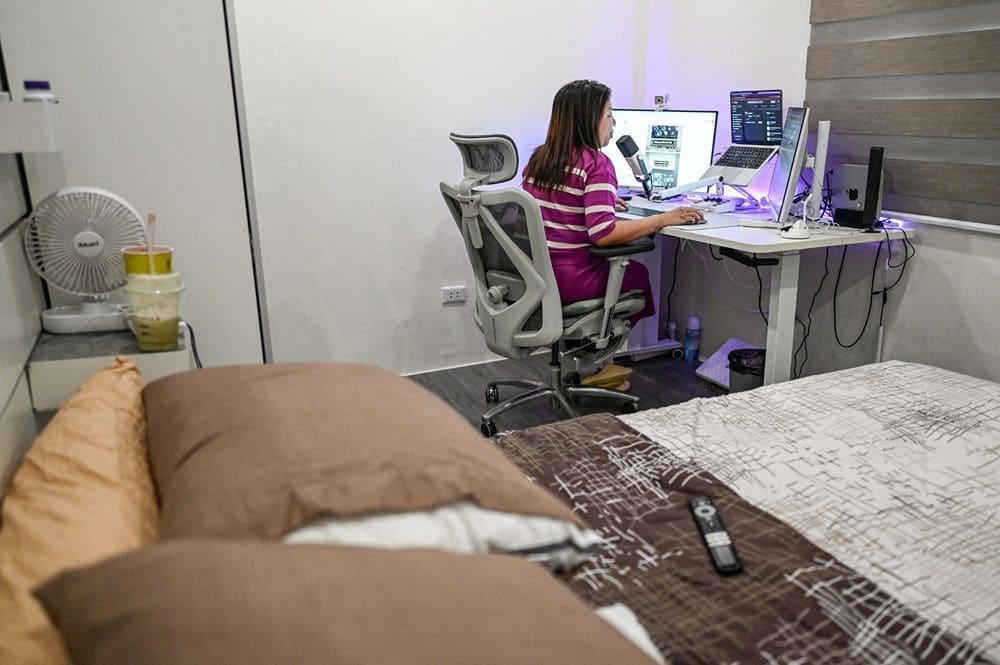
Nearly eight in ten Filipino workers now integrate artificial intelligence into their daily routines, yet a growing segment worries the technology is dulling their cognitive edge rather than sharpening it. The tension reflects a broader question across Southeast Asia's rapidly digitizing labor markets: whether automation enhances human capability or quietly replaces it.
Sprout Solutions, a software-as-a-service provider, surveyed 3,516 employees across 13 industries in the Philippines between May 8 and 29. The research found that 78 percent use AI tools during work hours, with applications spanning communication, data analysis, and decision support. Among those users, 27 percent deploy AI for communication and interaction tasks, 23 percent for information processing, 16 percent for thinking and decision-making, and 12 percent for computer and digital workflows.
The findings place the Philippines among the most AI-engaged workforces in ASEAN. An International Labour Organization report from February estimated that approximately 12.7 million Filipino workers are exposed to generative AI, the highest absolute figure in the region. However, the ILO noted that only 3.6 percent of jobs face high displacement risk, suggesting transformation rather than wholesale replacement remains the dominant pattern.
Productivity Gains, Cognitive Concerns
Workers who use AI daily report measurably higher productivity and lower stress levels, according to Sprout Solutions. Frequent users also experience more recognition from supervisors, work fewer overtime hours, and describe lighter mental loads. The correlation between AI-driven output and workplace recognition suggests performance metrics are improving alongside employee well-being.
Yet the same respondents express ambivalence. Many fear that offloading cognitive tasks to algorithms could atrophy skills they spent years developing. The study summarized the sentiment bluntly: employees want AI to enhance, not erode, their thinking abilities. The concern centers on decision-making roles, where AI has evolved from assistant to co-pilot. Workers who rely on AI for judgment calls report lower stress, indicating the technology reduces cognitive pressure. Whether that relief comes at the cost of long-term analytical capacity remains an open question.
Mental Offloading and Job Security
The phenomenon of mental offloading, where employees delegate complex reasoning to software, emerged as a recurring theme. Sprout Solutions described AI as doing more than accelerating decisions; it appears to be absorbing the psychological weight of making them. This shift may explain why stress levels drop among heavy AI users, but it also raises questions about skill atrophy over time.
Despite these anxieties, job security sentiment remains stable. Workers do not report heightened fears of displacement, even as adoption deepens. The ILO analysis supports this perception, forecasting that generative AI's primary impact in the Philippines will be job transformation rather than elimination. Productivity gains and improved employment quality are expected to accompany the shift, provided training infrastructure keeps pace.
The survey did not measure how many employees receive formal AI training, a gap that mirrors findings across the region. As tools proliferate faster than guidance on their use, workers navigate adoption through trial and error, balancing immediate efficiency gains against longer-term risks they cannot yet quantify.
Regional Context
The Philippines sits at the intersection of two regional trends: a large, English-speaking workforce attractive to global business process outsourcing, and rapid generative AI diffusion that is reshaping white-collar and service roles. The country's exposure exceeds that of neighbors in absolute terms, though relative displacement risk remains moderate.
Other ASEAN economies face similar dynamics. Singapore and Malaysia report high AI penetration in finance and logistics, while Vietnam and Indonesia see adoption concentrated in e-commerce and customer service. Across the region, the pattern holds: workers adopt tools quickly, training lags, and ambivalence about cognitive impact grows.
The Sprout Solutions data underscores a paradox. AI delivers measurable benefits in the short term, reducing stress and raising output. But the same employees benefiting today worry they are trading future capability for present convenience. Whether that trade-off proves sustainable will depend on how organizations manage the transition, and whether training evolves as fast as the technology itself.
RELATED STORIES
Manila Startup Kita Closes $4.5M to Automate Loan Document Processing Across Asia
Priyanka V. Rao · 3 min

Manila's Chip Industry Still Stalled in Assembly While Taipei Built Fabs
Priyanka V. Rao · 4 min

Jollibee Shifts IPO Plans to Hong Kong After US Listing Target
Cheng Wei-Lun · 3 min

Philippine Water Operator Earmarks $400 Million for Southeast Asia Expansion
Mariel D. Santos · 2 min
Spot something wrong? Email editor@briefasia.com. We log every correction publicly.