Finance · Markets
Fed Rate Hike Exposes Divergence in China's Economic Performance
US tightening cycle highlights growing gap between manufacturing and consumer sectors as oil prices climb
KEY TAKEAWAYS
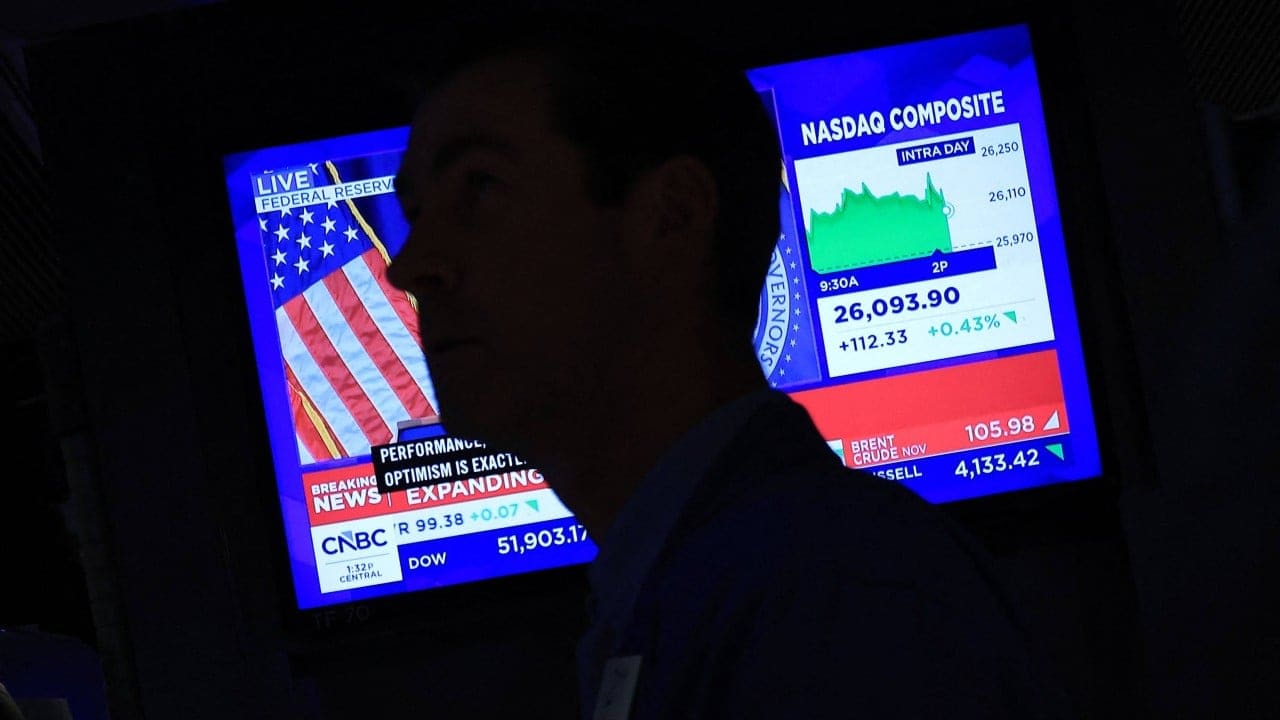
- ·The Federal Reserve raised its benchmark rate by 25 basis points whilst Hong Kong banks kept prime rates unchanged, maintaining the spread between dollar borrowing costs.
- ·China's exports grew 8.4 per cent year-on-year in August with factory capacity above 80 per cent, but retail sales rose only 2.1 per cent against a 4.5 per cent forecast.
- ·Rising oil prices from Middle East tensions increase input costs for manufacturers whilst Beijing faces a policy bind between supporting consumption and preventing capital outflows.
Tightening Cycle Hits Asia
The Federal Reserve lifted its benchmark rate by 25 basis points this week, a move that reverberates across Asian markets already navigating uneven post-pandemic recoveries. For China, the adjustment arrives at a moment when its economy displays two contrasting faces: robust factory output alongside sluggish household spending.
Hong Kong banks held their prime rates steady following the Fed's announcement, maintaining the spread between US dollar and Hong Kong dollar borrowing costs. The decision reflects local lenders' assessment of liquidity conditions in the city's financial system, which operates under a currency board pegged to the greenback.
Oil Prices Add Pressure
Inflation concerns driving central bank action stem partly from energy markets. Ongoing tensions in the Middle East have pushed crude prices higher, raising input costs for manufacturers and squeezing consumer purchasing power. China's industrial sector, heavily reliant on imported oil for production and logistics, faces margin pressure even as order books remain full.
The country's exports grew 8.4 per cent year-on-year in August, driven by electronics and machinery shipments to Southeast Asia and Europe. Factory output in Guangdong and Jiangsu provinces hit multi-year highs, with capacity utilisation rates above 80 per cent in key manufacturing clusters.
Consumer Side Lags
Retail sales growth tells a different story. August figures showed a 2.1 per cent increase, well below the 4.5 per cent pace economists had forecast. Department store traffic in Shanghai and Beijing remains below 2019 levels, whilst online platforms report softer demand for discretionary items beyond essentials.
Youth unemployment, though revised downward after methodology changes, continues to weigh on household confidence. Property market uncertainty adds to caution, with buyers delaying purchases despite developer incentives in second and third-tier cities.
Monetary Policy Bind
The Federal Reserve's tightening creates a dilemma for Beijing's policymakers. Keeping domestic rates low to support consumption risks widening the interest rate differential with the US, potentially triggering capital outflows and renminbi depreciation. Tightening in tandem would further dampen already weak consumer demand.
The People's Bank of China has maintained its one-year loan prime rate at 3.45 per cent since July, prioritising stability over aggressive stimulus. Targeted lending programmes for small businesses and infrastructure projects aim to channel credit without broad monetary loosening.
Regional Implications
Other Asian economies face similar trade-offs. South Korea's export sector benefits from semiconductor demand, yet domestic consumption remains subdued. Taiwan's technology manufacturers operate at high capacity whilst retail spending grows modestly. The divergence between production and consumption appears across the region, not only within China's borders.
Singapore's central bank tightened monetary settings earlier this year to combat imported inflation, accepting slower GDP growth as the cost of price stability. Japan maintains ultra-loose policy despite rising import costs, betting on wage growth to eventually lift domestic demand.
Outlook Factors
China's economic trajectory through year-end depends on several variables. Sustained export demand would support manufacturing employment and incomes, potentially lifting consumer sentiment. A resolution to Middle East tensions could ease oil prices and inflation pressure, giving central banks room to pause rate increases.
Fiscal policy may carry more weight than monetary tools in the near term. Infrastructure spending and consumption vouchers distributed by provincial governments could bridge the gap between factory floors and shopping malls, addressing the two-speed dynamic through direct intervention rather than interest rate adjustments.
The Federal Reserve's next moves will be closely watched in Beijing and across Asian capitals. A prolonged tightening cycle would test the resilience of export-led growth models whilst domestic demand engines struggle to gain traction.
RELATED STORIES
China-US Bond Yield Gap Reaches Two-Decade Peak
Cheng Wei-Lun · 3 min

Healthcare Investment in China Needs More Than Capital
Anand Sundaram · 5 min

Nio Sets 40,000-Unit Monthly Delivery Target for Q4
Anand Sundaram · 3 min

FAW Set to Become Second-Largest Shareholder in GAC Group Through Asset Swap
Jun-ho Seo · 3 min
Spot something wrong? Email editor@briefasia.com. We log every correction publicly.