Finance · Markets
Fanuc Stock Suffers Biggest Single-Day Drop in Four Decades
Japan's industrial robotics giant sees market value erode as investors brace for margin pressure from rising material costs
KEY TAKEAWAYS
- ·Fanuc Corporation experienced its steepest one-day stock decline in forty years Monday, driven by investor fears over escalating procurement costs for critical manufacturing materials.
- ·The selloff highlights margin pressure across Asia's robotics sector, where rising rare-earth and specialty alloy prices threaten profitability for capital-intensive automation manufacturers.
- ·Fanuc's struggles may signal broader headwinds for industrial capital expenditure in Southeast and South Asia, where automation economics are sensitive to upfront equipment costs.
Historic Decline Erases Billions in Market Value
Fanuc Corporation, the Japanese industrial automation heavyweight that supplies robotic arms to factories and warehouses across Asia and beyond, suffered its worst single-session selloff in four decades Monday. The stock plunged in Tokyo trading, erasing billions of yen in market capitalization as investors digested warnings about escalating input costs that threaten to compress margins across the company's manufacturing operations.
The selloff represents the sharpest one-day decline for Fanuc since the mid-1980s, a period marked by currency turmoil and structural shifts in Japan's export economy. Monday's rout underscores how quickly sentiment can turn in the capital-intensive automation sector, where even modest cost inflation can cascade through complex supply chains and erode the pricing power of dominant players.
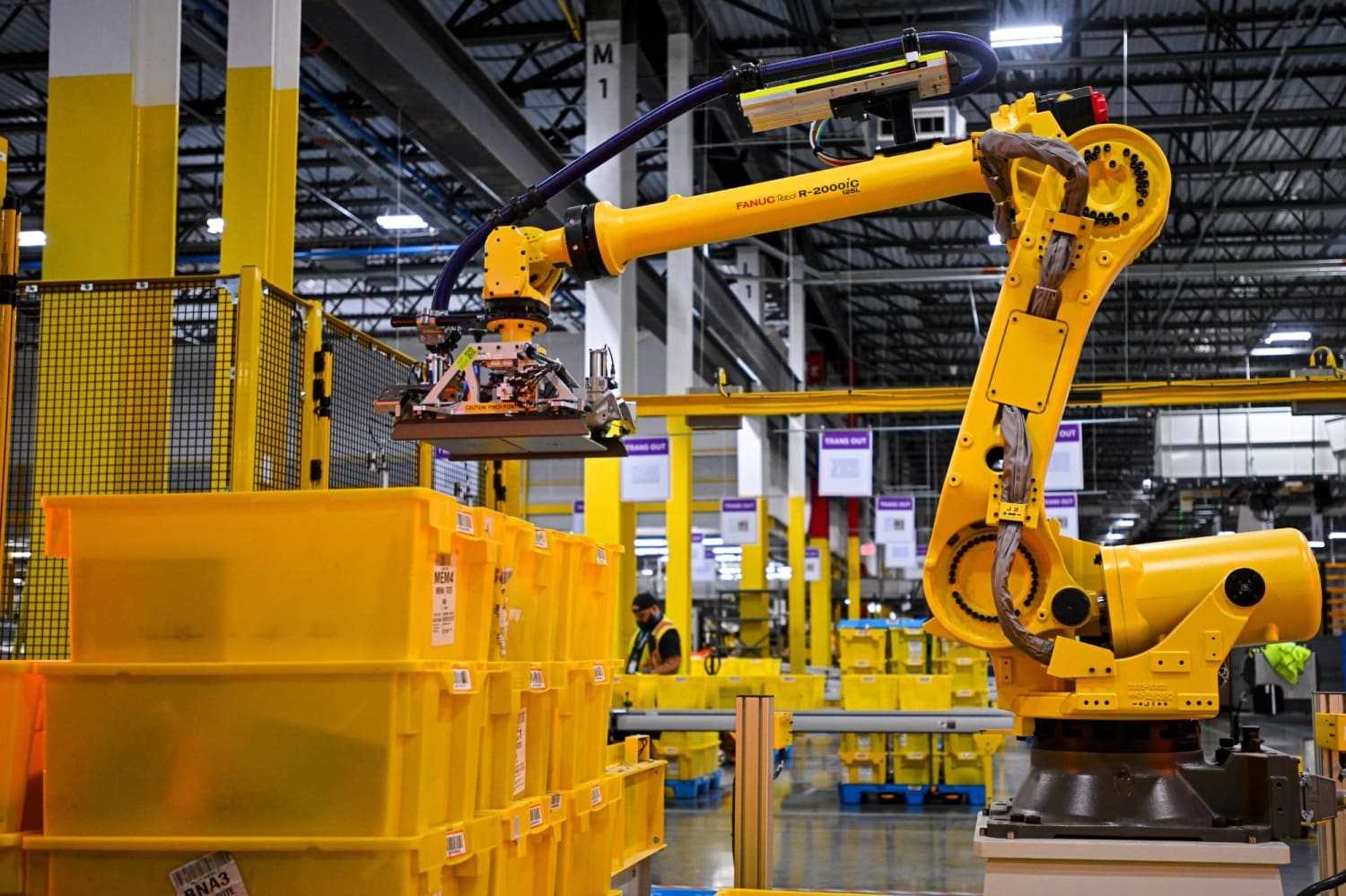
Fanuc's robotic systems are ubiquitous in Asia's manufacturing belt. Its yellow-painted arms assemble electronics in Shenzhen, sort parcels in Singapore logistics hubs, and weld automotive components in plants from Thailand to Indonesia. The company commands roughly one-third of the global market for industrial robots, making it a bellwether for capital expenditure trends across the region's factory floors.
Procurement Pressures Intensify
The trigger for Monday's collapse was investor concern over soaring prices for critical materials used in robotics production. While Fanuc has not issued a formal profit warning, market participants have grown increasingly nervous about the trajectory of input costs, particularly for precision-machined components, rare-earth elements used in servo motors, and specialty alloys required for high-torque joints.
Material cost inflation has been building for months across Asia's industrial sector. Steel and aluminum prices have climbed steadily since early 2025, driven by capacity constraints in China and renewed infrastructure spending in India and Southeast Asia. Rare-earth prices, heavily influenced by Chinese export quotas, have also trended upward, adding pressure to manufacturers that rely on neodymium and dysprosium for high-performance magnets.
For Fanuc, the challenge is compounded by the company's premium positioning. Its robots are engineered for precision and durability, often deployed in applications where downtime carries severe financial penalties. That reputation rests on stringent material specifications and tight manufacturing tolerances, both of which limit the company's ability to substitute cheaper inputs or redesign products on short notice.
Analysts note that Fanuc has historically maintained strong gross margins, typically in the 40 to 45 percent range, by leveraging economies of scale and vertical integration. The company manufactures many of its own components, including motors and control systems, at facilities in Japan. But even vertically integrated producers are vulnerable when raw material markets tighten, and Fanuc's reluctance to pass cost increases directly to customers has amplified margin concerns.
Regional Implications for Capital Spending
The selloff carries broader implications for industrial capital expenditure across Asia. Fanuc's financial health is closely watched by corporate treasurers and operations chiefs who are planning automation investments. A sustained period of margin compression at Fanuc could signal pricing pressure throughout the robotics supply chain, potentially slowing the pace of automation adoption in cost-sensitive markets such as Vietnam, the Philippines, and Bangladesh.
Asia's manufacturing sector has been in the midst of a multi-year automation wave, driven by rising labor costs, tighter quality standards, and the need to compete with more advanced production bases in Japan, South Korea, and Taiwan. Fanuc has been a primary beneficiary of this trend, with order intake from Southeast Asia and South Asia growing at double-digit rates over the past three years.
However, the economics of automation are highly sensitive to upfront capital costs. If robot prices rise in tandem with material costs, or if delivery lead times stretch due to supply chain bottlenecks, manufacturers may delay or scale back investment plans. That dynamic could ripple through the broader industrial ecosystem, affecting component suppliers, system integrators, and contract manufacturers that depend on steady automation capex.
Supply Chain Vulnerabilities Exposed
Monday's market reaction also highlights the vulnerabilities embedded in Asia's industrial supply chains. Despite decades of globalization and the rise of regional production networks, critical materials and components remain concentrated in a handful of geographies. China dominates rare-earth processing, Japan and Germany lead in precision machining, and Taiwan controls much of the market for high-performance electronic controllers.
Fanuc's exposure to these chokepoints is not unique, but its scale and market position make it a visible proxy for supply chain risk. The company's production footprint is heavily concentrated in Japan, with key facilities in Yamanashi Prefecture. While this centralization has historically supported quality control and intellectual property protection, it also means Fanuc has limited geographic diversification to buffer against localized cost shocks or logistics disruptions.
The timing of the selloff is particularly notable. It comes as governments across Asia are rethinking industrial policy and supply chain resilience in the wake of recent geopolitical tensions and pandemic-era disruptions. Japan, South Korea, and Taiwan have all announced initiatives to secure domestic supplies of critical materials and reduce dependence on single-source suppliers. Whether these efforts will stabilize input costs for manufacturers like Fanuc remains uncertain.
What Comes Next
Investors will be watching Fanuc's next earnings release closely for clarity on cost trends and management's strategy for preserving profitability. The company is scheduled to report quarterly results later this month, and any guidance on pricing actions, inventory management, or supply agreements will be scrutinized for signals about the sustainability of current margin levels.
In the meantime, the sharp decline in Fanuc's stock serves as a reminder that even industry leaders with entrenched market positions are not immune to cost pressures in volatile commodity environments. For the broader Asian industrial sector, the episode underscores the fragility of automation economics when input prices move sharply and the limited tools available to manufacturers caught between rising costs and price-sensitive customers.
RELATED STORIES

SoftBank Prices ¥1 Trillion Retail Bond in Largest Offering Since 2020
Aiko Nakamura · 3 min

Japan's Central Bank and Markets Diverge on Rate Hike Trajectory
Aiko Nakamura · 3 min

Bank of Japan Prepares Third Rate Increase in Ten Months
Aiko Nakamura · 3 min

Japan's Megabanks Launch Digital Services to Capture SME Business
Aiko Nakamura · 3 min
Spot something wrong? Email editor@briefasia.com. We log every correction publicly.