Technology · Dev
Energy and Water Shortages Threaten South Korea's Honam Semiconductor Hub
Jeolla Province's infrastructure struggles to meet demands of advanced memory fabrication as Seoul pushes regional chipmaking expansion
KEY TAKEAWAYS
- ·South Korea's proposed semiconductor cluster in Jeolla Province faces serious doubts over power grid and water infrastructure capacity needed for advanced memory manufacturing.
- ·A single leading-edge memory fab can demand several hundred megawatts of electricity and millions of gallons of ultra-pure water daily, far exceeding Honam's current utility design.
- ·Samsung and SK Hynix have not committed major investments to the region despite government incentives, reflecting corporate caution about infrastructure risks that could disrupt billion-dollar production operations.
Infrastructure Reality Check
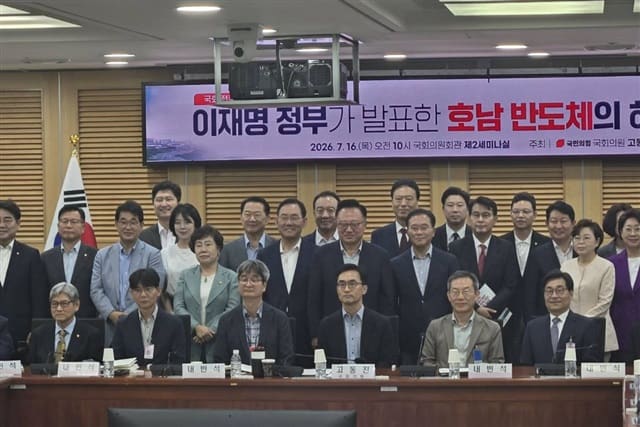
South Korea's drive to establish a semiconductor manufacturing cluster in the Honam region is running into a fundamental problem: the area may lack the basic utilities needed to sustain cutting-edge memory production. Jeolla Province, the government's chosen site for expanding the country's chipmaking footprint beyond traditional hubs, faces questions about whether its power grid and water infrastructure can handle the extreme demands of modern fab operations.
The scrutiny comes as Seoul accelerates efforts to diversify semiconductor manufacturing locations across the country. While Samsung and SK Hynix dominate production in Gyeonggi Province and the greater Seoul area, policymakers have pushed for regional development to spread economic benefits and reduce geographic concentration risk. Honam, historically an agricultural and industrial region in the southwest, emerged as a target zone for this expansion.
The Math Behind Memory Fabs
Advanced memory fabrication imposes extraordinary infrastructure requirements. A single leading-edge DRAM or NAND facility can consume as much electricity as a mid-sized city, with power demands reaching several hundred megawatts for continuous 24-hour operations. Water usage is equally intensive; ultra-pure water systems for wafer cleaning and chemical processes require millions of gallons daily, alongside sophisticated treatment facilities for discharge.
Industry observers note that Honam's existing utility capacity was designed for lighter manufacturing and agriculture, not the relentless consumption profile of semiconductor production. Upgrading transmission lines, substations, and water treatment plants to fab-grade standards would require multi-year timelines and substantial capital investment, potentially delaying any cluster development.
Regional Competition and Capacity
The challenge extends beyond Honam. South Korea's existing semiconductor regions already strain national infrastructure during peak demand periods. Summer electricity loads, driven by both industrial operations and residential cooling, have triggered grid stability concerns in recent years. Adding major new fab capacity in a region without established semiconductor infrastructure compounds the problem.
Water supply presents a separate constraint. Memory manufacturing requires not just volume but extreme purity standards, demanding dedicated desalination or purification plants. Jeolla Province's water resources, while adequate for current usage, would need significant augmentation to support multiple large-scale fabs. Environmental permitting for increased water withdrawal and wastewater discharge adds another layer of complexity.
Investment Calculus
For Samsung and SK Hynix, the two potential anchor tenants of any Honam cluster, infrastructure uncertainty affects investment decisions worth tens of billions of dollars. Both companies have signaled interest in regional expansion to capture government incentives, but neither has committed to major fab construction in Jeolla Province. The gap between policy ambition and corporate commitment reflects the practical difficulties of building world-class semiconductor capacity in unproven locations.
Government officials have acknowledged the infrastructure challenges while maintaining that long-term planning can address them. Proposals include dedicated power generation capacity for industrial zones and public-private partnerships to build water infrastructure. However, the timeline for such projects extends well into the next decade, creating a mismatch with the industry's need for rapid capacity expansion to meet AI and data center demand.
Asia's Fab Footprint
The Honam situation illustrates broader tensions in Asia's semiconductor buildout. Across the region, governments are competing to attract chipmaking investment, but infrastructure realities often lag policy enthusiasm. Japan's Kumamoto cluster, anchored by TSMC, succeeded partly because existing utility capacity could accommodate new fabs with incremental upgrades. Taiwan's established clusters benefit from decades of infrastructure investment specifically designed for semiconductor loads.
South Korea's challenge is that memory manufacturing, unlike logic chip production, requires even higher utility reliability due to the continuous nature of processes. A power fluctuation or water quality issue can ruin entire production batches worth millions of dollars. Companies will not commit to locations where infrastructure poses operational risk, regardless of financial incentives.
The outcome in Honam may determine whether South Korea can successfully decentralize its semiconductor industry or whether manufacturing will remain concentrated in existing hubs where infrastructure has already been proven at scale.
RELATED STORIES
SK Hynix May Fast-Track Gwangju Fab Investment Alongside Yongin Expansion
Jun-ho Seo · 3 min
South Korean Chip Materials Suppliers Ride AI Boom to Profit Surge
Cheng Wei-Lun · 3 min

South Korea Taps Three Telecom Giants to Deliver Free AI Services Nationwide
Cheng Wei-Lun · 3 min

SK Hynix Eyes Deeper Collaboration With Japan's Chip Sector
Cheng Wei-Lun · 4 min
Spot something wrong? Email editor@briefasia.com. We log every correction publicly.