Technology · Products
Dynapack Eyes Double-Digit Growth on AI Server Battery Demand
Taiwan battery maker expects backup power units for data centers to drive second-half revenue as cloud customers ramp orders
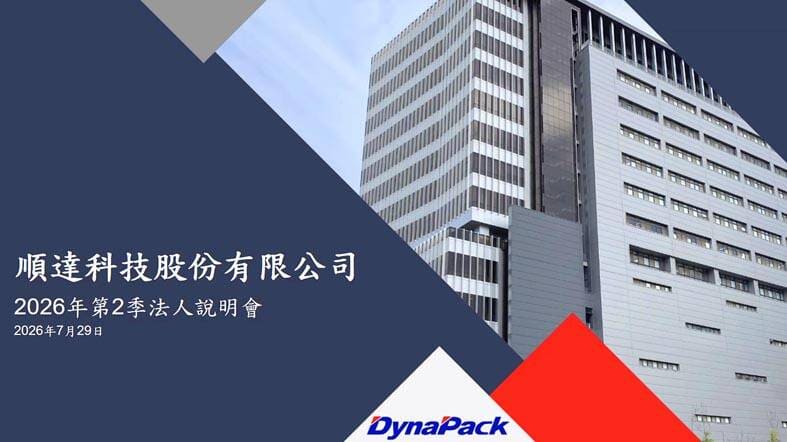
KEY TAKEAWAYS
- ·Dynapack expects second-half revenue to grow by a double-digit percentage from NT$6.84 billion in the first half, driven by backup battery units for AI servers.
- ·Non-IT business, primarily BBUs for data centers, will exceed 50 percent of total revenue this year, up from 25 to 30 percent in Q2.
- ·The company will start shipping to a new cloud customer in Q4 and begin mass production of 8kW and 12kW units in the same quarter.
Shifting Revenue Mix
Dynapack International Technology Corp posted first-half revenue of NT$6.84 billion (US$211.3 million) and now anticipates second-half growth will accelerate by a double-digit percentage, according to company president Chang Chung-hsing. The driver is a sharp uptick in orders for backup battery units that keep AI data centers running when power flickers or fails.
The Taiwanese manufacturer produces lithium battery packs for notebook computers and, increasingly, BBUs that integrate directly into server racks powered by Nvidia chips. These units are critical infrastructure for cloud operators who cannot tolerate even momentary outages in compute-intensive workloads.
Chang told an earnings briefing that order visibility for BBUs remains solid through the second half, and that the company will begin shipping to a new cloud service customer in the fourth quarter. He expects full-year revenue to climb by a double-digit percentage from 2025's NT$13.22 billion, even as traditional IT products face headwinds from memory shortages and softer notebook demand.
Data Center Batteries Take the Lead
Non-IT business, led by BBUs, is forecast to exceed 50 percent of total revenue this year, a sharp jump from the 25 to 30 percent share recorded in the second quarter. Chang estimated that BBU supplies to AI data centers could reach NT$6 billion to NT$7 billion in 2026.
The company is currently focused on shipping 3kW and 5.5kW units in the second half. Mass production of 8kW and 12kW models is scheduled to begin in the fourth quarter, with volume output of units above 15kW and high-voltage direct current products slated for 2027.
Dynapack has budgeted roughly NT$1 billion in capital expenditure this year, earmarked primarily for expanding BBU manufacturing capacity in Taiwan and Thailand. Utilization at the company's BBU production lines is running at 60 to 70 percent in 2026 and is expected to top 80 percent next year as new customer contracts ramp.
Margin Pressure Eases
Gross margin improved to 16.87 percent in the first half from 14.36 percent a year earlier, and company spokesperson Lin Yu-Huei said the figure should climb to around 20 percent in the second half as higher-margin BBU shipments increase.
Net profit for the first half fell 31.31 percent year-on-year to NT$520 million, or NT$3.4 per share, down from NT$757 million a year earlier. Lin attributed the decline to a lower contribution from high-margin non-IT products during the period, a mix that is now reversing as BBU volumes scale.
Asia's Data Center Build-Out
The shift at Dynapack mirrors a broader pattern across Asia's supply chain. Hyperscale cloud operators and AI infrastructure builders are prioritizing uninterrupted power as they deploy ever-larger clusters of accelerated compute. Backup battery systems have moved from auxiliary hardware to mission-critical components, with procurement cycles shortening and capacity requirements climbing.
Taiwan's electronics manufacturers are racing to capture this demand, leveraging decades of experience in battery chemistry and power management. Dynapack's ability to scale from 3kW to 15kW-plus units in a single year underscores both the technical complexity and the commercial urgency of the segment.
The company's guidance points to a market where data center operators are willing to pay premium prices for reliable backup power, a dynamic that is pulling battery makers up the value chain and reshaping revenue models across the sector.
RELATED STORIES
Integrated Systems Will Drive Next Wave of AI Growth, Says TSMC
Cheng Wei-Lun · 4 min

MediaTek Executive Projects Million-GPU Clusters as Mid-Tier by 2030
Cheng Wei-Lun · 3 min
Taiwan UPS Maker Eyes Record Quarter on Data Center Demand
Cheng Wei-Lun · 3 min
AI Demand Tightens Memory Markets as HBM4 Production Strains Supply
Cheng Wei-Lun · 3 min
Spot something wrong? Email editor@briefasia.com. We log every correction publicly.