Technology · AI
DeepSeek Eyes $74 Billion Valuation in Latest Fundraising Push
The Hangzhou-based AI startup is preparing another capital raise just weeks after securing $7.4 billion, signaling both investor enthusiasm and the escalating costs of frontier AI development in China.
KEY TAKEAWAYS
- ·DeepSeek is raising capital at a 500 billion yuan valuation just weeks after securing $7.4 billion in June at 450 billion yuan post-money.
- ·The company has begun IPO preparations for Shanghai's STAR Market with an internal target to file paperwork this year.
- ·Rising costs for data centers, chip development, and talent are forcing DeepSeek to pursue external funding after years of self-financing through founder Liang Wenfeng's hedge fund.
Another Round, Higher Stakes
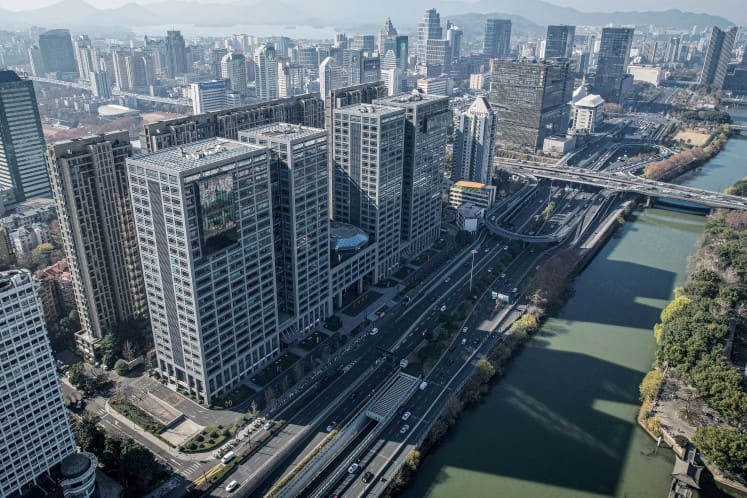
DeepSeek is moving to raise fresh capital at a valuation of approximately 500 billion yuan ($74 billion), according to people familiar with the matter. The Hangzhou-based AI company completed a $7.4 billion fundraising in June at a post-money valuation of around 450 billion yuan, though regulatory filings from Chinese investors later indicated a 350.88 billion yuan ($52 billion) figure. The rapid succession of capital raises reflects both strong demand from investors and the mounting expenses associated with competing at the leading edge of artificial intelligence.
The startup is seeking to bring in as much as 50 billion yuan in the current round, one person briefed on the discussions said. Alongside the fundraising effort, DeepSeek has begun preliminary work toward an initial public offering on Shanghai's STAR Market, China's answer to Nasdaq. The company has set an internal goal to file IPO paperwork before the end of this year, though plans remain fluid and timelines may shift.
DeepSeek gained international attention in 2025 when it released AI models that delivered performance comparable to leading US systems while claiming significantly lower training and operational costs. That breakthrough positioned the company as a test case for whether China could develop competitive AI infrastructure despite limited access to cutting-edge semiconductors from abroad.
The Capital Intensity of AI
The need for another funding round so soon after the June close underscores the financial realities of frontier AI work. Training large language models, expanding data-center capacity, and hiring specialized engineering talent all require substantial outlays. DeepSeek announced plans to double its workforce across multiple departments shortly after its first major external financing, with particular emphasis on data centers and AI agent systems capable of executing tasks with minimal user input.
The company is also pursuing hardware ambitions. It has quietly ramped up hiring of chip-design engineers for a project to develop its own AI inference chip, aiming to reduce reliance on external suppliers and gain greater control over the performance and economics of its models.
For much of its existence, DeepSeek stood apart in China's AI landscape by refusing outside investment. Founder Liang Wenfeng funded the company primarily through his quantitative hedge fund, High-Flyer. That self-sufficiency became unsustainable as the costs of staying competitive climbed. In the June round, Liang personally committed 20 billion yuan. Tencent Holdings invested 10 billion yuan, while battery manufacturer CATL contributed 5 billion yuan, becoming the largest external shareholders. Additional backers include China's national AI fund, NetEase, JD.com, and several investment firms.
Competitive Pressure at Home
DeepSeek faces intensifying competition within China. ByteDance, the parent company of TikTok and Douyin, has poured resources into AI research and product development. Alibaba operates one of the country's most advanced cloud AI platforms. Well-funded startups such as Z.ai, Moonshot, and MiniMax are also vying for market share and technical leadership.
The participation of the state-backed national AI fund in DeepSeek's June round highlighted the company's strategic significance to Beijing. China's government has made developing domestic AI capabilities a priority, particularly as US export controls restrict access to advanced chips and related technologies. DeepSeek's ability to produce competitive models under these constraints has made it a focal point in that effort.
IPO Timing and Market Conditions
The STAR Market, launched in 2019, was designed to attract high-growth technology companies and provide an alternative to listings in Hong Kong or overseas. A DeepSeek IPO would be one of the most prominent AI-related debuts in China to date, offering a public market valuation benchmark for the sector.
Timing will depend on market conditions, regulatory approvals, and the company's operational readiness. Chinese IPO markets have seen periods of both robust activity and caution in recent years, influenced by broader economic trends and policy signals from regulators.
DeepSeek's trajectory from a hedge-fund-backed research project to a company pursuing a multibillion-dollar valuation and public listing illustrates the velocity of change in China's AI industry. Whether the company can sustain its technical momentum while managing the demands of external shareholders and public market scrutiny will shape its role in the next phase of global AI competition.
RELATED STORIES
Sharpa Secures $668 Million at $3.3 Billion Valuation in Tech Giant-Backed Round
Cheng Wei-Lun · 2 min

China Scrubs 5.6 Million AI-Generated Posts in Platform Cleanup
Cheng Wei-Lun · 3 min
China's Chip Makers Split Three Ways Beneath the Revenue Growth
Tran Quoc Bao · 3 min
JCET Eyes $968 Million to Scale AI Packaging Lines
Tran Quoc Bao · 3 min
Spot something wrong? Email editor@briefasia.com. We log every correction publicly.