Finance · Banking
DBP Launches Deposit Drive to Fund Infrastructure Pipeline
The state lender's new campaign targets both retail and corporate depositors as it looks to boost its lending capacity for development projects across the Philippines.
KEY TAKEAWAYS
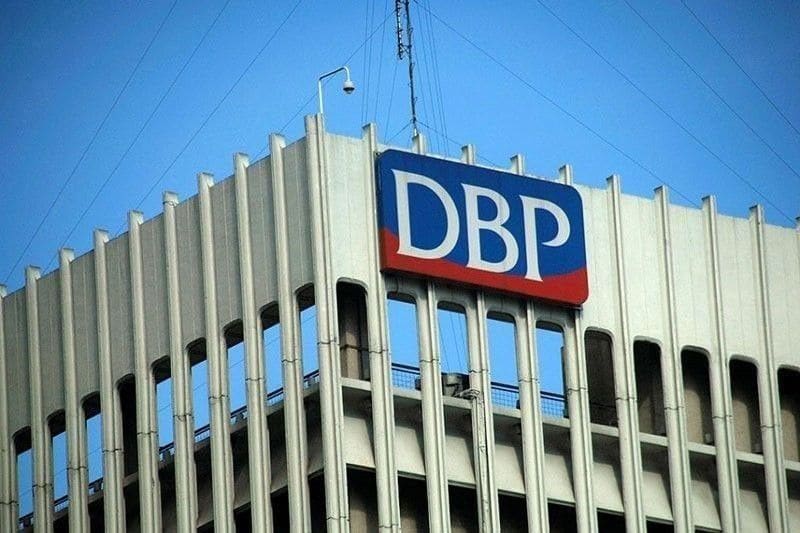
- ·Development Bank of the Philippines launched a deposit campaign offering cash prizes up to PHP 250,000, with the goal of expanding its funding base for infrastructure and development projects.
- ·DBP's deposit book grew 15.5 percent year-on-year to PHP 413.41 billion in Q2 2026, outpacing broader industry growth as the state lender competes for retail and corporate funds.
- ·The campaign targets underbanked Filipinos and runs through December 31, reflecting a regional trend among Asian development banks seeking stable, low-cost funding sources.
Fresh Capital for Development Lending
Development Bank of the Philippines is courting savers with a nationwide deposit campaign that offers cash incentives and prizes, a move designed to deepen its funding pool for infrastructure and development projects across the archipelago. The state-owned lender launched its "Save 2 Win" initiative this month, targeting both individual account holders and corporate treasurers with rewards that reach PHP 250,000 for top-tier retail depositors.
The campaign represents a strategic shift for DBP as it seeks to reduce reliance on wholesale funding and tap into the country's household savings. With the Philippine banking system holding roughly PHP 14 trillion in deposits as of mid-2026, state banks have been competing more aggressively for retail funds, particularly as lending appetite for infrastructure remains robust despite tighter global credit conditions.
DBP president and CEO Michael de Jesus framed the deposit push as essential to the bank's mandate. "Every deposit entrusted to DBP will help strengthen its capacity to finance transformative projects that will support economic growth, create jobs and improve the lives of communities across the country," he said in announcing the campaign.
Deposit Base Growth Outpaces Sector
The lender's deposit book expanded by 15.5 percent year-on-year in the second quarter, reaching PHP 413.41 billion compared to PHP 357.91 billion in the same period of 2025. That growth rate outpaces the broader Philippine banking industry, which posted single-digit deposit growth over the same period, according to central bank data.
The acceleration comes as DBP ramps up lending to infrastructure, renewable energy, and manufacturing sectors aligned with government priorities. State-owned development banks in Southeast Asia have faced a common challenge: balancing developmental mandates with commercial sustainability. Deposits offer a more stable and cheaper funding source than bond issuance or borrowings, which can be subject to volatile interest rate swings.
Regional peers have pursued similar strategies. Indonesia's Bank Mandiri and Thailand's Government Savings Bank have both launched deposit campaigns in the past two years, offering lottery-style incentives to attract retail savers. The approach reflects a broader trend among Asian development finance institutions seeking to diversify funding away from capital markets and multilateral credit lines.
Targeting Underbanked Segments
Beyond the headline prizes, DBP's campaign explicitly aims to draw in underbanked and unbanked Filipinos, a demographic that remains significant despite years of financial inclusion initiatives. According to the Bangko Sentral ng Pilipinas, roughly 44 percent of Filipino adults remain outside the formal banking system, though that figure has improved from 66 percent in 2019.
De Jesus emphasized the dual purpose of the drive: personal financial security for depositors and broader economic impact. "We hope to inspire more Filipinos to save not only for achieving their personal financial goals but also for contributing to nation-building and achieving sustainable progress," he said.
The campaign, which runs through December 31 this year, is open to depositors at all DBP branches nationwide. Individual depositors are eligible for cash prizes, while institutional depositors can win gift certificates. The mechanics mirror consumer banking promotions common in the Philippines, where prize-linked savings accounts have gained traction as a behavioral nudge for household savings.
Infrastructure Lending Appetite Remains Strong
DBP's deposit drive comes at a moment when the Philippine government is pushing an ambitious infrastructure build-out under its medium-term development plan. The lender has committed to financing projects spanning transport, energy, water, and digital infrastructure, sectors that require long-tenor funding not always available from commercial banks.
State banks in the region have faced scrutiny over their ability to mobilize deposits at scale. Vietnam's state-owned commercial banks, for example, have struggled with deposit competition from higher-yielding instruments and fintech platforms. The Philippines has seen similar pressures, with digital banks and investment platforms offering attractive rates that challenge traditional deposit products.
DBP's campaign also reflects a recognition that retail deposits provide a more stable funding base than volatile wholesale markets. As global interest rates remain elevated and credit spreads widen, development banks are re-evaluating their liability mix. A broader deposit franchise reduces rollover risk and lowers the weighted average cost of funds, critical for a lender whose mandate often involves concessional or below-market-rate financing.
Regional Context and Competitive Landscape
The Philippine banking sector has seen intensifying competition for deposits, with both universal banks and digital players vying for share. Land Bank of the Philippines, DBP's fellow state lender, has similarly expanded its retail footprint, while private banks like BDO Unibank and Metrobank have rolled out high-yield savings products and digital account opening to capture younger savers.
Southeast Asian central banks have generally encouraged deposit mobilization as a buffer against external shocks. The Bangko Sentral ng Pilipinas has maintained reserve requirements and deposit insurance ceilings designed to support confidence in the banking system, while also allowing banks flexibility to compete on rates and product features.
For DBP, the campaign is both a funding strategy and a brand-building exercise. State banks in emerging Asia often struggle with public perception as bureaucratic or slow-moving. Prize-linked campaigns offer a way to humanize the institution and engage depositors who might otherwise park funds with commercial rivals or digital wallets.
Implications for Development Finance
The success of DBP's deposit drive will be closely watched by policymakers and peers across the region. If the bank can materially expand its retail base, it sets a template for other development finance institutions seeking to reduce dependence on bond markets and multilateral facilities. A stronger deposit franchise also gives DBP more latitude to absorb credit losses on developmental loans, a recurring challenge for state lenders with mandates that prioritize social impact over short-term profitability.
The campaign's emphasis on financial inclusion aligns with broader ASEAN goals around digital payments and savings penetration. As mobile banking and fintech platforms proliferate, traditional banks including state lenders must innovate to remain relevant. DBP's approach, combining analog branch presence with incentive-driven campaigns, reflects a hybrid model suited to a market where digital adoption is advancing but physical banking infrastructure still matters.
Whether the "Save 2 Win" initiative translates into sustained deposit growth will depend on execution and competitive dynamics. But the move signals that even state-owned development banks in Asia are adopting retail banking playbooks, recognizing that funding diversification is no longer optional in a region where infrastructure needs far outstrip available capital.
RELATED STORIES
Land Bank of the Philippines Targets Profit Growth Despite Fee Waivers
Mariel D. Santos · 3 min
Security Bank Posts 4% Profit Growth to ₱6.08 Billion in First Half
Priyanka V. Rao · 3 min

Philippines Senator Calls for Simpler Access to Financial Services Beyond Fee Cuts
Mariel D. Santos · 3 min
Philippines Plans Two-Year Return of $1.9 Billion PDIC Reserve
Priyanka V. Rao · 3 min
Spot something wrong? Email editor@briefasia.com. We log every correction publicly.