Finance · Banking
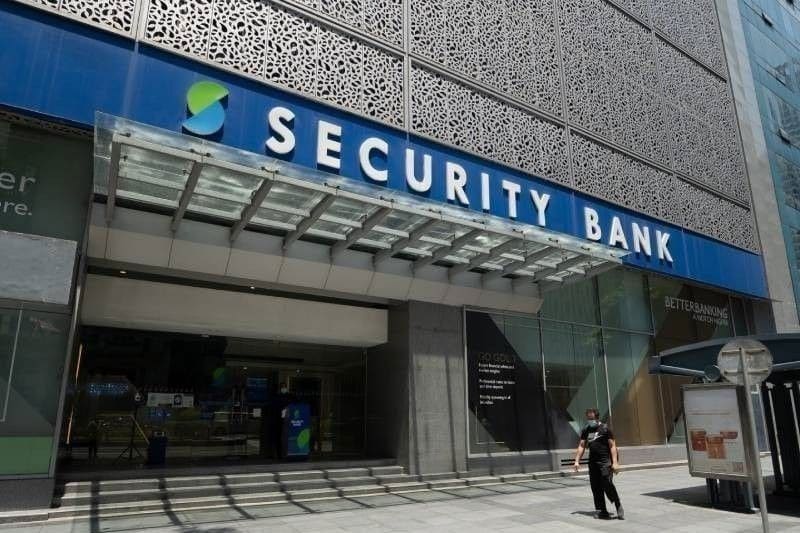
Security Bank Posts 4% Profit Growth to ₱6.08 Billion in First Half
The Philippine lender's net interest income gains and operational efficiency improvements overcame headwinds from higher provisioning and FX volatility.
KEY TAKEAWAYS
- ·Security Bank's first-half net income reached ₱6.08 billion, up 4% year-on-year from ₱5.86 billion, as net interest income and operational efficiency offset headwinds.
- ·Higher credit provisions and losses from foreign exchange and trading activities weighed on profitability amid peso depreciation and bond-yield volatility.
- ·The bank's conservative provisioning and focus on affluent retail and mid-market corporates position it for resilience if regional economic conditions worsen.
Steady Profit Trajectory Amid Headwinds
Security Bank Corp. reported net income of ₱6.08 billion for the first half, a 4% increase from ₱5.86 billion in the same period last year. The Manila-based lender navigated a challenging environment marked by rising credit costs and foreign exchange volatility, relying instead on improved lending margins and tighter operational controls to sustain profitability.
The modest gain underscores the balancing act facing mid-tier Philippine banks as they manage loan-book expansion against the backdrop of a slowing domestic economy and currency swings tied to regional capital flows. Security Bank's ability to grow earnings, even incrementally, signals disciplined underwriting and cost management at a time when many peers are grappling with asset-quality pressures.
Net Interest Income Lifts Performance
The bank's net interest earnings strengthened during the period, driven by loan repricing and a widening spread between borrowing and lending rates. Philippine banks have benefited from a higher interest-rate environment, with the Bangko Sentral ng Pilipinas maintaining a cautious stance on policy easing despite moderating inflation. Security Bank's core lending business, which spans retail mortgages, SME credit, and corporate facilities, captured that rate advantage while keeping deposit costs in check.
Operating efficiency also improved. The bank trimmed its cost-to-income ratio through branch automation and digital-channel adoption, a strategic priority for Philippine lenders competing with digital-only challengers. Back-office rationalization and shared-service models have allowed Security Bank to redeploy resources toward revenue-generating units without proportional increases in overhead.
Provisioning and FX Losses Weigh
Higher credit provisions tempered the upside. Security Bank set aside more capital to cover potential loan losses, reflecting both regulatory prudence and emerging stress in select portfolio segments. Consumer unsecured lending and micro-enterprise loans, which expanded rapidly in recent years, are now showing early delinquency upticks as household debt servicing becomes stretched. The bank's conservative provisioning stance, while earnings-dilutive in the near term, positions it to weather a prolonged credit cycle without sudden reserve shortfalls.
Foreign exchange and trading losses also dented the bottom line. The Philippine peso depreciated against the dollar during the first half, pressuring banks with unhedged dollar liabilities or mark-to-market exposures in their treasury books. Security Bank's trading desk recorded net losses as bond yields fluctuated and currency volatility spiked, a common theme across regional banks with active capital-markets operations.
Regional Context and Outlook
Security Bank's performance sits within a broader Southeast Asian narrative: banks are defending margins through repricing power while absorbing higher risk costs. Peers in Indonesia, Thailand, and Vietnam face similar dynamics, with net interest margins holding firm but provisioning eating into profit growth. The divergence between strong core banking operations and weaker fee income or trading results is becoming a defining feature of the 2026 earnings season across ASEAN financials.
For Security Bank, the path forward hinges on credit discipline and deposit franchise strength. The bank has historically punched above its weight in affluent retail segments and mid-market corporates, niches that offer stickier relationships and lower churn than mass-market deposits. Sustaining that franchise advantage, while steering clear of high-risk consumer lending, will determine whether the lender can accelerate profit growth in the second half or faces continued margin compression as competition for quality borrowers intensifies.
The ₱6.08 billion result, modest as it appears, reflects a deliberate choice: prioritize balance-sheet resilience over headline growth, a posture that may serve Security Bank well if regional economic conditions deteriorate further.
RELATED STORIES

Land Bank of the Philippines Targets Profit Growth Despite Fee Waivers
Mariel D. Santos · 3 min
DBP Launches Deposit Drive to Fund Infrastructure Pipeline
Priyanka V. Rao · 5 min

Alliance Global Reports 3% Profit Growth to ₱16 Billion in First Half
Mariel D. Santos · 3 min

Philippine Stocks Edge Higher as Investors Hunt for Bargains After Pullback
Mariel D. Santos · 2 min
Spot something wrong? Email editor@briefasia.com. We log every correction publicly.