Technology · AI
Daewoo E&C Partners With KINX to Build End-to-End AI Data Center Business
Korean construction giant teams with internet infrastructure operator to capture hyperscale opportunities in Asia's surging AI infrastructure market
KEY TAKEAWAYS
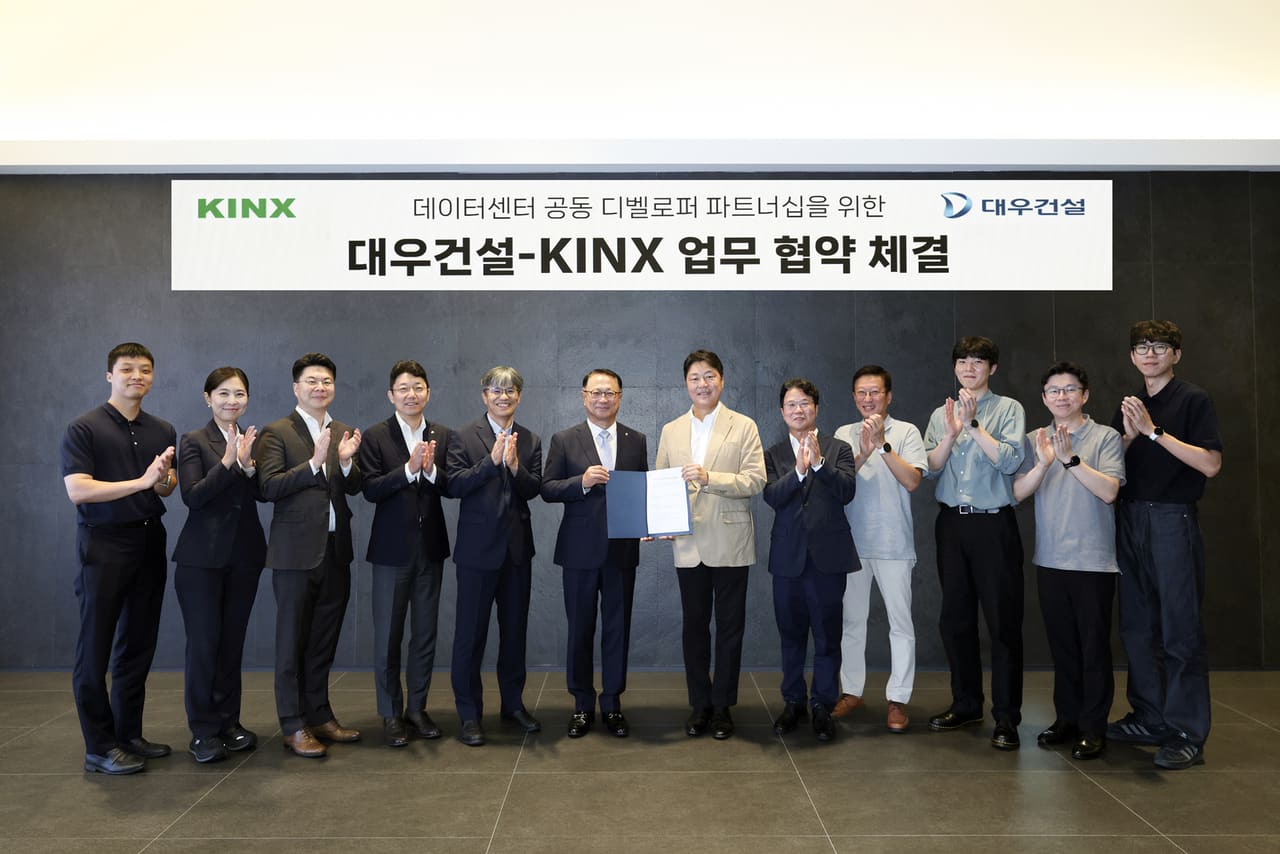
- ·Daewoo Engineering & Construction has partnered with Korea Internet Neutral eXchange to build a full-service data center business covering development, construction, and operations for hyperscale and AI projects.
- ·The alliance allows Daewoo to extend beyond traditional build contracts into recurring operational revenue, while KINX gains access to large-scale project capital and construction capacity.
- ·South Korea has become a regional data center hub due to reliable power, submarine cable access, and proximity to Northeast Asian demand, though land scarcity and power constraints remain challenges.
Construction Meets Infrastructure
Daewoo Engineering & Construction announced a strategic partnership with Korea Internet Neutral eXchange that positions the builder to deliver comprehensive data center services from initial development through long-term operations. The alliance, disclosed Friday, targets the fast-growing hyperscale and AI data center segment in Asia.
The collaboration brings together Daewoo's construction and engineering capabilities with KINX's expertise in internet infrastructure and data center operations. KINX operates internet exchange points and colocation facilities across South Korea, providing the operational knowledge that complements Daewoo's project delivery track record.
Full-Stack Play
The partnership establishes a model linking three phases: development, construction, and operations. Daewoo has historically focused on the build phase; this alliance extends its value chain upstream into site selection and project structuring, and downstream into facility management and tenant services.
For KINX, the tie-up offers access to large-scale project capital and construction capacity needed to compete for hyperscale contracts. Cloud providers and AI companies increasingly prefer turnkey solutions from partners who can handle multi-hundred-megawatt campuses and guarantee uptime from day one.
The two companies will jointly pursue opportunities for hyperscale and AI data center projects. Hyperscale facilities typically exceed 10 megawatts of IT load and serve cloud platforms, while AI data centers require higher power density and specialized cooling to support GPU clusters.
Asia's Infrastructure Surge
The timing reflects surging demand for data center capacity across Asia. Governments in Singapore, Tokyo, Seoul, and Mumbai have relaxed or updated regulations to accommodate new facilities, while energy constraints in some markets have pushed developers to secondary cities with available grid capacity.
South Korea has emerged as a regional hub, benefiting from reliable power infrastructure, submarine cable landing points, and proximity to Northeast Asian demand. Seoul and its surrounding metropolitan area host multiple carrier-neutral facilities, though land scarcity and power allocation challenges have slowed new supply.
Daewoo's move into full-cycle data center services mirrors strategies adopted by global construction and engineering firms. Several have launched dedicated digital infrastructure divisions, acquiring operational expertise through partnerships or acquisitions to capture recurring revenue beyond one-time build contracts.
Competitive Landscape
The partnership enters a crowded field. International developers, local construction firms, and specialized data center operators are all competing for hyperscale mandates in Korea. Established players have existing relationships with cloud providers and proven operational records, creating high barriers for new entrants.
Daewoo's advantage lies in its engineering pedigree and balance sheet. Large AI data centers require complex mechanical and electrical systems, backup power redundancy, and sophisticated cooling. The company has delivered industrial and infrastructure projects with comparable technical demands.
KINX contributes network connectivity and a customer base of enterprises and service providers. Hyperscale tenants prioritize low-latency access to internet exchanges and diverse fiber routes, assets KINX already controls.
What Comes Next
The partnership will test whether vertical integration delivers competitive advantage in data center development. Success depends on securing anchor tenants, navigating power and zoning approvals, and operating facilities at uptime levels that meet contractual service-level agreements.
Daewoo has not disclosed investment commitments or specific project timelines. The company's ability to move quickly will determine whether it captures market share in a sector where first movers often lock in the best sites and power allocations.
Asia's data center pipeline continues to expand, driven by cloud adoption, digital services growth, and AI workload requirements. Builders with operational capability and capital access are positioning to serve that demand. Daewoo's alliance with KINX is one signal that the construction industry sees data centers not as a project category, but as a long-term business line.
RELATED STORIES
South Korea Taps Three Telecom Giants to Deliver Free AI Services Nationwide
Cheng Wei-Lun · 3 min
Samsung Display Restarts Asan OLED Campus as Foldable Phones Stage Recovery
Cheng Wei-Lun · 4 min
Nexon Commits $179M to Gaming IP Fund Targeting Asian Developers
Cheng Wei-Lun · 3 min
SK Hynix Eyes Deeper Collaboration With Japan's Chip Sector
Cheng Wei-Lun · 4 min
Spot something wrong? Email editor@briefasia.com. We log every correction publicly.