Asia · Business
Cosmax Builds Digital Gateway for K-Beauty Brands Seeking Global Markets
South Korea's largest ODM cosmetics manufacturer integrates export services into its client platform, addressing regulatory and logistics bottlenecks that have limited overseas expansion.
KEY TAKEAWAYS
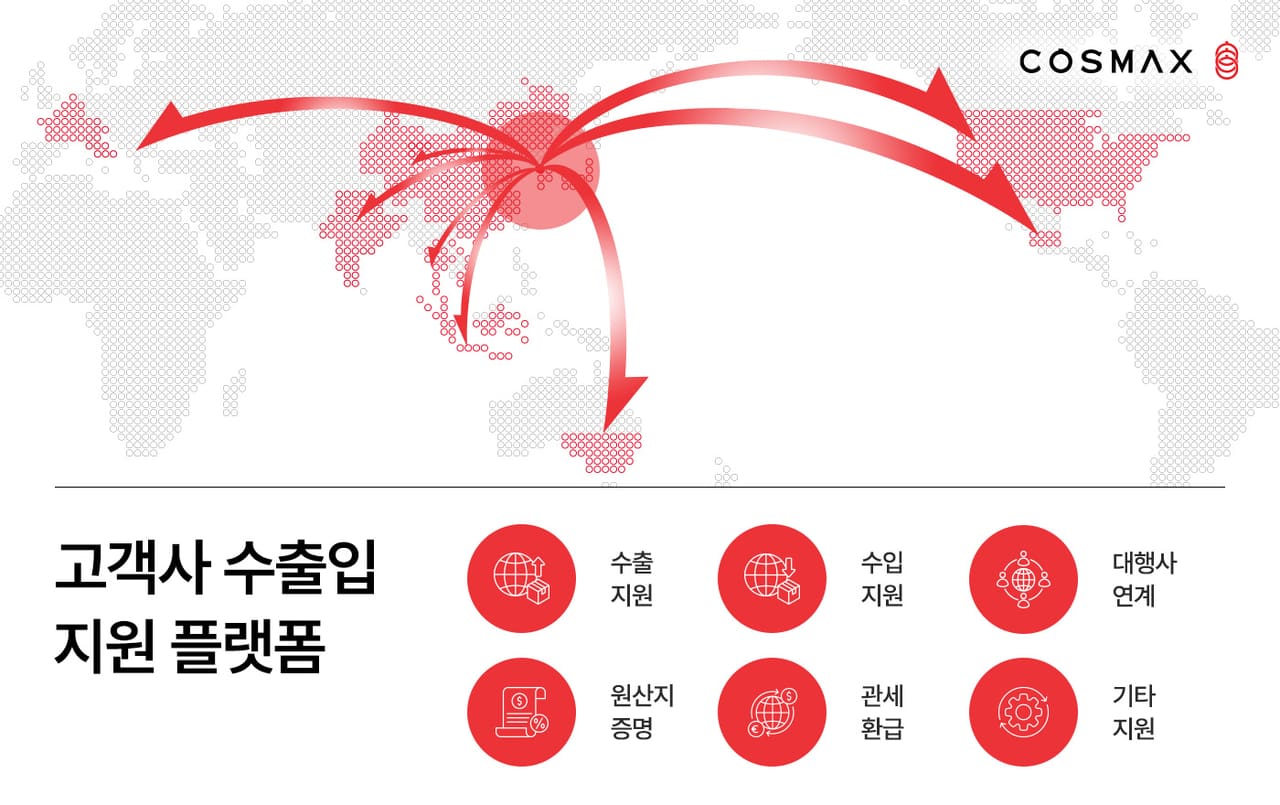
- ·Cosmax added an export and import support module to its client e-biz platform, covering regulatory compliance, documentation, and logistics for overseas market entry.
- ·South Korea exported $9.4 billion in cosmetics in 2025, but smaller independent brands face regulatory complexity and capital constraints that limit cross-border sales.
- ·The platform integrates trade services with manufacturing workflows, reducing the need for separate freight forwarders and customs brokers while leveraging Cosmax's regional production footprint.
A Single Portal for Cross-Border Beauty
Cosmax, South Korea's largest original design manufacturer for cosmetics, has integrated a dedicated export and import module into its existing client communication platform. The company announced the addition of the section to its e-biz system on Friday, positioning it as a centralized resource for domestic brands that want to break into overseas markets but lack in-house trade infrastructure.
The platform handles what Cosmax describes as the most common friction points in international beauty commerce: understanding country-specific regulatory frameworks, securing compliant product documentation, and coordinating logistics across borders. By embedding these services into the same system where clients already manage formulation orders and production timelines, Cosmax is betting that lower administrative overhead will accelerate the pace at which small and mid-sized brands can launch abroad.
South Korea exported $9.4 billion worth of cosmetics in 2025, according to data from the Korea Customs Service, with China, the United States, and Japan accounting for more than half of total shipments. Yet the bulk of that volume flows through a handful of large conglomerates. Smaller independent labels, which have proliferated in Seoul's Gangnam beauty district and online, often cite regulatory complexity and capital requirements as barriers to cross-border sales.
ODM as Trade Facilitator
Cosmax operates more than a dozen manufacturing sites across Asia, including facilities in China, Indonesia, and Thailand, and produces for both domestic Korean brands and international clients. The company's move to formalize export support reflects a broader shift among Asian ODM manufacturers, which are expanding their role from pure contract production into end-to-end commercialization partners.
The new platform module covers regulatory research, import permit applications, labeling compliance, and shipping coordination. Cosmax did not disclose pricing for the service or specify whether it will charge per transaction or as a subscription tier within its existing client agreements.
Industry observers note that trade facilitation is becoming a competitive differentiator in the ODM segment. As K-beauty's growth in mature markets like the U.S. and Europe decelerates, brands are targeting emerging Southeast Asian and Middle Eastern markets where regulatory environments are less familiar and distribution networks are still consolidating.
Regulatory Gaps and Market Access
Export compliance remains a moving target. The European Union updated its Cosmetics Regulation in 2024 to tighten restrictions on certain preservatives and fragrance allergens, while China's National Medical Products Administration continues to refine its registration requirements for imported cosmetics. Smaller brands often lack the legal and regulatory teams to track these changes in real time.
By centralizing trade support within the same platform where brands manage their manufacturing workflows, Cosmax is reducing the need for clients to coordinate with separate freight forwarders, customs brokers, and regulatory consultants. The integration also allows the company to leverage its own cross-border production footprint, potentially routing shipments from its regional facilities to minimize tariffs and lead times.
The platform's launch coincides with rising interest in K-beauty formats, particularly cushion compacts, ampoules, and sheet masks, in markets outside East Asia. Cosmax has not disclosed client uptake figures or specified which geographies the platform will prioritize in its initial rollout.
South Korea's cosmetics industry has long benefited from a tight-knit ecosystem of ingredient suppliers, contract manufacturers, and brand incubators concentrated in the Seoul metropolitan area. The question now is whether digital infrastructure can replicate that density of coordination across borders, and whether ODM manufacturers can credibly expand their remit beyond the factory floor.
RELATED STORIES
South Korea Breaks Full-Year Export Record in September
Tran Quoc Bao · 3 min
SK Hynix Union Rejects Wage Deal in Razor-Thin Vote
Cheng Wei-Lun · 3 min
SK Chemicals Targets Europe's Can-Coating Shift After BPA Ban
Cheng Wei-Lun · 2 min

Hyundai Motor Faces First Full-Day Strike in a Decade as Wage Talks Stall
Jun-ho Seo · 2 min
Spot something wrong? Email editor@briefasia.com. We log every correction publicly.