Technology · Dev
Chinese Supplier Befar Launches 6N Hydrogen Fluoride Production for Chip Manufacturing
The Binzhou facility marks China's latest push into high-purity specialty gases critical for semiconductor etching and chamber cleaning
KEY TAKEAWAYS
- ·Befar Group launched production of 6N hydrogen fluoride gas at 99.9999% purity in Binzhou on July 19, targeting semiconductor etching and chamber cleaning applications.
- ·The facility strengthens China's position in specialty electronic gases, a segment where Japanese suppliers Stella Chemifa and Daikin currently hold 55% global market share.
- ·Qualification at leading fabs typically requires six to twelve months of testing, with success hinging on consistent impurity control and defect-free performance over multiple production batches.
China Adds Capacity in Critical Etching Gas
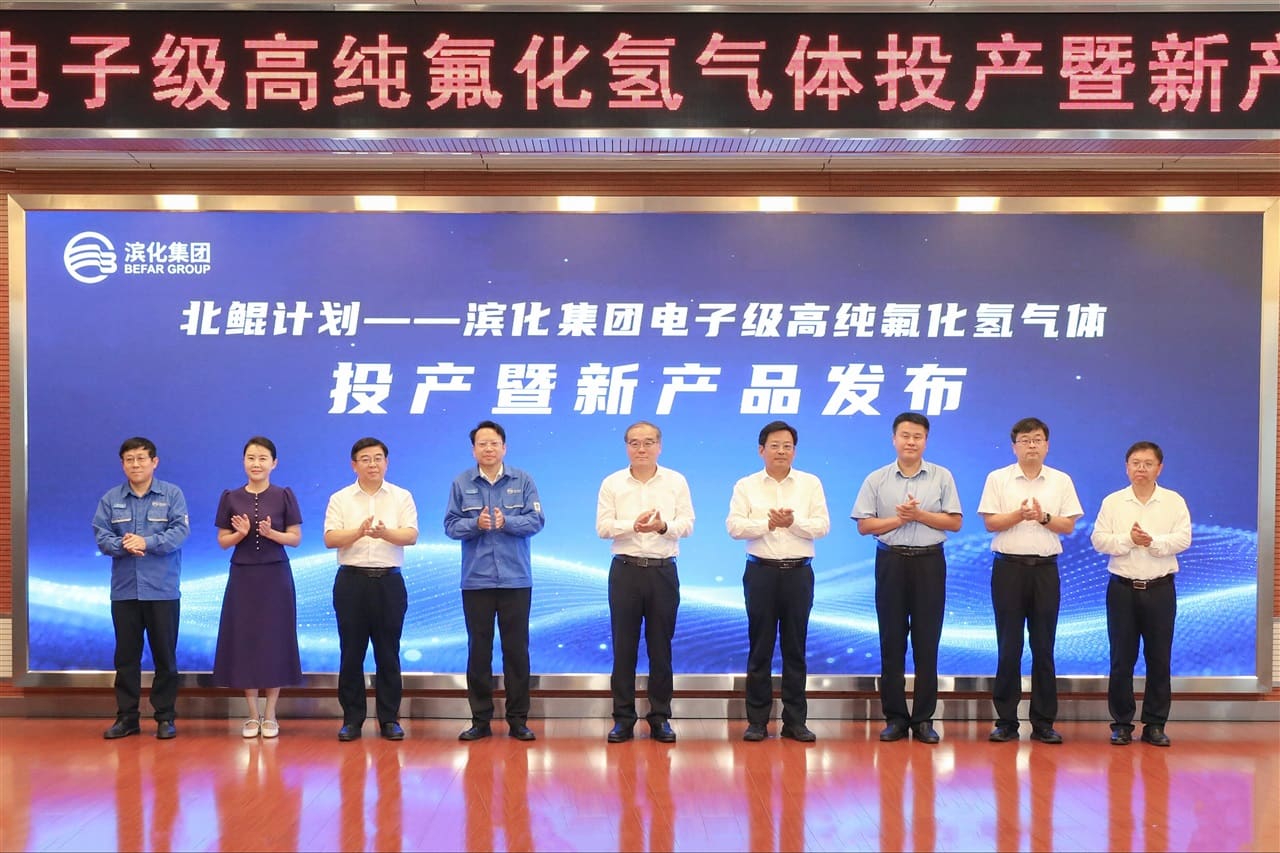
Befar Group commenced production of ultra-high-purity hydrogen fluoride gas at its Binzhou facility on July 19, the Chinese chemical supplier announced. The new line produces material rated at 6N purity - 99.9999% - a specification required for advanced semiconductor fabrication processes.
Hydrogen fluoride gas serves two essential functions in chip manufacturing: etching circuit patterns onto silicon wafers and cleaning residues from production chamber walls between runs. At 6N purity, the gas contains fewer than one contaminant particle per million, a threshold necessary to prevent defects in transistor structures now measured in single-digit nanometers.
The Binzhou plant expands Befar's footprint in specialty electronic gases, a segment dominated historically by Japanese suppliers Stella Chemifa and Daikin, alongside U.S.-based Honeywell. China has accelerated domestic production of these materials since 2019, when export controls tightened access to foreign sources for several Chinese chipmakers.
Regional Supply Chain Implications
Befar's entry into 6N hydrogen fluoride arrives as Asia's semiconductor manufacturing base diversifies its material sourcing. Taiwan's chipmakers currently import roughly 70% of their electronic-grade gases from Japan, according to industry data, while Korean fabs source similar proportions from a mix of Japanese and domestic suppliers.
The new capacity in Binzhou sits approximately 400 kilometers from Beijing and 500 kilometers from Tianjin, positioning the facility within trucking range of several Chinese fab clusters. Liquid hydrogen fluoride typically ships in specialized ISO containers under temperature control; gaseous forms require on-site vaporization units at customer facilities.
Chinese chemical producers have scaled production of lower-purity hydrogen fluoride - used in pharmaceuticals and aluminum processing - for decades. The jump to 6N grade demands stricter control of trace metals, moisture, and organic contaminants during synthesis and distillation. Achieving that consistency at commercial scale has proven a bottleneck for several Chinese suppliers attempting to serve the semiconductor market.
Market Context and Competitive Landscape
Global consumption of semiconductor-grade hydrogen fluoride reached approximately 45,000 metric tons in 2025, with Taiwan and South Korea together accounting for nearly half of demand. Spot prices for 6N-grade material ranged between USD 18 and USD 22 per kilogram in the first half of 2026, up from USD 14 per kilogram in early 2024, driven by capacity additions at leading-edge fabs.
Befar Group, headquartered in Shandong province, operates chemical plants producing fluoropolymers, refrigerants, and electronic materials. The company supplies industrial customers across Asia and has pursued semiconductor-grade products as margins in commodity fluorochemicals compressed over the past three years.
Japan's Stella Chemifa holds roughly 35% of the global semiconductor hydrogen fluoride market, followed by Daikin at 20% and Honeywell at 15%, based on 2025 shipment volumes. Chinese suppliers collectively represent about 10% of the market, concentrated in mature-node applications where purity tolerances are less stringent.
Technical Hurdles and Qualification Timelines
Introducing a new source of hydrogen fluoride into a fab's supply chain typically requires six to twelve months of qualification testing. Process engineers run the candidate material through etching and cleaning tools, then measure defect densities on test wafers and compare results against the incumbent supplier's performance.
Any deviation in impurity profile - such as elevated levels of iron, nickel, or chloride ions - can shift etch rates or leave residues that degrade device yield. Fabs therefore maintain dual or triple sourcing only after extensive validation, and switching costs discourage frequent changes once a supplier is qualified.
Befar has not disclosed which customers are evaluating the Binzhou output, nor has the company specified the facility's annual production capacity. Industry observers note that a single large fab complex can consume 300 to 500 metric tons of 6N hydrogen fluoride per year, implying that even a mid-sized plant can serve multiple customers if qualification proceeds smoothly.
What Comes Next
China's push into high-purity electronic gases extends beyond hydrogen fluoride. Domestic suppliers have ramped production of ammonia, nitrogen trifluoride, and specialty silanes over the past 24 months, aiming to reduce reliance on imports as the country expands its semiconductor manufacturing footprint.
For Befar, the next milestone will be securing orders from Tier 1 foundries and memory producers, a process that hinges on passing rigorous quality audits and demonstrating batch-to-batch consistency over multiple quarters. Success would position the company alongside established players in a market where reliability often outweighs price in purchasing decisions.
Regional competitors in Taiwan and South Korea will watch closely. While most leading-edge fabs prefer incumbent Japanese suppliers for critical materials, cost pressures at mature-node facilities may open the door to qualified Chinese alternatives - provided geopolitical considerations and export compliance frameworks allow unimpeded trade.
RELATED STORIES
China's Chip Makers Split Three Ways Beneath the Revenue Growth
Tran Quoc Bao · 3 min
Hong Kong Debuts Robot-Run Convenience Store in Commercial Automation Push
Cheng Wei-Lun · 3 min

China Scrubs 5.6 Million AI-Generated Posts in Platform Cleanup
Cheng Wei-Lun · 3 min
Chinese Automakers Target Hybrid Market After EV Dominance
Cheng Wei-Lun · 3 min
Spot something wrong? Email editor@briefasia.com. We log every correction publicly.