Technology · Products
Chinese Robotics Firms Deploy Humanoids to Public Spaces for Real-World Training
Manufacturers are sending bipedal machines into restaurants, offices, and transit hubs to accelerate learning in uncontrolled environments
KEY TAKEAWAYS
- ·Chinese robotics manufacturers are deploying humanoid robots in restaurants, offices, and transit hubs to gather real-world behavioral data and refine machine learning models.
- ·Unitree Robotics showcased its G1 humanoid platform at the Tokyo Humanoids Summit in May, with developer units priced under $20,000 to undercut Western competitors.
- ·Field testing in dense urban environments provides data on unpredictable human behavior and spatial challenges that laboratory settings cannot replicate at scale.
Field Testing at Scale
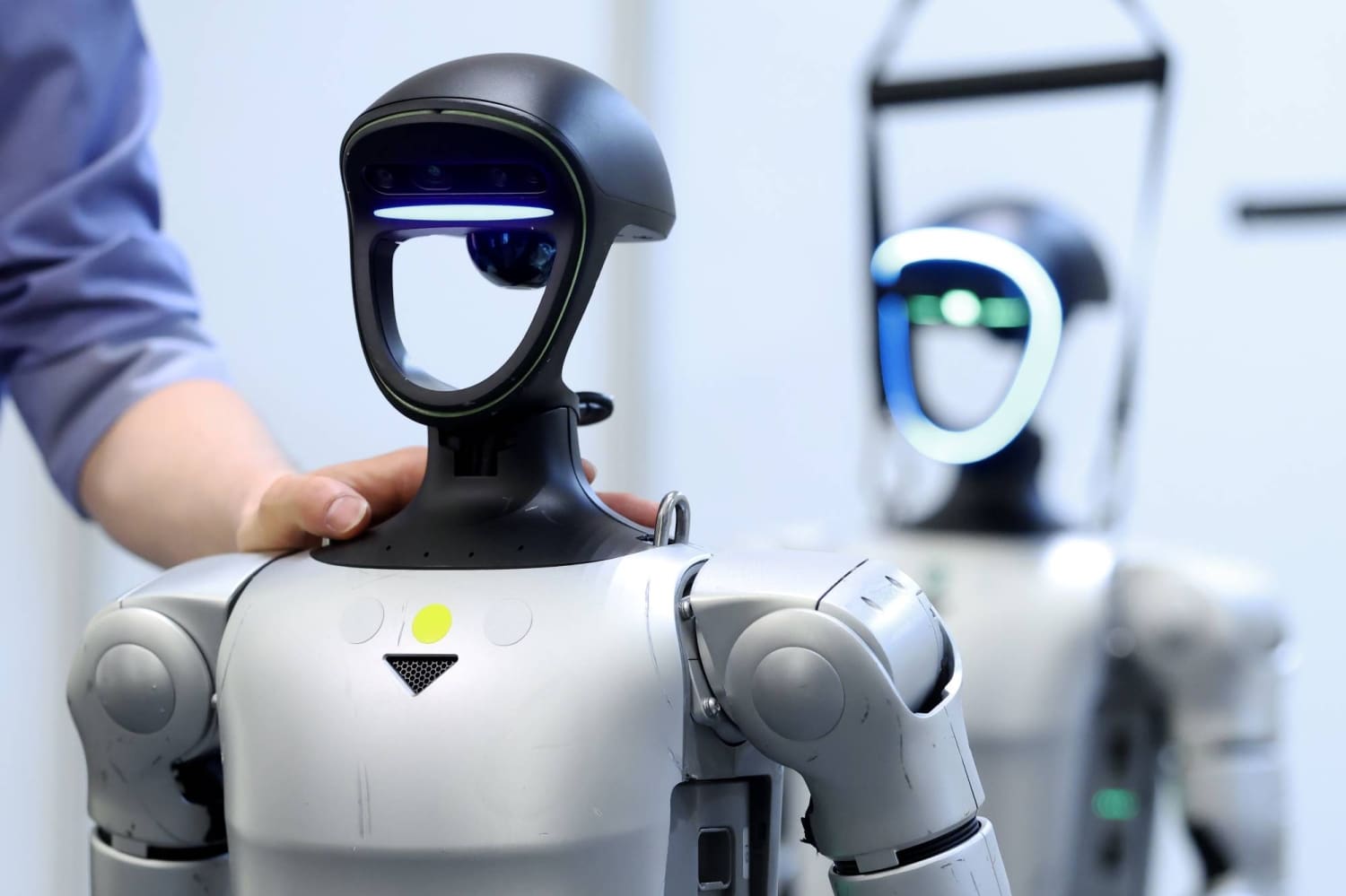
Chinese robotics manufacturers have begun deploying humanoid robots into restaurants, shopping centers, office buildings, and public transit stations across major cities. The strategy represents a departure from traditional laboratory-based development, pushing machines into unstructured environments where they encounter unpredictable human behavior, spatial constraints, and real-time decision-making scenarios.
Unitree Robotics, the Hangzhou-based manufacturer behind the G1 humanoid platform, is among the companies pursuing this approach. The firm showcased its bipedal robot at the Humanoids Summit in Tokyo in late May, an event that drew engineers and investors focused on the commercialization of general-purpose robots. The G1 model stands roughly 1.3 meters tall when in a crouched posture and can extend to full height for tasks requiring reach.
Why Public Deployment Matters
Training humanoid robots in controlled settings yields limited data. Labs offer clean floors, predictable lighting, and scripted interactions. Real-world environments present slippery tiles, crowded doorways, ambient noise, and humans who do not follow instructions. These variables are difficult to simulate at scale, and machine learning models improve faster when exposed to the chaotic conditions they will eventually navigate autonomously.
China's robotics sector has structural advantages for this kind of field testing. Dense urban populations provide high foot traffic. Municipal governments in cities such as Shenzhen, Beijing, and Hangzhou have shown willingness to grant permits for pilot programs involving autonomous systems. Manufacturing capacity is deep, allowing companies to produce multiple units for simultaneous deployment rather than relying on a single prototype.
The data collected during these deployments feeds back into neural networks that govern balance, object recognition, path planning, and social navigation. A robot working a shift in a noodle shop learns to avoid steam, recognize when a customer is waiting, and adjust grip pressure when handling bowls of varying weight and temperature. A unit stationed in a subway concourse learns to interpret hurried gestures, avoid collisions during rush hour, and recover from minor stumbles without human intervention.
Regional Context and Competition
Asia has emerged as the primary theater for humanoid robotics development. Japan's industrial robot heritage, South Korea's electronics infrastructure, and China's manufacturing scale create a competitive regional ecosystem. Japanese firms such as Toyota and Kawasaki have decades of experience in industrial automation but have focused primarily on factory and warehouse applications. Chinese entrants are betting that general-purpose humanoids, trained in public settings, will unlock service-sector markets that remain largely untouched by automation.
Unitree's public demonstrations in Tokyo signal an intent to position Chinese platforms as viable alternatives to Western models from firms like Boston Dynamics or Agility Robotics. The company has priced its G1 unit aggressively, with developer editions available for under $20,000, a fraction of the cost of comparable systems from U.S. manufacturers. This pricing strategy, combined with field-testing velocity, could accelerate adoption in markets where labor costs are rising but capital budgets remain constrained.
Technical and Regulatory Hurdles
Deploying robots in public spaces introduces liability questions. If a humanoid collides with a pedestrian or damages property, responsibility may fall on the manufacturer, the operator, or the venue owner, depending on local regulations. China's regulatory framework for robotics is still evolving, and pilot programs often operate under temporary permits that limit scope and duration.
Battery life remains a constraint. Most humanoid robots can operate for two to four hours under moderate load before requiring a recharge. This limits the range of tasks they can perform in a single shift and necessitates infrastructure for rapid battery swaps or charging stations in deployment locations.
Sensor reliability in outdoor environments is another challenge. Cameras and lidar systems can struggle with direct sunlight, rain, or dust. Robots deployed in covered indoor spaces perform more consistently, but outdoor applications, particularly in logistics or construction, remain difficult.
What Comes Next
Chinese robotics firms are expanding the number of deployment sites and the variety of tasks assigned to humanoid platforms. Beyond service roles, companies are exploring applications in elder care, warehouse fulfillment, and light manufacturing. The data gathered from public deployments will inform the next generation of hardware and software, with iterative improvements in mobility, dexterity, and autonomy.
International interest in Chinese humanoid platforms is growing, particularly in Southeast Asia and the Middle East, where infrastructure projects and hospitality sectors are seeking automation solutions. If Chinese manufacturers can demonstrate reliability and cost-effectiveness through sustained public deployment, they may capture significant market share before Western competitors scale production.
The race is no longer confined to labs. It is unfolding in noodle shops, subway stations, and hotel lobbies, where robots are learning to navigate the messy, unpredictable world humans take for granted.
RELATED STORIES
Sharpa Secures $668 Million at $3.3 Billion Valuation in Tech Giant-Backed Round
Cheng Wei-Lun · 2 min
Hong Kong Debuts Robot-Run Convenience Store in Commercial Automation Push
Cheng Wei-Lun · 3 min

China Scrubs 5.6 Million AI-Generated Posts in Platform Cleanup
Cheng Wei-Lun · 3 min
China's Chip Makers Split Three Ways Beneath the Revenue Growth
Tran Quoc Bao · 3 min
Spot something wrong? Email editor@briefasia.com. We log every correction publicly.