Real Estate · Offices
Chinese Investors Return to Commercial Real Estate as Prices Stabilize
Transaction volumes rise in Shanghai and other major cities as distressed assets draw bargain hunters following years of property market decline
KEY TAKEAWAYS
- ·Commercial property transactions are rising in Shanghai and other tier-one Chinese cities as investors acquire office, hotel, and retail assets at discounted valuations following years of price declines.
- ·Stabilizing prices and distressed sales by cash-strapped developers have created acquisition opportunities, though transaction volumes remain well below 2018-2019 peaks and secondary cities continue to struggle.
- ·Buyers include domestic insurers, asset managers, and family offices deploying patient capital, while structural challenges such as high vacancy rates and weak tenant demand persist across most markets.
Buyers Re-Enter the Market
Commercial property transactions are accelerating across China's largest cities, with investors moving to acquire office buildings, hotels, and shopping centers at valuations sharply below historical peaks. Shanghai has emerged as a focal point of activity, alongside other tier-one markets where transaction volumes have climbed after years of near-dormancy.
The shift follows a multi-year downturn that hammered valuations across the commercial sector. Office towers, retail centers, and hospitality assets lost substantial value as China's broader property crisis deepened, credit tightened, and tenant demand weakened. Many institutional owners, including developers facing liquidity pressure, have been forced to offload assets at steep discounts.
Stabilization Draws Capital
Pricing in select markets now appears to have found a floor. Investors monitoring the sector say the absence of further sharp declines has created conditions for selective acquisition activity. Institutional buyers and private capital groups are conducting due diligence on properties that would have been prohibitively expensive two years ago.
The rebound in deal flow does not yet signal a broad recovery. Transaction volumes remain well below the levels seen during the sector's peak in 2018 and 2019, and many secondary cities continue to see depressed pricing with limited buyer interest. But in core districts of Shanghai, Beijing, and Shenzhen, where occupancy rates for Grade A office space have held relatively steady, investors are beginning to deploy capital again.
Who Is Buying
The buyer pool includes domestic insurance companies, asset management firms, and family offices seeking long-term income streams. Foreign capital, which retreated sharply from Chinese commercial real estate over the past three years, has shown tentative signs of re-engagement, though cross-border deals remain a small fraction of total activity.
Distressed asset sales have become a significant component of the market. Developers under financial strain, including some that have undergone debt restructuring, are divesting non-core holdings to raise cash. These forced sales have created opportunities for buyers with patient capital and the ability to weather continued market uncertainty.
Regional Dynamics
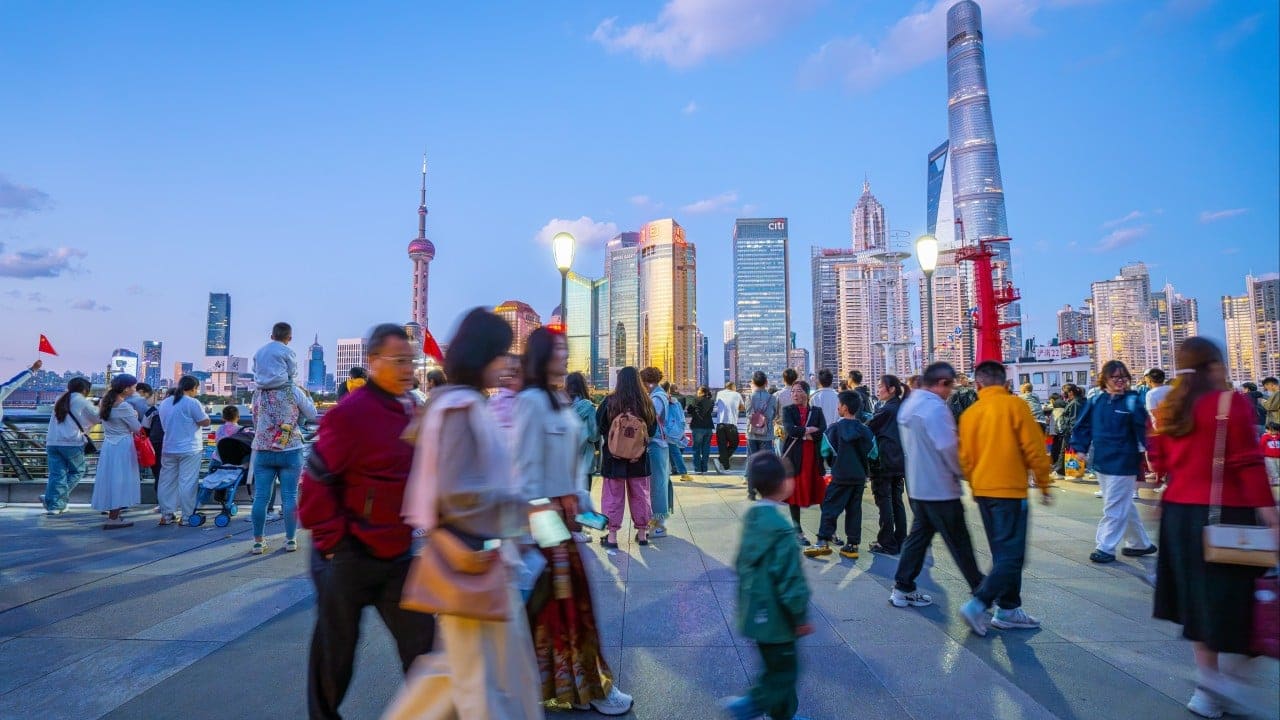
Shanghai's commercial property market has seen some of the most visible activity. Several high-profile office buildings in the Lujiazui financial district and along the Huangpu River have changed hands in recent months, according to local brokers. Buyers are betting that the city's role as China's financial hub will underpin long-term tenant demand, even as short-term vacancy rates remain elevated.
Beijing's market is showing similar dynamics, with transactions concentrated in the Central Business District and around Guomao. Shenzhen, historically more volatile, has attracted interest in tech-oriented office properties, though deal volumes remain modest compared to the other two cities.
Outside the top tier, conditions are more challenging. Cities such as Chengdu, Hangzhou, and Wuhan have seen limited transaction activity, and pricing remains under pressure as oversupply persists and tenant demand remains weak.
Risks and Outlook
The uptick in deals does not eliminate the structural challenges facing China's commercial property sector. Vacancy rates for office space remain high in most cities, and retail properties continue to struggle as consumer spending lags. The hotel sector has shown more resilience, buoyed by domestic tourism, but profitability remains uneven.
Investors entering the market now are pricing in continued volatility. Many are pursuing value-add strategies, planning to reposition assets or improve management rather than relying solely on market appreciation. The expectation is that returns will come over a multi-year horizon, not through quick flips.
Whether the current activity marks a turning point or merely a pause in a longer downturn remains unclear. For now, the return of transaction volume offers a signal that some capital believes the worst may be over, even if the path to recovery will be measured in years, not quarters.
RELATED STORIES
China-US Bond Yield Gap Reaches Two-Decade Peak
Cheng Wei-Lun · 3 min

Arm Unveils Mobile Compute Platform Targeting China's AI Handset Sector
Tran Quoc Bao · 3 min
China's Beverage Giants Face Profitability Test After Rapid Expansion
Jun-ho Seo · 3 min
China's Social Security Fund Doubles Offshore Holdings to $86 Billion
Jun-ho Seo · 3 min
Spot something wrong? Email editor@briefasia.com. We log every correction publicly.