Technology · Products
Chinese EV Makers Push Into Indonesia's Hybrid Market
BYD, Chery, and DFSK unveil plug-in hybrid models as charging infrastructure gaps and policy uncertainty slow battery-electric adoption in Southeast Asia's biggest economy.
KEY TAKEAWAYS
- ·BYD, Chery, and DFSK introduced their first plug-in hybrid models at a Jakarta automotive show starting July 30.
- ·Sparse public charging infrastructure outside Jakarta remains a key barrier to battery-electric vehicle adoption in Indonesia.
- ·Chinese automakers are entering a hybrid segment currently dominated by Japanese brands Toyota and Honda.
Strategic Pivot to Hybrids
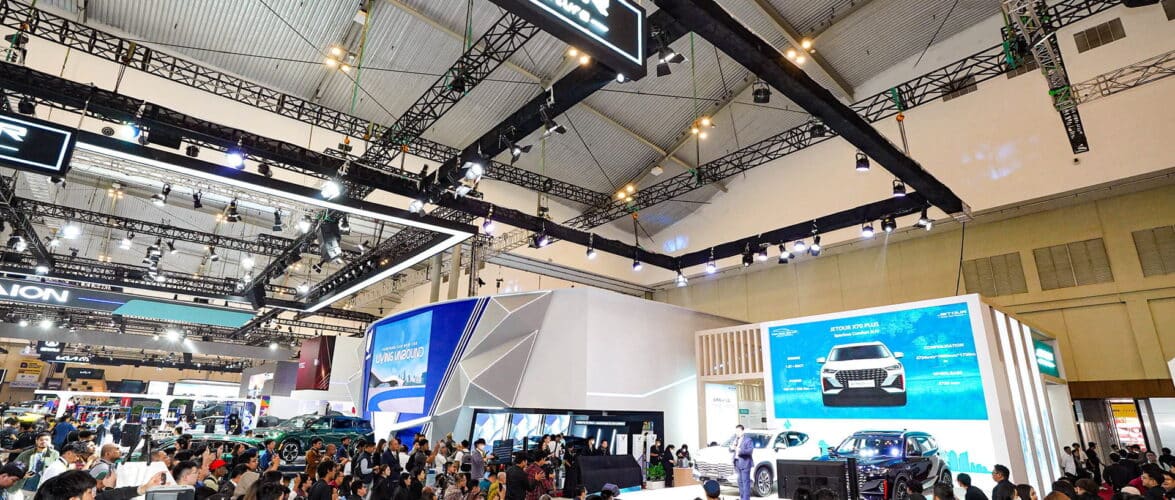
Three major Chinese automotive manufacturers introduced plug-in hybrid electric vehicle models in Indonesia during a public automotive exhibition near Jakarta that began on July 30. BYD, Chery, and DFSK each showcased PHEV variants, marking their first entry into Indonesia's hybrid segment.
The timing reflects a calculated shift in market strategy. Indonesia's government has yet to finalize a fresh round of incentives for battery-electric vehicles, creating uncertainty around the economics of pure EV ownership. Plug-in hybrids offer a middle ground, combining electric range with a combustion engine fallback that addresses Indonesia's infrastructure limitations.
Infrastructure Reality Check
Outside the capital, Indonesia's public charging network remains thin. The scarcity of fast-charging stations across the archipelago has constrained battery-electric vehicle adoption, particularly among buyers who travel beyond Jakarta regularly. For a country spanning more than 17,000 islands, range anxiety is not an abstract concern.
Plug-in hybrids sidestep this constraint. Owners can charge at home for short urban trips and rely on gasoline for longer journeys, eliminating dependence on a charging grid that does not yet exist in most provinces. This dual-mode capability makes PHEVs a pragmatic choice in markets where infrastructure lags behind vehicle technology.
Challenging Japanese Dominance
Japanese automakers currently hold the overwhelming share of Indonesia's hybrid vehicle market. Toyota and Honda have spent years building consumer trust and dealer networks across the country, positioning hybrids as reliable, fuel-efficient alternatives to conventional cars.
Chinese brands now aim to disrupt that equilibrium. BYD has leveraged its vertical integration in battery production to price competitively, while Chery and DFSK bring manufacturing partnerships that allow local assembly, potentially qualifying for Indonesian content requirements. The Jakarta show represents a coordinated effort to establish credibility in a segment where Chinese marques have not yet gained traction.
Policy Limbo and Market Dynamics
Indonesia has signaled ambitions to become a regional hub for electric vehicle manufacturing, drawing investment from both Chinese and South Korean battery producers. Yet the rollout of consumer incentives has been uneven. Previous subsidy programs favored vehicles with high levels of local content, effectively excluding fully imported EVs.
The government's next incentive package remains under discussion, leaving buyers and automakers in a holding pattern. Plug-in hybrids may qualify for different treatment than pure EVs, depending on how policymakers define electrification targets. For Chinese brands, launching PHEVs now hedges against regulatory uncertainty while building brand presence ahead of any future subsidy clarity.
Regional Implications
Indonesia is Southeast Asia's largest automotive market by volume, making it a bellwether for the region. Thailand has attracted significant EV investment through tax breaks and manufacturing incentives, while Vietnam has positioned VinFast as a national champion. Indonesia's slower EV uptake, by contrast, reflects both policy caution and geographic challenges.
Chinese automakers have approached Southeast Asia with different strategies depending on local conditions. In Thailand, they compete on price and battery range; in Indonesia, they are now competing on flexibility. The introduction of plug-in hybrids suggests a recognition that infrastructure and policy will shape adoption curves as much as vehicle technology itself.
The Jakarta show also signals that Chinese brands are no longer treating Indonesia solely as a beachhead for pure electric vehicles. By diversifying into hybrids, they acknowledge the market's current realities while positioning themselves for a future where charging networks and incentives may eventually catch up. Whether that future arrives quickly enough to justify the investment remains an open question.
RELATED STORIES

Indonesia Car Sales Jump 34% as Electric Vehicles Reshape Southeast Asia's Auto Market
Siti Nuraini · 3 min

Southeast Asian Workers Embrace AI Tools Faster Than Global Peers
Priyanka V. Rao · 3 min
Chinese Drone Exports Surge in Southeast Asia as Civilian Demand Offsets US Market Decline
Cheng Wei-Lun · 3 min

Indonesia's Education Bill Revision Could Reopen Funding Door for Free Meals Program
Siti Nuraini · 3 min
Spot something wrong? Email editor@briefasia.com. We log every correction publicly.